How we chose
We assessed current Australian exact models from Ninja, Philips, Breville, Instant Pot, Tefal, Crock-Pot, Russell Hobbs, Cuisinart and Sunbeam. We compared current pricing, capacity, pressure and slow cooking, sautéing, steaming, rice and grain programs, air frying where relevant, pressure release, pot material, cleaning, interface, bench footprint, warranty and support, source-specific owner evidence and professional testing. Worth Buying scores are editorial judgements, not customer-star calculations. Worth Buying Australia did not perform CHOICE's laboratory tests, and manufacturer performance statements remain manufacturer claims.
Serious contenders reassessed
Tefal Cook4Me Touch CY9128/CY9128B: is the strongest guided-cooking alternative, with a touchscreen, Wi-Fi, app support and a large recipe library. It missed because it costs roughly $600, connectivity complaints exist, and Ninja offers broader pressure-plus-air-fry integration while Philips is much cheaper.
Ninja Combi SFP701ANZ: is a strong steam-and-air-fry appliance with excellent complete-meal potential, but it is not a pressure cooker. CHOICE found its Combi cooking and air frying impressive while slow cooking disappointed, making OL650 the more complete fit for this guide's core intent.
Breville Fast Slow Pro BPR700BSS: offers mature owner evidence, dual sensors and sophisticated pressure control. It also has a long-running pattern of reported EO errors, sealing and pressure-building problems alongside many enthusiastic owners. The BPR680 is the cleaner current stainless-pot recommendation; “Pro” does not automatically make BPR700 the better fit.
Instant Pot Pro 5.7L: remains a technically strong traditional pressure multi-cooker with a stainless-steel pot and deep recipe ecosystem. Australian exact-model evidence and local support are less convincing, while Philips costs less. Instant Pot Duo Crisp 8L adds air frying and a stainless pot, but its two-lid workflow creates more storage and swapping than Ninja's integrated SmartLid.
Crock-Pot CPE210: is a credible value near-miss with pressure, slow-cook, rice, sauté, steam and yoghurt modes, but owner complaints include release-valve and spare-parts issues. Philips HD2151/72 is a more established premium Philips alternative, while the new 8L HD2823/80 suits larger households. Neither matches HD2616/70's current mainstream value. Russell Hobbs RHPC3000 remains a lower-cost alternative, but Philips' new platform costs only modestly more.
Ninja Foodi SmartLid 14-in-1 7.5L Multi Cooker OL650ANZ
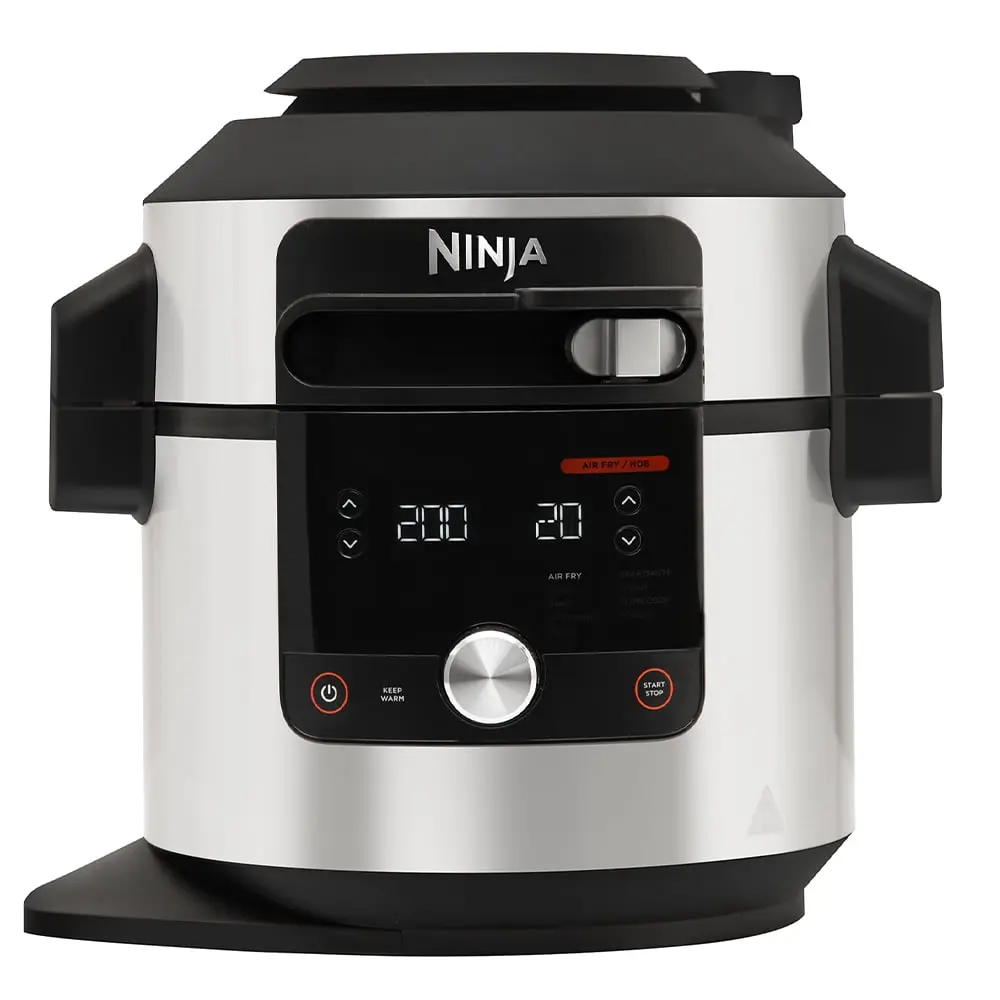
Exact OL650 / OL650ANZ product image.
The 1760W OL650ANZ combines a 7.5L ceramic-coated pot and 4.7L Cook & Crisp basket with 14 functions: Pressure Cook, Steam Meals, Steam Air Fry, Steam Bake, Steam Bread, Air Fry, Bake/Roast, Grill, Dehydrate, Prove, Sear/Sauté, Steam, Slow Cook and Yoghurt. Ninja lists a 25–240°C temperature range, approximately 36.5 × 38 × 38cm dimensions and an 11.4kg weight.
The integrated SmartLid is the practical reason it wins. It moves between pressure, air-fry and SteamCrisp workflows without storing or swapping a second lid. CHOICE includes the exact OL650ANZ in its current multi-cooker testing and awarded its air-fryer mode an 88% expert rating. No hidden member-only pressure or slow-cooking scores are reproduced here.
Its strengths come with real ownership costs. It is large and heavy enough to deserve permanent bench space, and the integrated lid has more surfaces to clean than a simple pressure lid. The ceramic-coated pot also makes Breville the better fit for buyers who specifically want stainless steel.
What owners say
These ratings are deliberately not averaged. Retailer-hosted feedback is overwhelmingly positive, but the smaller independent ProductReview pool is considerably more critical, particularly around durability and after-sales support. That conflict is a material reason the score stops at 9.1.
Ninja Australia currently lists a two-year manufacturer warranty. Individual failure reports do not establish a universal defect, but buyers should keep proof of purchase and account for the appliance's cleaning and storage demands.
Pros
- Pressure cook and air fry in one appliance
- One integrated SmartLid
- Useful SteamCrisp modes
- Large 7.5L family capacity
- Strong exact-model air-fry test evidence
Cons
- Large 11.4kg appliance
- Integrated lid takes effort to clean
- Mixed independent durability feedback
- Ceramic-coated rather than stainless pot
- Costs far more than a basic pressure multi-cooker
Philips 3000 Series 6L Multi Cooker HD2616/70
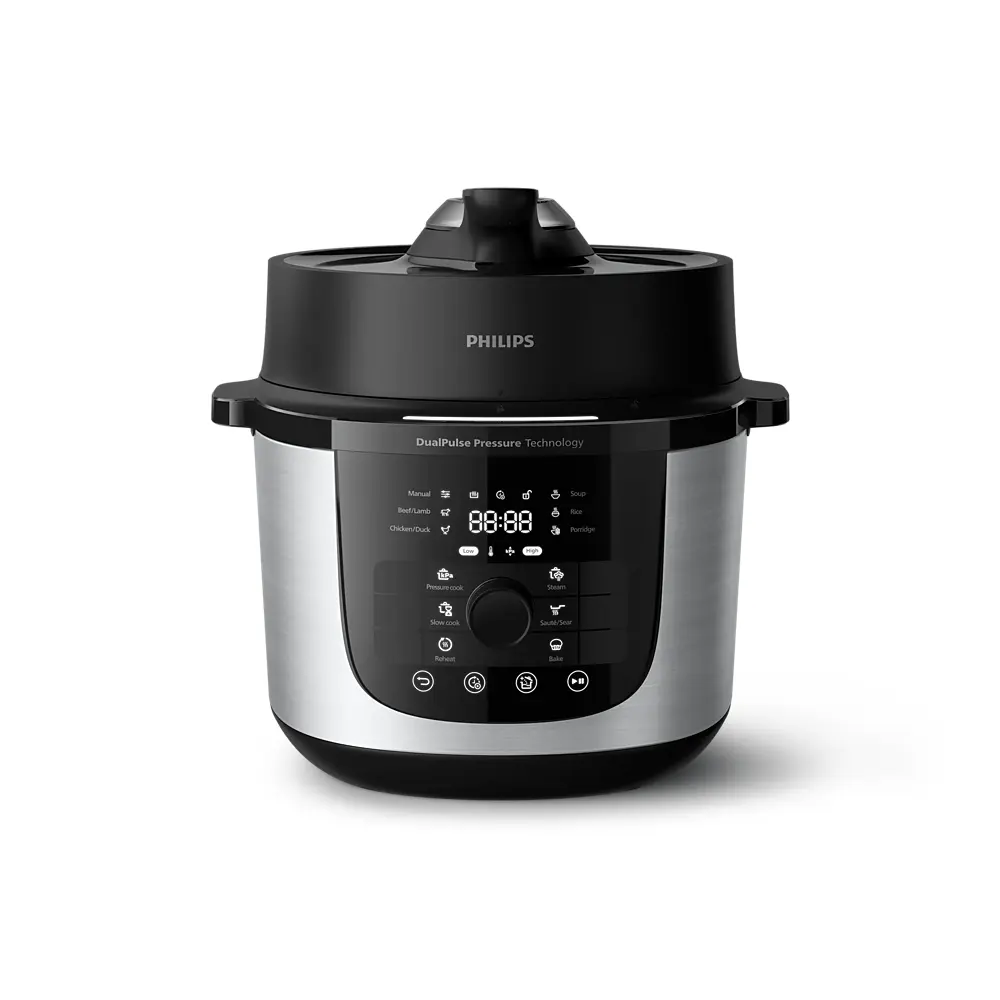
Exact HD2616/70 product image.
Philips identifies HD2616/70 as a new current-generation 3000 Series model. It has a 6L PFAS-free ceramic-coated inner pot, 13 presets and dedicated methods for pressure cooking, steaming, baking, slow cooking, sautéing and reheating, plus manual customisation. Its light-bar interface tracks heat-up, pressure, cooking and release stages.
True Auto Pressure Release removes the need to turn a manual steam valve at the end of a pressure program. Philips' DualPulse system alternates high and low pressure; claims about improved tenderness and juiciness are Philips internal-test claims, not Worth Buying measurements.
BIG W listed the exact HD2616/70 at $199 promotional during the current check, against a recent $249 ticket. That is roughly half the price of Ninja, though it gives up air frying and the wider appliance-replacement role. Philips Australia advertises a two-year warranty and established local support.
What owners say
Australian exact-model owner evidence is still developing because this is a new model. That is a genuine uncertainty rather than a sign that the market search was incomplete, and it keeps the score below 9.0 despite the strong price.
Pros
- Excellent current promotional price
- New 6L current-generation platform
- Automatic pressure release
- Pressure, slow, sauté, steam and bake modes
- Simple mainstream proposition
Cons
- Very limited exact-model owner history
- No air frying
- Limited independent exact-model testing
- $199 price is promotional
- Less feature-rich than Ninja
Breville the Fast Slow GO BPR680BSS
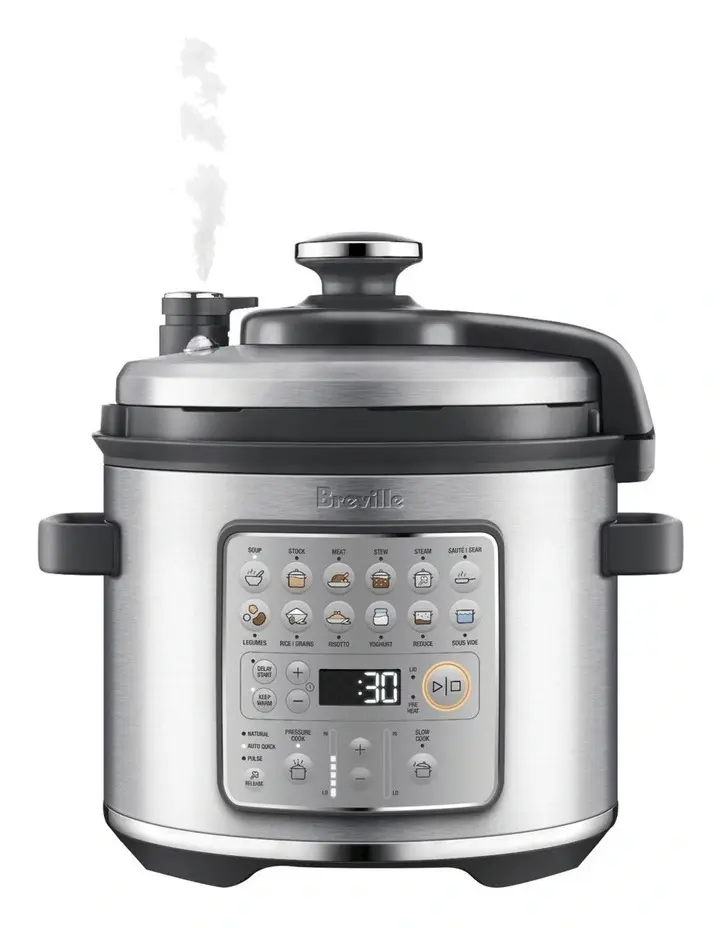
Exact BPR680BSS product image.
The BPR680BSS combines a 6L stainless-steel bowl with pressure cooking, slow cooking, sauté/sear, soup, stock, meat, stew, legumes, rice/grains, risotto, yoghurt, reduce, sous vide, steam and keep-warm functions. Pressure levels are adjustable, altitude adjustment is included, and Natural, Pulse and Auto Quick release options reduce the need to work directly over a manual valve.
It does not air fry, and that limitation is explicit. For someone who already owns a good air fryer, the simpler pressure-focused design may be preferable to Ninja's size and integrated-lid cleaning burden. The stainless bowl avoids dependence on a coated primary pressure-cooking vessel, though stainless can require more soaking after sticky foods.
Myer listed BPR680BSS at $295.20 promotional during the current check, reduced from $369. That is materially more than the Philips promotion but well below Ninja, without changing Philips' locked value award.
What owners say
The two sources are not combined. Retailer-hosted feedback is strongly positive, while the much smaller independent exact-model pool is more mixed. The complaints are disclosed without claiming they prove a widespread defect.
CHOICE includes BPR680BSS in its current multi-cooker comparison and confirms the exact model's 6L capacity, pressure levels, slow-cook settings, pressure cooking, sauté/searing, steaming and warming functions. No member-only performance scores are reproduced. Breville's Australian support and parts infrastructure strengthen the ownership case.
Pros
- Stainless-steel cooking pot
- Strong pressure-focused feature set
- Natural, Pulse and Auto Quick release
- Sous vide and yoghurt modes
- Established Australian support presence
Cons
- No air frying
- Costs more than Philips
- Small mixed independent owner pool
- Less guided than Tefal Cook4Me
- Cannot replace as many appliances as Ninja
What to look for in a multi-cooker
Pressure cooking versus slow cooking
Pressure cooking uses high temperature under pressure to shorten braises, legumes and stews. Slow cooking uses long, low-temperature cooking. A machine offering both is useful only if both modes suit the foods you make; a “14-in-1” label does not prove equal performance across every mode.
Integrated air frying
Air frying can turn one appliance into a more complete replacement, but it adds a fan, heating element, lid complexity, cleaning surfaces and weight. If you already own a good air fryer, Philips or Breville may be better value.
Pot material
Stainless steel has no non-stick coating and is robust, but food can stick and require more soaking. Coated pots release food and clean more easily but need gentler handling. There is no basis here for unsupported health claims about legally compliant coatings.
Capacity
Six litres is a useful mainstream household size. A 7.5–8L model better suits larger families, batch cooking and some larger roasts. Nominal volume is not the safe pressure-cooking fill limit—always follow the pot markings.
Pressure release
Natural release lets pressure fall by itself; quick release deliberately vents steam; controlled or pulse release vents in stages. Different foods suit different methods. Never force a pressure-cooker lid open.
Presets and cleaning
More presets are useful only when they simplify repeat cooking and allow sensible overrides. Check how the pot, sealing ring, valve, condensation collector and any air-fry element or guard must be cleaned.
Multi-cooker safety basics
Never fill a pressure cooker beyond the manufacturer's markings. Keep pressure-release pathways clean, inspect the sealing ring, never force the lid open and keep hands and face away from venting steam. Follow recipe guidance for foaming foods. Disconnect power before deep cleaning, let hot parts cool, never immerse the powered base and use only approved replacement seals and parts. Ninja's SmartLid interlocks must be used as designed; Philips' automatic release still produces dangerously hot steam; Breville's hands-free release reduces direct interaction but does not remove the steam hazard.
Which one should you buy?
Buy the Ninja OL650ANZ if you want the most complete appliance replacement and both pressure cooking and air frying matter.
Buy the Philips HD2616/70 if you want a straightforward pressure-and-slow multi-cooker at the strongest current price.
Buy the Breville BPR680BSS if you already own an air fryer and prioritise pressure cooking, stainless-steel cookware and manual flexibility.
Frequently asked questions
Is a multi-cooker the same as an Instant Pot?
No. Instant Pot is a brand; multi-cooker is the appliance category. Ninja, Philips, Breville, Tefal and Crock-Pot also sell multi-cookers with different combinations of pressure, slow, steam, sauté and air-fry functions.
Is a multi-cooker worth it if I already own an air fryer?
Often, yes. Pressure cooking, slow cooking and steaming add different capabilities. If your current air fryer is excellent, Philips or Breville may avoid paying for a duplicated crisping function.
What size multi-cooker should I buy?
Six litres suits many households and batch-cooking jobs. A 7.5–8L cooker is more practical for larger families and larger food loads, but it takes more bench and storage space.
Are stainless-steel pots better than non-stick pots?
Neither is universally better. Stainless steel is robust and avoids a non-stick coating but can hold stuck-on food. Coated pots release food and clean more easily but need careful utensils and cleaning to preserve the surface.
Can a multi-cooker replace a slow cooker?
Sometimes. Many models offer slow-cook settings, but performance and heating patterns vary. A dedicated slow cooker can still behave differently, so consider independent slow-cook results rather than relying on the mode name alone.