How we chose
We assessed current Australian exact models using availability, legitimate street pricing, cooling capacity, room-size suitability, regulated MEPS data and CHOICE comparative coverage, input power, published noise, owner evidence, window-kit usability, water management, mobility, Wi-Fi, warranty and overall value. CHOICE’s portable-air-conditioner methodology uses regulated MEPS performance data and comparative analysis rather than the same in-house thermal-lab process it uses for some other categories. Worth Buying Australia did not physically test these units.
Serious contenders reassessed
Olimpia Splendid PROCOOL16E has substantial 4.7kW output and a very large retailer pool, but its roughly 3.8/5 owner result includes repeated noise, reliability and running-cost complaints. The larger PROCOOL18E reaches 5.2kW, yet its $1,299 price, bulk and small mixed owner pool make a split system increasingly compelling.
De’Longhi PACEL112CSTWIFI adds Wi-Fi to a 2.9kW design but has less owner depth than the bedroom pick. The PACEX130CST WIFI is feature-rich, though its approximately $1,299 price is hard to justify beside the stronger-output Rinnai. Midea MPPD40C is a serious 4.0kW alternative, but Australian owner evidence and mainstream support visibility are thinner.
CHOICE’s September 2026 public avoid list gives Dimplex DCP33EB, Dimplex DCP26EB, EWT EWTP11, Excelair EPA58023W, Shinco SPO6-07C and Shinco SPS-12C Expert Ratings of 50%. None is recommended here.
Rinnai 4.1kW Portable Air Conditioner RPC41MCWF
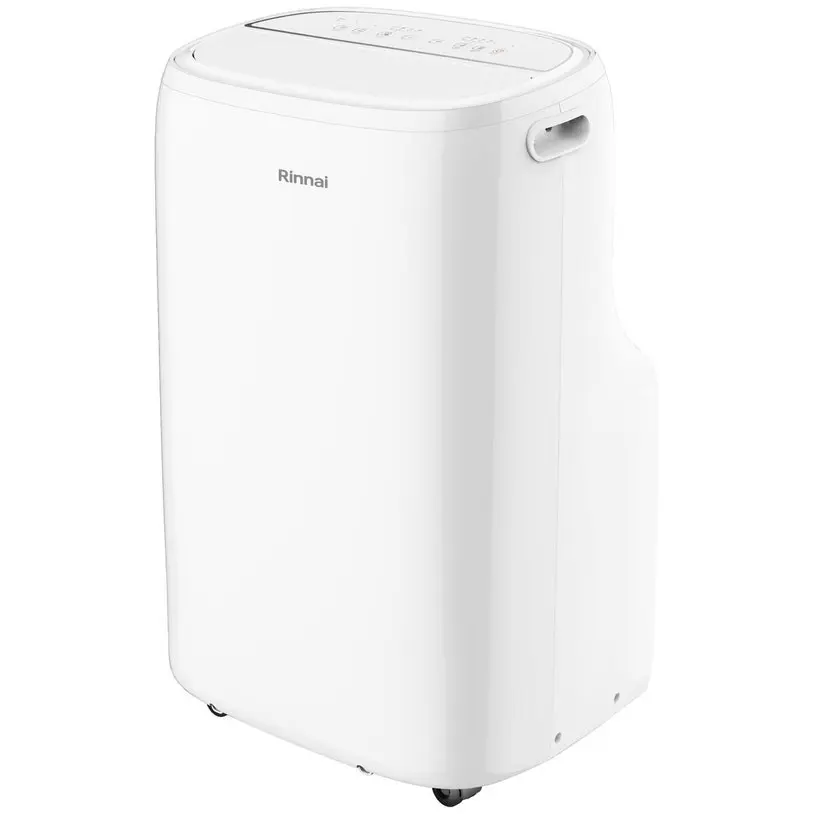
Exact-model product image.
Rinnai’s stated 13–30m² application range gives this model a clearer medium-room role than the smaller De’Longhi. That range is manufacturer guidance, not a guarantee: ceiling height, insulation, direct sun, windows, air leakage, people and Townsville-style heat and humidity can change the real load dramatically.
The 1640W rated input, 36.5kg weight and 64dB(A) sound-power figure show the compromises. This is a substantial single-hose appliance that needs an effective window seal and is far less efficient than a split system. Its wheels make it repositionable on one level, not easy to carry between floors.
Wi-Fi, remote control, three fan speeds, timer, sleep and dry modes are useful, while the included ventilation kit removes a separate setup purchase. The unit generally evaporates condensate through the exhaust during normal cooling, but high humidity, dry mode and other conditions can still require drainage. It should never be described as needing no water management.
What owners say
Professional evidence
CHOICE has current exact-model coverage for RPC41MCWF. That supports model identity and professional comparative presence; members-only ratings and sub-scores are not reproduced.
Pros
- Strong 4.1kW cooling capacity
- Useful Wi-Fi and remote control
- Three speeds plus sleep and dry modes
- Window/ventilation kit included
- Exact-model CHOICE coverage
Cons
- Very heavy at 36.5kg
- 64dB(A) sound-power figure is loud
- Single-hose efficiency penalty
- Still needs drainage in some conditions
- Cannot cool multiple separated rooms
De’Longhi Pinguino PACEM93KSILENT
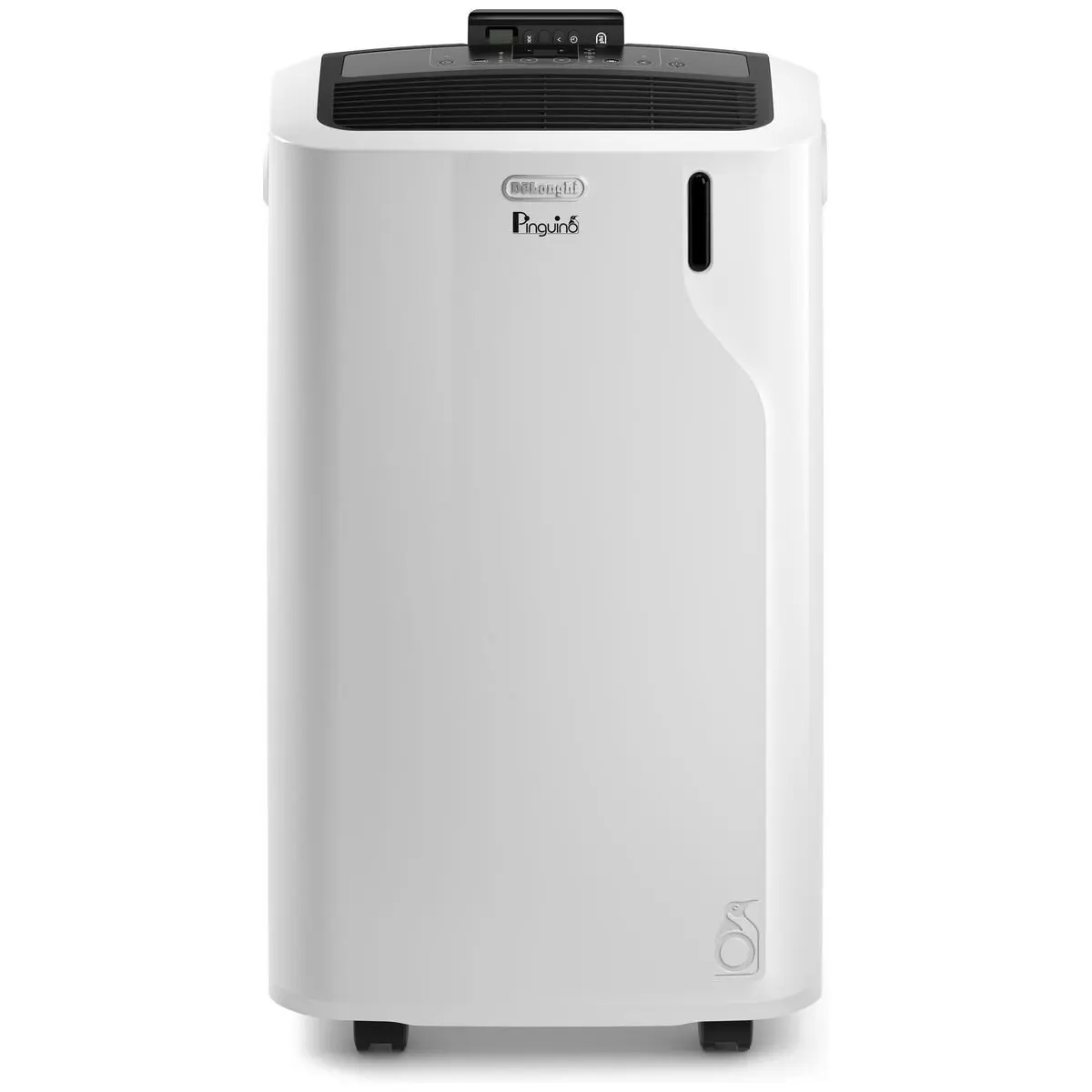
Exact-model product image.
The 2.6kW Pinguino is smaller and about 10kg lighter than the Rinnai. De’Longhi’s stated 47–50dB figure is a manufacturer sound-pressure range, not directly comparable with Rinnai’s sound-power figure. “Silent Technology” means a quieter operating mode—not silent cooling. The compressor remains inside the room and owners still describe it as audible at night.
The manufacturer claims suitability up to 90m³. That is room volume, not floor area, and should not be converted to square metres without assuming ceiling height. The 1000W input and EER of 2.6 support its smaller-room positioning rather than large-living-room duty.
Three speeds, dehumidification, thermostat control and a 24-hour timer cover normal use. There is no Wi-Fi on this exact model; smart Pinguino variants use different SKUs. The exhaust hose must still be routed outdoors through a compatible opening, and hose length can limit placement.
What owners say
Professional evidence
CHOICE has tested the exact PAC EM93K SILENT. Public model data confirms its current tested status and 2.6kW cooling-only architecture; member-only scores are not reproduced.
Pros
- Better fit for bedrooms and studies
- 26.1kg is easier to move
- Useful lower-noise operating mode
- Three speeds and dehumidification
- Strong exact-model retailer evidence
Cons
- Still clearly audible at night
- $899 is expensive for 2.6kW
- No Wi-Fi
- Not suitable for large living rooms
- Single-hose inefficiency remains
Solt 3.5kW Portable Air Conditioner GGSAP3500W
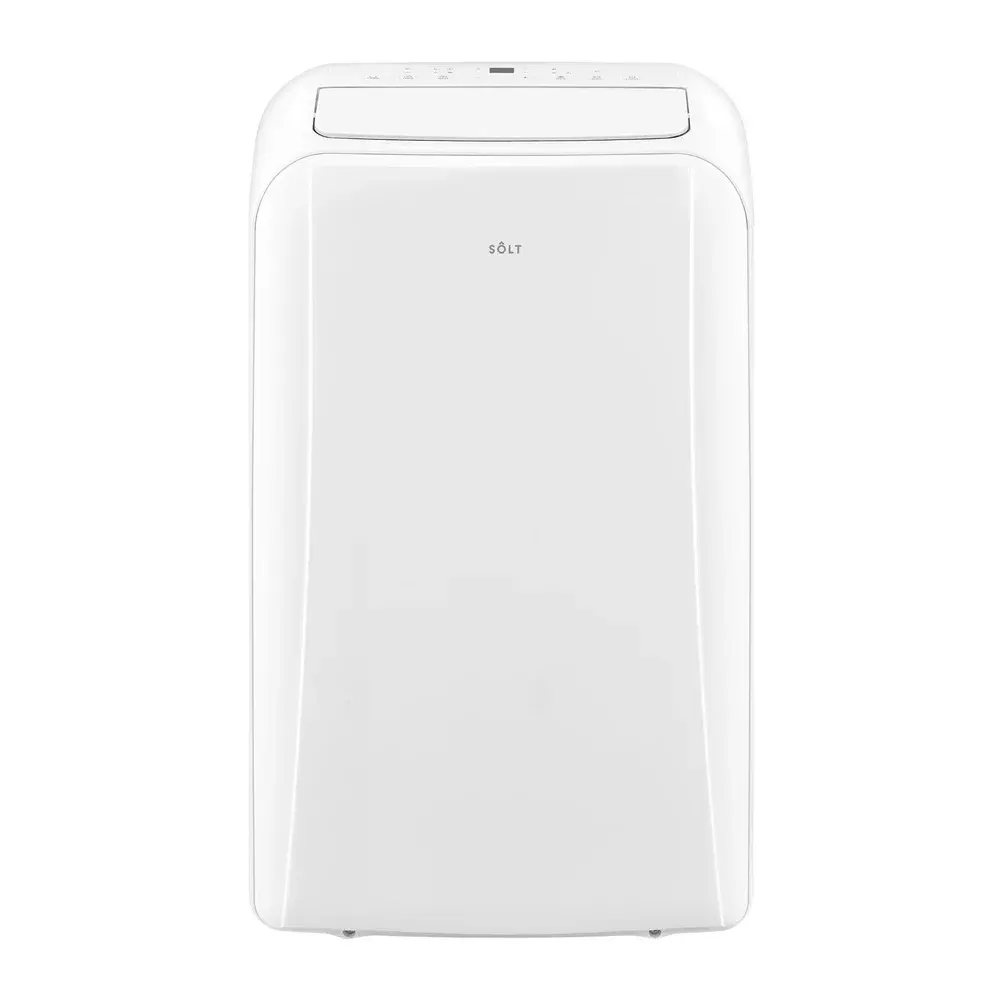
Exact-model product image.
The Solt sits between compact 2.6kW bedroom units and the larger $1,000-plus models. It supplies three speeds, a timer, remote, dry mode, washable filter and window kit. The 32.5kg weight is still substantial, but the 3.5kW capacity makes more sense for buyers who need more output than the De’Longhi and cannot justify the Rinnai’s normal pricing.
Room performance remains highly dependent on sealing, insulation and heat load. Retailer AI-generated room-size claims are not used here as authoritative specifications. The unit has no Wi-Fi or heating, and its appeal is straightforward capacity for the money rather than refinement.
Noise is the repeated caution. Owners mention compressor vibration and disturbance in bedrooms, while poorly insulated or open rooms take longer to cool. As with every finalist, the exhaust must be vented outdoors and the hose kept short, straight and uncrushed where practical.
What owners say
Professional evidence
CHOICE has current exact-model coverage for GGSAP3500W. Public data confirms its 3.5kW cooling-only architecture and window-kit inclusion; member-only scores are not reproduced.
Pros
- Strong 3.5kW capacity for $699
- Three speeds, timer and remote
- Dry mode and washable filter
- Window kit included
- Exact-model CHOICE coverage
Cons
- 32.5kg is heavy
- Noise may disturb bedroom users
- No Wi-Fi or heating
- Basic feature set
- Owner pool is still developing
Portable air conditioner buying guide
Portable does not mean installation-free
A compressor portable air conditioner needs an exhaust hose, a window or door vent, a reasonably good seal and a nearby grounded wall outlet. If the hot exhaust stays in the room, the appliance cannot cool it properly.
Single-hose units lose efficiency
Most Australian portable units draw room air across the hot side and exhaust it outside. That creates slight negative pressure and pulls warm replacement air back into the room or building. It is a major reason they are less efficient than split systems.
Room-size claims are only a starting point
Floor area, ceiling height, insulation, window area, direct sun, orientation, people, appliances and air leakage all change the load. A west-facing room in Townsville or Brisbane can be far harder to cool than a shaded room of the same dimensions.
Bigger is not automatically better
Higher-capacity units cost more, weigh more, use more power and are often louder. Match output to an enclosed room rather than buying the biggest kW figure available.
Noise is fundamental
The compressor sits inside the room, so portable AC is generally much louder than a split-system indoor unit, ceiling fan or pedestal fan. Sleep and silent modes mean quieter operation—not silence. Published sound power and sound pressure also cannot be treated as interchangeable.
Hose positioning matters
Keep the exhaust hose as short and straight as practical, without crushing it, and seal the opening properly. Excessive bends can reduce cooling output and trap more radiant heat inside the room.
Drainage depends on conditions
Some condensate may evaporate through the exhaust, but high humidity, dry mode or particular operating conditions can require continuous drainage or manual emptying. Follow the exact model’s manual rather than assuming every portable unit is drain-free.
Running costs add up
CHOICE’s current comparison estimates an average portable-unit summer running cost of roughly $172 under its method, versus about $61 for a small split system under comparable assumptions. That is comparative guidance, not a guaranteed household bill.
Safe installation and servicing
Use a grounded wall outlet, a stable level floor, proper clearances and the manufacturer-approved vent setup. Do not use a generic power board or extension lead for these high-load appliances. All three finalists use cooling-only portable architecture, and R290 refrigerant is flammable; refrigerant-circuit repairs require appropriately qualified service personnel.
Which one should you buy?
Choose the Rinnai RPC41MCWF when a split system is genuinely unavailable and you need the strongest all-round option for a properly enclosed medium room.
Choose the De’Longhi PACEM93KSILENT for a bedroom or study where the smaller body and lower-noise mode matter more than maximum capacity.
Choose the Solt GGSAP3500W when $699 is the realistic budget and 3.5kW offers the right balance for your room.
Frequently asked questions
Are portable air conditioners worth it?
They can be worthwhile for renters, restricted buildings and occasional cooling where permanent installation is impossible. If you own the property and use cooling frequently, a suitable split system is usually more efficient, quieter and more effective.
What size portable air conditioner do I need?
Start with the manufacturer’s capacity and room guidance, then account for ceiling height, insulation, windows, direct sun, climate, people and heat-producing appliances. Treat published room sizes as guidance, not guarantees.
Why are portable air conditioners so noisy?
The compressor and hot-side fan operate inside the room. Quiet or sleep modes reduce output and fan noise, but they do not make a portable compressor unit silent.
Do portable air conditioners need to be vented outside?
Yes. The exhaust hose must send hot air outside through a reasonably sealed opening. Running a real portable AC without the vent installed correctly can add heat back into the room.
Do portable air conditioners need to be drained?
Sometimes. The answer depends on the model, humidity and operating mode. Some moisture evaporates through the exhaust during cooling, while high humidity or dehumidification may require a drain hose or manual emptying.