How we chose
We compared current Australian models on lawn capacity, terrain and slope ability, boundary setup, mapping, navigation redundancy, obstacle avoidance, edge performance, app control, weather handling, security, servicing, warranty, local availability and total ownership cost. A mower's most impressive headline specification does not automatically make it the right choice for a small, simple lawn.
Worth Buying scores are editorial judgements and stay separate from customer reviews. We did not perform the professional tests cited here. Manufacturer area, slope, navigation and recognition figures remain clearly identified as claims, while exact-model owner evidence is kept separate from family or brand history.
Why these three won
LUBA 3 AWD 3000 offers the strongest balance of serious terrain ability, large-lawn capacity and advanced wire-free navigation without reaching Husqvarna's price. GOAT O600 RTK creates a clear value route into current-generation wire-free mowing. The 435X AWD NERA justifies its specialist position with steep-slope architecture, large-area capability and a mature Australian dealer network.
Other robot mowers we considered
We also considered Mammotion's LUBA mini 2 AWD, LUBA 3 AWD 1500 and 5000, YUKA range, Husqvarna 305E, 310E, 430X and 450X NERA, ECOVACS GOAT A2000 LiDAR PRO, current Segway Navimow models and credible wire-based alternatives. The $2,999 GOAT A2000 is a stronger larger-lawn ECOVACS, but the O600 has a clearer value role. LUBA 5000 is the logical step-up when the actual mowing area exceeds what the 3000 comfortably handles.
Mammotion LUBA 3 AWD 3000
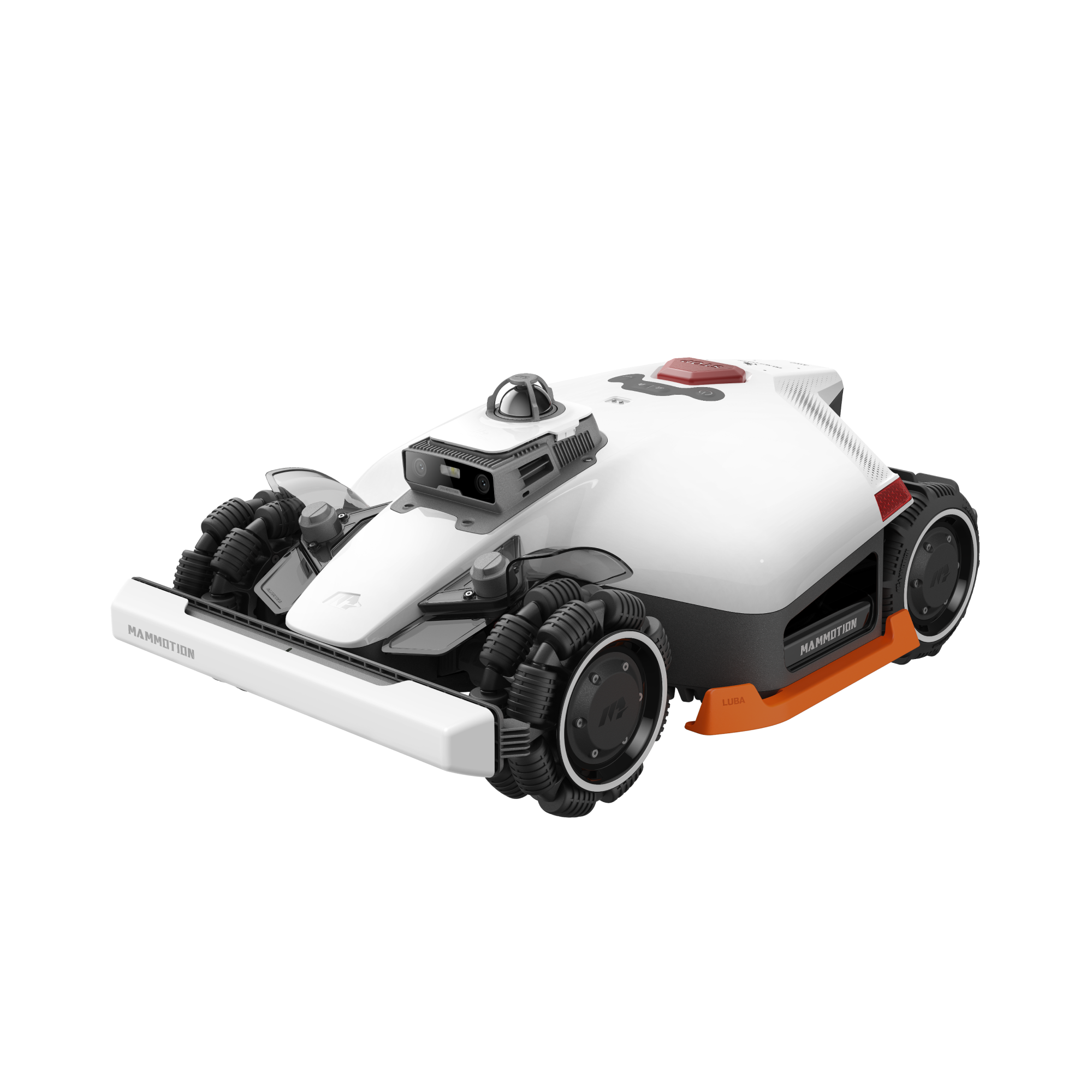
The exact 3000 variant is rated by Mammotion for lawns up to 3,000m² and slopes up to 80%—approximately 38.6°, not 80 degrees. Its Tri-Fusion Navigation combines 360° LiDAR, NetRTK and dual-camera AI vision, so it is less dependent on a single positioning method than basic satellite-only designs. Mammotion says the system enables centimetre-level positioning and sophisticated obstacle recognition; those are manufacturer claims, not measurements made by Worth Buying.
Current Australian specialist documentation lists up to about 30 zones, a 12Ah battery, a 400mm-class dual-disc cutting system, approximately 19kg family weight, IPX6 protection, rain detection, app control, 4G functionality and a charging station. The three-year warranty is offered through Mammotion's Australian direct/distribution channel. Confirm the exact bundle and service path before buying, especially if you live far from a specialist repair point.
PCWorld independently tested the LUBA 3 AWD 3000 in 2026. Its review supports strong performance on rough and uneven ground, excellent traction, good obstacle handling, quiet operation, consistent cutting and substantial battery capacity remaining after mowing. It also identified high weight, occasional connectivity problems, app glitches and a high purchase price. These are PCWorld's exact-model findings, not Worth Buying testing.
LUBA is technically capable, but setup still matters. Complex boundaries can require map adjustment, wet or very soft turf can show turning marks, and no obstacle system removes the need to clear hoses, toys and small debris. It leaves clippings as mulch and will not remove every need for manual edging.
Key details
| Coverage | Up to 3,000m² |
|---|---|
| Drive / slope | AWD · up to 80% (about 38.6°), claimed |
| Navigation | 360° LiDAR + NetRTK + dual-camera AI vision |
| Zones / battery | Up to about 30 zones · 12Ah current 3000 specification |
| Weather / weight | IPX6 + rain detection · about 19kg family figure |
| Price / warranty | About $4,899 · 3 years through Australian channel |
Owner and professional evidence
Pros
- Genuine AWD and excellent difficult-terrain potential
- LiDAR, RTK and vision-based wire-free navigation
- Large 3,000m² coverage and multi-zone support
- Strong exact-model professional testing
- Competitive beside ultra-premium Husqvarna
Cons
- Expensive and heavy
- App and connectivity are not flawless
- Complex maps can still require adjustment
- Excessive for a small flat yard
- Occasional manual edging remains
ECOVACS GOAT O600 RTK GOAT-O600-RTK
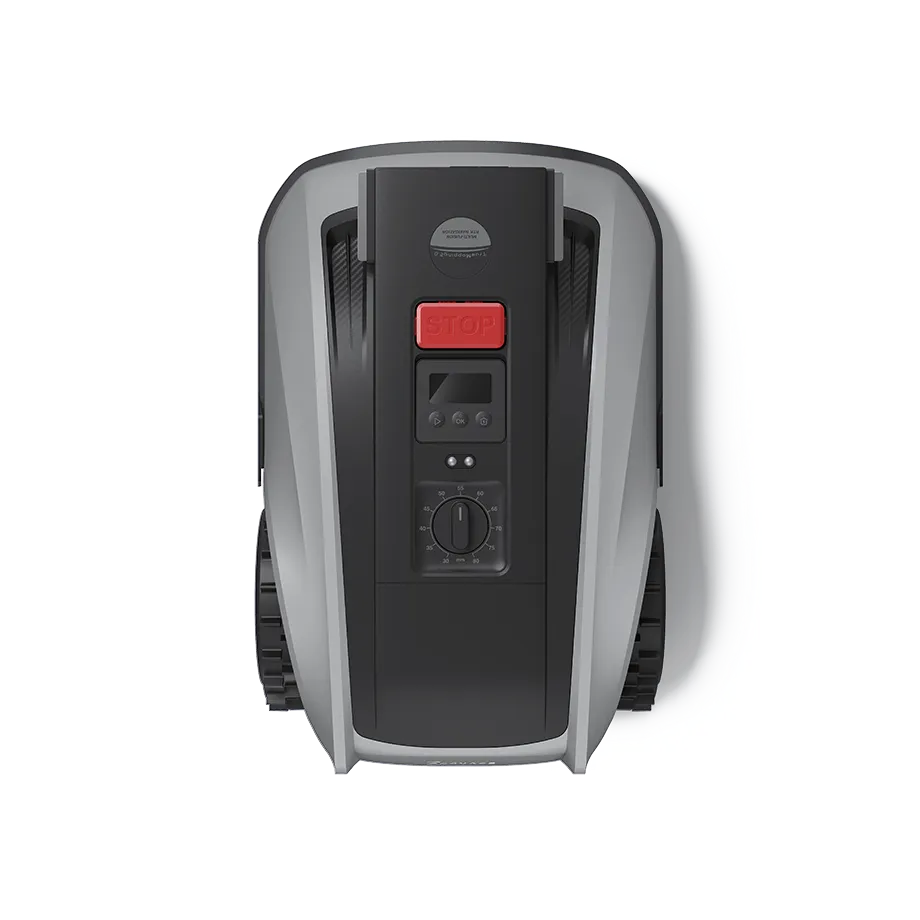
The exact Australian GOAT-O600-RTK uses TrueMapping 2.0 Multi-Fusion RTK Navigation with automatic or remote mapping, AIVI obstacle avoidance, TruEdge mowing and editable multi-area maps. ECOVACS rates it for up to 600m² and slopes to 45%, or about 24°. It offers a 3–8cm cutting-height range in 0.5cm increments, a claimed 3cm barrier-crossing ability, IPX6 protection and ECOVACS HOME app control.
ECOVACS says its AI can recognise more than 200 garden obstacle types and promotes fast setup and increased cutting power. These are manufacturer or laboratory claims, not independent Worth Buying results. Obstacle avoidance remains an aid rather than a guarantee: clear small toys, hoses, pet waste and debris before mowing.
The 600m² ceiling needs context. A mower at its quoted maximum has less headroom for complicated shapes, fast growth, frequent recharging or missed mowing days. Someone with a measured 590m² lawn should not assume this model offers abundant spare capacity. Larger or substantially more difficult sites are better matched to LUBA 3 or a higher-capacity GOAT.
Exact-model ownership history is naturally thin because this is a new Australian launch. The recommendation rests on verified local availability, its $1,299 price, the appropriate small-lawn role, its wire-free architecture and ECOVACS' established Australian consumer-support presence—not imported GOAT G1, overseas O-series or robot-vacuum ratings.
Key details
| Exact model | GOAT O600 RTK · GOAT-O600-RTK |
|---|---|
| Coverage | Up to 600m² |
| Navigation | TrueMapping 2.0 Multi-Fusion RTK |
| Slope / barrier | 45% (about 24°) · 3cm crossing claimed |
| Cutting height | 3–8cm in 0.5cm increments |
| Price | $1,299 at ECOVACS Australia and The Good Guys |
Owner and professional evidence
Pros
- Accessible $1,299 price
- Wire-free automatic RTK mapping
- Obstacle avoidance and edge-focused mowing
- Wide 3–8cm cutting-height range
- Strong fit for a normal suburban lawn
Cons
- Only 600m² rated coverage
- Very young exact-model owner history
- Not intended for extreme slopes
- RTK and site conditions still matter
- Long-term mower reliability is less established than Husqvarna
Husqvarna Automower 435X AWD NERA 970 74 52-07
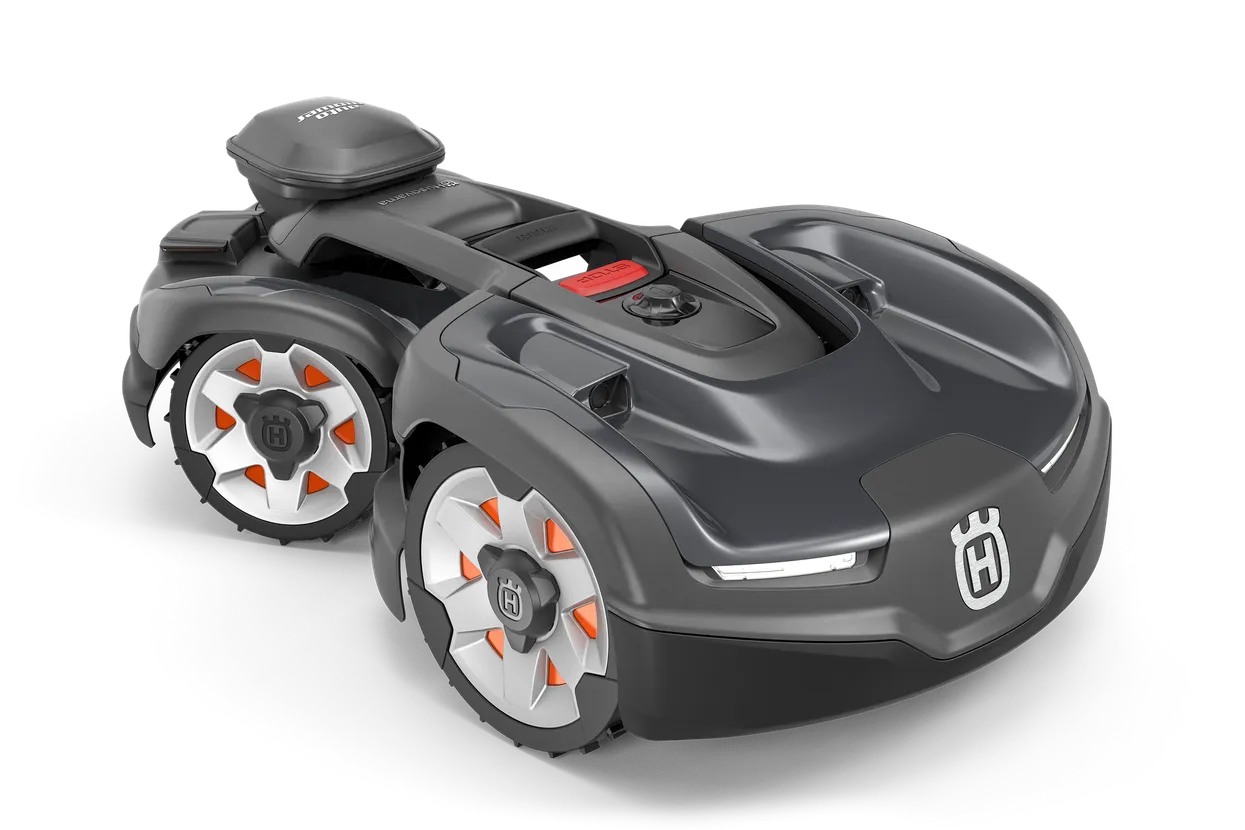
The exact Australian Automower 435X AWD NERA, article 970 74 52-07, is rated for up to 5,000m² and slopes to 70%—approximately 35°, not 70 degrees. It combines all-wheel drive with an articulated body for severe terrain and narrow-passage manoeuvrability, plus Automower Connect, Zone Control and a choice of virtual or physical boundary installation.
The $8,899 price includes the mower, charging station, six extra blades, power supply and 10m low-voltage cable. An EPOS reference station is not included. For wire-free operation, Husqvarna says the mower may use Husqvarna Cloud where coverage is available and stable internet service reaches the lawn. Where cloud positioning is unavailable or the site requires it, a separately purchased EPOS reference station may be needed. Buyers should check cloud coverage, property geometry and installation requirements with a dealer before paying.
Husqvarna remains here despite costing far more than LUBA because its role is different. The mature Automower ecosystem, parts and dealer infrastructure, articulated steep-slope platform, hybrid virtual/physical boundary choice and large-area rating can justify the premium on an unusually difficult property. For a simple 400m² suburban lawn it would be absurd overkill.
Do not confuse the longstanding reputation of Automower with a huge exact-model owner pool for this current NERA version. Broader brand and service history supports confidence in the ownership model, but it is not converted into a fake rating for article 970 74 52-07.
Key details
| Exact article | 970 74 52-07 |
|---|---|
| Coverage | Up to 5,000m² |
| Drive / slope | AWD articulated chassis · up to 70% (about 35°), claimed |
| Boundaries | Virtual EPOS or physical wire |
| Included | Charging station, 6 extra blades, power supply, 10m low-voltage cable |
| Price | $8,899 incl. GST; EPOS reference station extra if required |
Owner and service evidence
Pros
- Huge 5,000m² capacity
- AWD and articulated steep-slope chassis
- Up to 70% slope rating
- Virtual or physical boundary options
- Mature dealer, parts and service network
Cons
- Extraordinary $8,899 price
- EPOS reference station may cost extra
- Installation planning still matters
- Expensive parts and accessories
- Overkill for most homes
What matters when buying a robot lawn mower
Boundary wire versus wire-free
Traditional robot mowers follow buried perimeter cable. Modern models can use RTK/GNSS, LiDAR, cameras and virtual maps. Wire-free boundaries are easier to change, but setup and positioning conditions still matter; they are not automatically trouble-free.
RTK and satellite limitations
Buildings, dense tree cover, narrow side passages and deep courtyards can obstruct satellite positioning. LUBA supplements NetRTK with LiDAR and vision; GOAT fuses RTK and camera/navigation data; Husqvarna uses EPOS with cloud or reference-station options. None should be described as never losing signal.
Lawn area needs headroom
A manufacturer's maximum area is not always the ideal target for a complicated lawn. Shape, growth rate, terrain, mowing frequency and recharge cycles affect performance. Measure the actual grass area rather than the total property size.
Slope percentages are not degrees
A 45% gradient is about 24°, 70% is about 35° and 80% is about 38.6°. These are manufacturer maximums under particular conditions; wet turf, boundary placement and cross-slope travel can reduce the safe practical limit.
Edge cutting still needs help
“Edge-to-edge” and “zero-edge” marketing do not guarantee a perfect finish around fences, retaining walls, poles, corners and obstacles. Expect some whipper-snipping or manual edging even with an offset deck or edge mode.
Mulching, not collection
Robot mowers do not collect clippings. They cut frequently and leave tiny pieces behind as mulch. Long or wet grass, fallen leaves and missed mowing periods can still require manual cleanup or a conventional mower.
Weather and traction
Water-resistance ratings do not mean “mow in every storm”. Avoid operation during lightning, flooding or unsafe ground conditions, and follow the manufacturer's rain and storage guidance. Very wet turf can compromise traction or show turning marks.
Theft and account security
App location, PIN/account controls, alarms and GPS/4G features can deter theft and help recovery where supported. They do not make theft impossible. Use strong account credentials and follow installation advice for the charging station.
Blades and other consumables
Small pivoting blades wear and can be damaged by debris. Inspect and replace them on the manufacturer's schedule, isolate the mower first, use suitable gloves and keep approved spares. Do not sharpen or reuse blades when replacement is specified.
Servicing and lifetime cost
Budget for blades, wheels or tyres, batteries, accessories and possible dealer labour. Remote buyers should check parts turnaround and repair logistics before choosing a newer direct-sales brand solely on features.
Robot mower safety
Robot mowers are autonomous machines with exposed cutting systems underneath. Keep children away while a mower operates and supervise pets appropriately. Remove toys, hoses, branches and small debris; inspect blades; follow servicing instructions; and fully disable or isolate the mower before underside maintenance. Never bypass lift, tilt or other safety sensors.
Obstacle recognition reduces risk but does not make rotating blades harmless. Verify that pools, steep drops, retaining edges, wildlife areas and no-go zones are safely mapped or physically managed. Follow the manufacturer's weather guidance, and do not operate during lightning, flooding or where traction is unsafe.
Which robot lawn mower should you buy?
Choose the Mammotion LUBA 3 AWD 3000 if you want the strongest all-round combination for a large, sloped or complex property and prefer modern wire-free navigation without paying Husqvarna money.
Choose the ECOVACS GOAT O600 RTK if you have a normal smaller suburban lawn and want the lowest practical entry price into current-generation wire-free robot mowing.
Choose the Husqvarna Automower 435X AWD NERA if you have a genuinely steep, large or difficult property and prioritise mature dealer and service infrastructure over purchase price.
Frequently asked questions
Do robot lawn mowers need a boundary wire in 2026?
Not always. All three recommendations can operate with virtual boundaries, while the Husqvarna also supports a physical wire. Wire-free systems still require correct mapping and suitable positioning conditions; they do not remove every setup task.
How well do robot lawn mowers work under trees?
Dense canopy can weaken satellite visibility. LiDAR, cameras, onboard navigation and a properly placed reference station can help, depending on the model, but performance remains site-specific. Check the whole route, including narrow passages between open lawn sections.
Can robot lawn mowers handle steep slopes?
Some can. GOAT O600 is rated to 45% (about 24°), Husqvarna to 70% (about 35°) and LUBA to 80% (about 38.6°). These are manufacturer maximums, not guarantees for wet grass, edges or every direction of travel.
Do robot lawn mowers collect grass clippings?
No. They cut frequently and leave very small clippings as mulch. If grass becomes too long or the lawn carries heavy leaves and debris, a conventional mower or cleanup may still be required.
Are robot lawn mowers safe around pets and children?
Safety sensors and obstacle detection reduce risk, but do not make the cutting mechanism harmless. Keep children away during operation, supervise pets, clear small objects and never rely on AI recognition as the only safety measure.
Do robot lawn mowers completely eliminate whipper-snipping?
Usually not. Deck placement and edge modes reduce the strip left behind, but fences, walls, posts, retaining edges and tight corners commonly need occasional manual trimming.