How we chose
We assessed current Australian exact models, new-stock pricing, bowl capacity, dough capability, whipping, cake and batter mixing, small-batch usability, construction, speed control, attachment ecosystems, owner evidence, professional testing, warranty, service evidence, weight, storage and long-term value. Manufacturer claims, owner reports and professional tests remain separately attributed. Worth Buying Australia has not physically laboratory-tested these mixers.
KitchenAid Artisan Plus Tilt-Head Stand Mixer KSM50
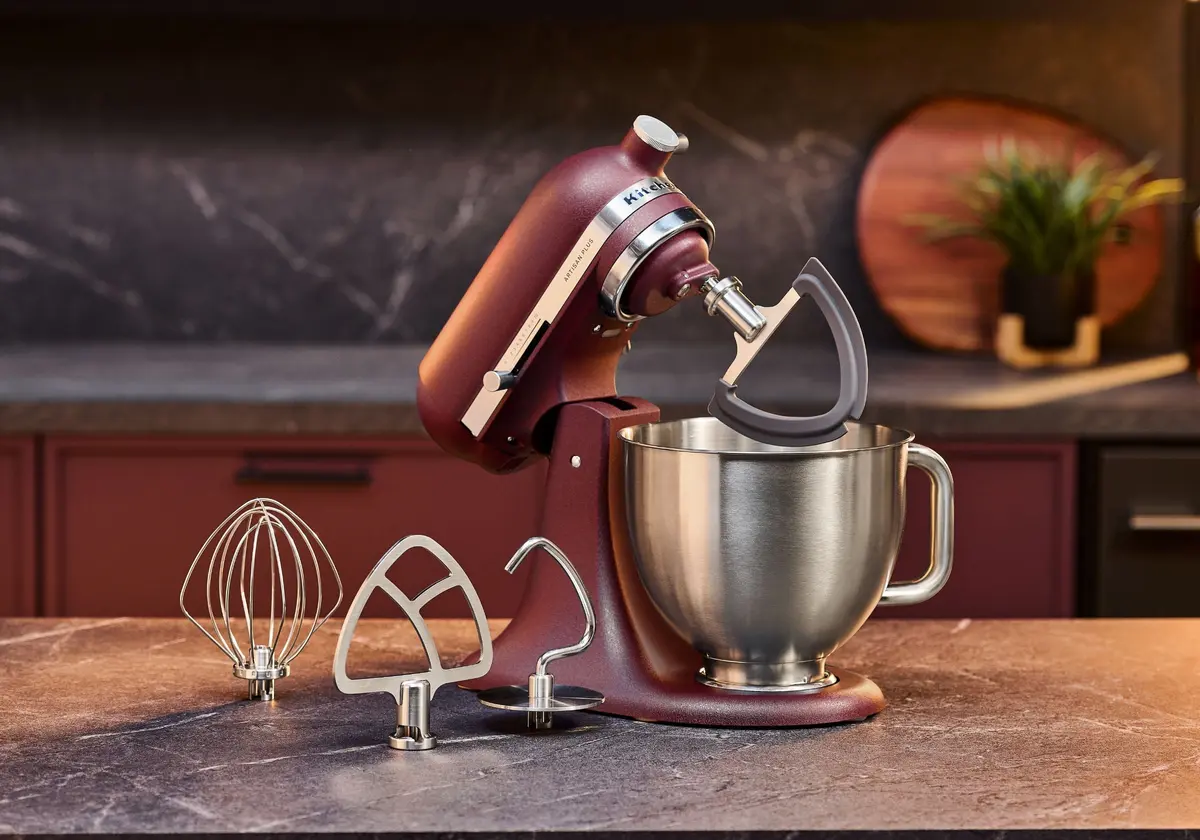
KitchenAid Artisan Plus KSM50 shown.
The full-metal KSM50 uses a 4.7L stainless-steel bowl, a 325W motor and planetary mixing action. Eleven speed selections include a gentle half-speed fold setting, while precision speed control is intended to keep the selected speed stable as the mixture changes. An integrated bowl light is genuinely useful when judging whether flour pockets remain or a batter is fully combined. At roughly 35.3cm high, 22.2cm wide and 35.6cm deep, it still needs a permanent, measured bench position.
The core accessories are unusually complete: stainless flat beater, dough hook and wire whisk, a stainless double flex-edge beater and a pouring shield. The double flex-edge beater reduces—but does not necessarily eliminate—the need to stop and scrape. The front hub keeps KitchenAid's large current attachment ecosystem available for buyers who will actually use pasta, grinding or other powered tools.
At about 9.89kg, this is stable but not portable in any practical sense. The 4.7L bowl is also a physical volume, not permission to fill it with 4.7L of heavy dough. Tilt-head convenience suits cakes, cookies, whipping, pastry and ordinary bread batches; buyers regularly making multiple loaves or stiff dough should consider the specialist Ankarsrum instead.
What the evidence says
The evidence case is therefore strong on current professional testing and platform maturity, but still developing for independent owners of this exact new model.
Pros
- Excellent exact-model professional-test performance
- Versatile 11-speed planetary design
- Stainless core accessories and double flex-edge beater
- Large KitchenAid attachment ecosystem
- Five-year parts-and-labour household warranty
Cons
- Premium $1,199 RRP
- Independent exact-model owner evidence is immature
- Not ideal for huge heavy-dough batches
- Almost 10kg and awkward to move
- Optional attachments add substantial cost
Kenwood Go Stand Mixer KZM35
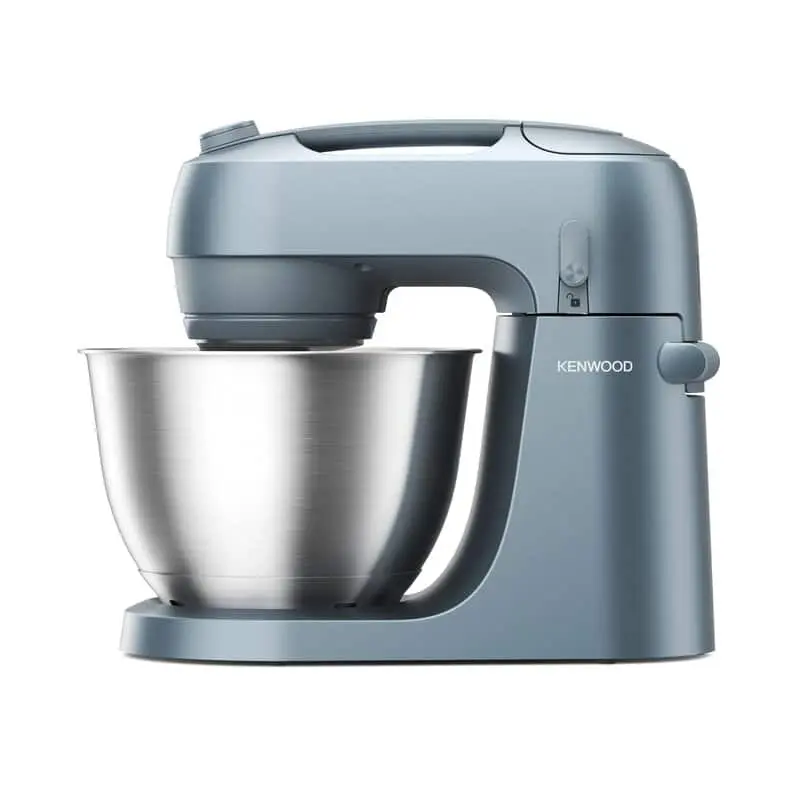
Kenwood Go KZM35 shown. Colour suffixes are variants of the same core mixer.
The Australian KZM35 family includes colour variants such as KZM35.000GY, KZM35.000GR and KZM35.000RD. They share the same core Go architecture; the suffix should be checked only for finish and exact retail stock. The all-metal body, 6.3kg weight and carry handle make this substantially easier to store than the premium machines without reducing it to a lightweight plastic appliance.
Its 4L stainless bowl, six speeds and pulse setting cover ordinary cakes, whisking, pastry and family-sized dough recipes. The box includes a K-beater, whisk, dough tool, splashguard and bowl. Kenwood publishes task-specific examples such as up to 1.8kg of cake mix, eight egg whites and about 0.5kg of pastry flour; those limits are not interchangeable with the headline 4L volume.
The 800W motor figure should not be used to claim it is stronger than the 325W KitchenAid. The machines use different gearing and drive designs, and motor input alone does not measure mixing results. The Kenwood's real advantage is simpler: it offers sturdy construction and appropriate everyday capability at roughly one quarter of the KitchenAid's research price.
What owners and testers say
Pros
- Excellent $299 current value
- Compact 30cm height
- All-metal body and 6.3kg weight
- 4L bowl suits ordinary family recipes
- Includes beater, whisk and dough tool
Cons
- Only one independent exact-family owner review
- Smaller bowl than both premium picks
- Fewer speeds and smaller attachment range
- Not intended for massive dough batches
- Relatively new model with limited ownership history
Ankarsrum Assistent Original AKM6230
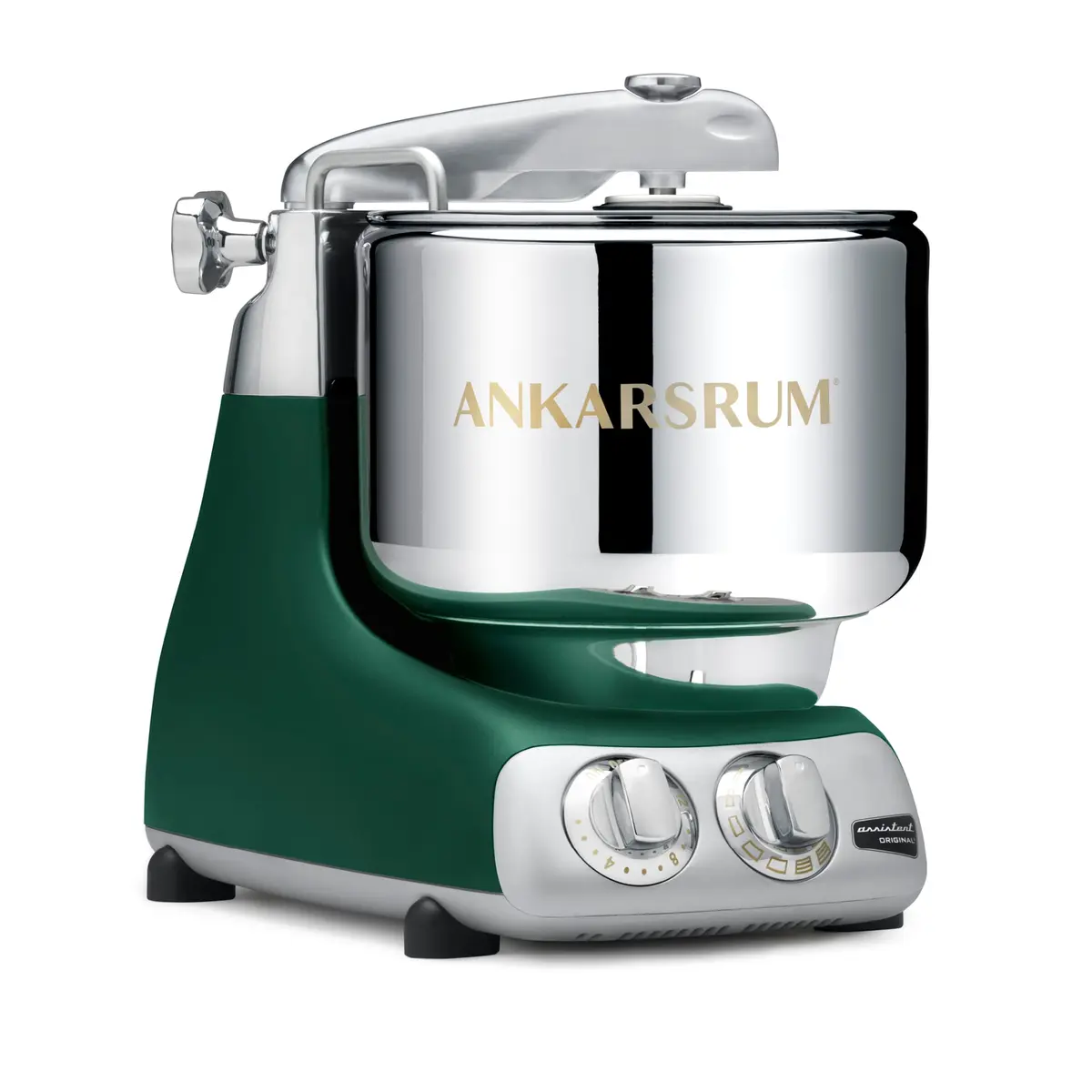
Ankarsrum Assistent Original AKM6230 shown; colour may vary.
The main 7L stainless bowl rotates while the dough roller and scraper—or the included dough hook—work the mixture. That geometry gives the baker direct control over roller position and is particularly well suited to sourdough, pizza, enriched dough and multi-loaf batches. It is unfamiliar at first: users trained on a planetary mixer need to learn where to set the roller and when to switch tools.
Ankarsrum's manufacturer-rated maximum is up to about 5kg of dough, with up to 1.5L of dough liquid. Those are task-specific claims, not permission to treat every 7L mixture the same. A separate 3.5L Tritan bowl uses balloon whisks or cookie beaters for cream, meringue, cake and lighter mixtures, so the system remains versatile even though bread is its clearest reason to buy.
The included set covers the dough roller, dough knife or scraper, dough hook, spatula, proving lid, 3.5L whisking bowl, balloon whisks and cookie or single-wire beaters. Optional accessories extend into food preparation. Made in Sweden and backed by a seven-year warranty under current Australian wording, the machine makes a strong long-ownership case—but only for a baker who will use its distinctive strengths.
What owners and testers say
Pros
- Excellent architecture for bread and heavy dough
- 7L main bowl plus 3.5L whisking bowl
- Up to about 5kg manufacturer-rated dough capacity
- Made in Sweden with seven-year warranty
- Broad included tool and optional accessory range
Cons
- Very expensive at $1,395
- Unfamiliar controls and roller positioning
- Large footprint and approximately 13kg weight
- Separate bowl setup is less intuitive for cakes
- Australian exact-model owner sample remains small
What matters when buying a stand mixer
Planetary vs rotating-bowl design
KitchenAid and Kenwood move a tool around a fixed bowl, a familiar approach that suits cakes, whipping, frosting and general baking. Ankarsrum rotates the bowl while a roller, scraper or hook works dough. Neither is automatically superior for every recipe.
Bowl volume is not working capacity
Four, 4.7 and 7 litres describe physical bowl volume. Safe batter, dough and liquid quantities are lower and vary by recipe and tool. Use the manufacturer's task limits instead of filling to the rim.
Watts are not a performance score
The Kenwood's 800W and KitchenAid's 325W figures belong to different motor, gearing and drive designs. Wattage alone does not measure mixing consistency, torque at the tool, load handling or durability.
Bread changes the decision
Weekly sourdough, pizza or multi-loaf batches put sustained load through the motor, gearbox, drivetrain and bowl lock. A mixer that is excellent for cake can still be the wrong architecture for large heavy dough.
Small batches can favour smaller bowls
A huge bowl is not always an upgrade. One egg white, a little butter and sugar or a tiny dough quantity can sit below the useful tool path. Consider your normal recipe size, not only your largest imagined batch.
Attachment ecosystems cost money
KitchenAid has an especially broad Australian attachment system, while Kenwood and Ankarsrum support their own accessories. An ecosystem matters only when the buyer will genuinely use it; theoretical versatility does not justify a four-figure purchase.
Bench space and weight matter
The KSM50 is about 9.9kg, Kenwood Go 6.3kg and Ankarsrum about 13kg. Heavy machines can be stable in use but unpleasant to move in and out of cupboards, so plan a permanent position where possible.
A hand mixer suits occasional whipping and light batters. A food processor excels at chopping, slicing and short dough work. A bread maker automates mixing, proving and baking. A dedicated stand mixer earns its space when hands-free mixing, repeated baking, tool control or heavy dough is genuinely useful.
Other serious contenders
KitchenAid Artisan KSM195 remains attractive around $649–$729 promotional pricing, with two bowls, familiar controls and a broad ecosystem. However, its exact-model ProductReview pool is about 2.7/5 from 17 reviews and includes dough, drivetrain, switch, accessory and support complaints. The new KSM50 is the stronger flagship recommendation.
Kenwood Titanium Chef Baker XL KVL85.004BK brings a 7L bowl, secondary nesting bowl, built-in EasyWeigh scales and a large attachment system, but exact-model evidence is extremely thin and the available independent owner report criticises small-batch performance and bowl handling. Breville Bakery Chef Hub LEM750/BEM750 is capable and CHOICE-tested, though its current exact-model/family owner evidence includes noise, scraper-beater, parts and support complaints.
Sunbeam Mixmaster HeatSoft MXM7000WH offers a useful-to-some warming function and a small positive independent pool, but the feature is polarising and current retailer evidence is limited. Smeg remains a design-led premium alternative without a cleaner performance/value case. The KitchenAid KSM70 is a strong 6.6L bowl-lift option for buyers who want familiar planetary operation and more capacity, while Ankarsrum creates the more distinct specialist bread recommendation here.
Which one should you buy?
Choose the KitchenAid Artisan Plus KSM50 for the best all-round mix of cake, cookie, whipping, pastry and ordinary dough capability, refined speed control, stainless tools and a five-year household warranty. Choose the Kenwood Go KZM35 when $299 value, compact storage and a 4L bowl matter more than evidence depth or premium capacity. Choose the Ankarsrum AKM6230 when bread and heavy dough are the priority and its rotating-bowl workflow, large capacity and seven-year warranty will justify the learning curve and cost.
Frequently asked questions
Is KitchenAid still worth it in Australia?
The KSM50 can be worth it for frequent, varied baking when its speed control, stainless tools, attachment system and five-year household warranty will be used. It is poor value for occasional light mixing, and serious bread bakers should compare the Ankarsrum architecture rather than buying on brand familiarity alone.
What size stand mixer do I need?
A 4L bowl can cover ordinary family cakes, whisking and moderate dough. A 4.7L bowl adds flexibility without becoming enormous. Seven litres suits large batches, but physical bowl volume is not the working limit for every recipe, and oversized bowls can be awkward for very small quantities.
Which stand mixer is best for bread dough?
The Ankarsrum AKM6230 is the strongest recommendation here for frequent sourdough, pizza and multi-loaf batches because its rotating bowl, roller and hook are designed around dough. The KitchenAid and Kenwood can handle ordinary dough within their stated limits but are broader general-purpose choices.
Does motor wattage matter in a stand mixer?
It is one specification, not a performance ranking. Motor type, gearing, drive efficiency, tool design, electronic control and the recipe load all affect real results. An 800W mixer is not automatically stronger or better than a 325W direct-drive design.
Is a stand mixer worth buying if I only bake occasionally?
Often not. A hand mixer and a sturdy bowl can handle occasional cakes, cream and batters with far less cost and storage. A stand mixer makes more sense when hands-free operation, frequent baking, dough work or attachments save meaningful time.