How we chose
We assessed current Australian exact models from DeWalt, Ryobi, Bosch Professional, AEG, Makita, Milwaukee, Metabo, HiKOKI and credible budget alternatives. We compared exact model identity, availability, price, disc size, usable performance, variable speed, braking, kickback mitigation, switch design, soft start, guard and disc changes, ergonomics, battery-platform cost, warranty, service and source-specific Australian owner evidence. Worth Buying scores are editorial judgements, not customer-star calculations. Worth Buying Australia did not conduct manufacturer or third-party laboratory tests; corded-equivalent statements remain manufacturer claims.
Serious contenders reassessed
AEG 18V FUSION 125mm: is the strongest near-miss, not an inferior tool. At about $349 it combines a deadman paddle, electronic brake, anti-kickback, tool-free guard and disc changes, plus a large positive Australian owner pool. Ryobi costs materially less for ordinary DIY, DeWalt adds variable speed, and Bosch has the cleaner heavy-duty slot.
Makita DGA519Z: combines 125mm X-LOCK convenience, variable speed, Active Feedback Sensing, Automatic Torque Drive, brake, soft start and anti-restart. Its roughly $447 price overlaps DeWalt, while X-LOCK requires buyers to account for accessory compatibility and availability.
Milwaukee M18FAG125XPDB-0: is a serious current trade model with RAPIDSTOP, E-Clutch and a deadman paddle. It missed because DeWalt offers greater speed-control versatility and Bosch presents the stronger heavy-duty protection/output case. The older M18FSAG125XPDB-0 is discontinued and is not treated as the current model.
Metabo WB 18 LTX BL 15-125 Quick 601730850 and HiKOKI G3613DVE(H4Z) are technically strong specialist alternatives. Metabo has a fast brake, mechanical safety clutch and M-Quick system; HiKOKI adds six-speed control and 36V MultiVolt output. Thinner mainstream availability and owner evidence keep them outside the formal three without making them weak products.
DeWalt DCG418N-XJ: may look unusually cheap during promotions, but it requires the 54V FLEXVOLT platform and serves a different power/runtime trade-off. Ozito PXC 125mm brushless remains a budget alternative at roughly $119, while Ryobi is the more convincing recommendation for buyers expecting regular grinder workloads.
DeWalt 18V XR Brushless 125mm Variable Speed Angle Grinder DCG416VSN-XJ
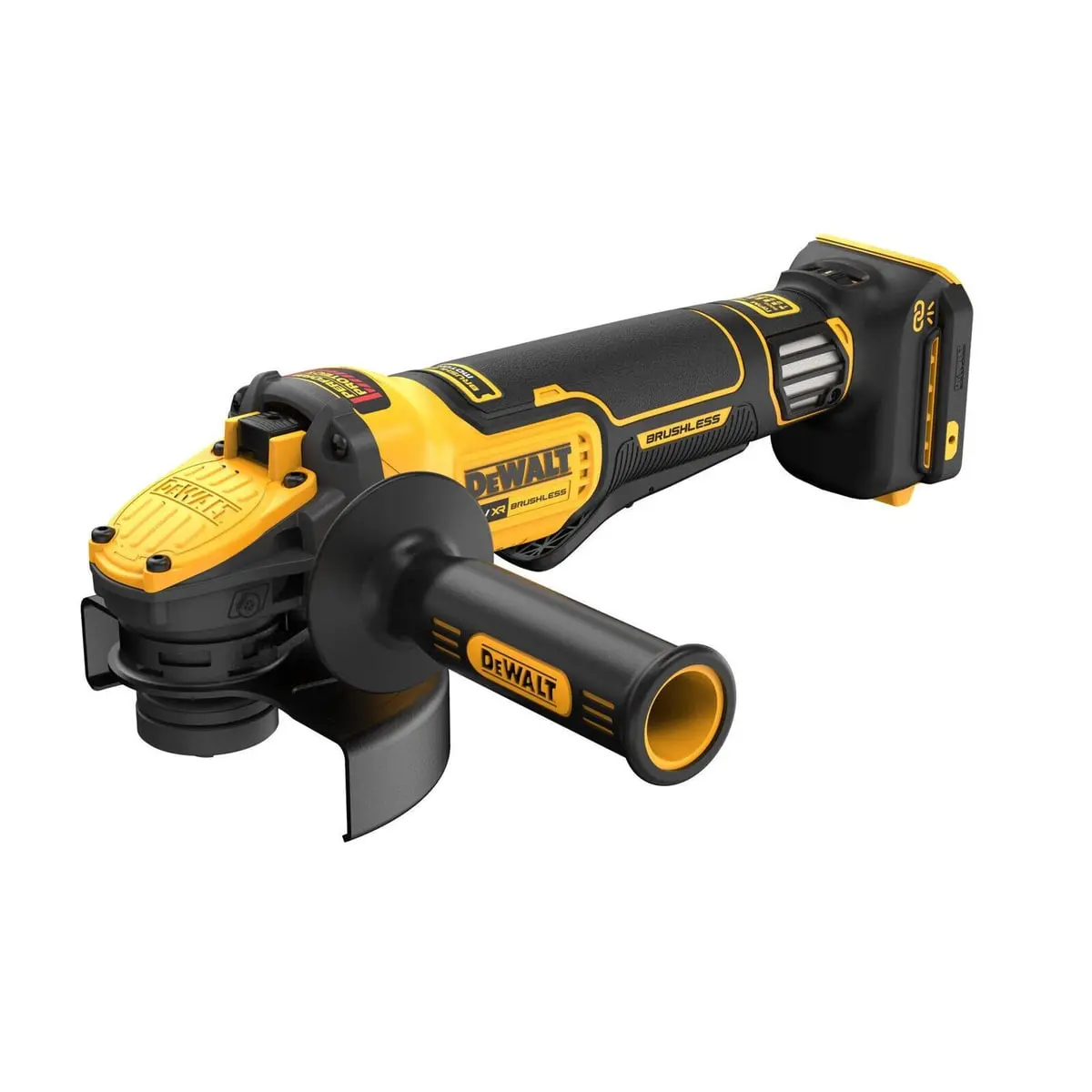
Exact-model product image. Tool only; battery and charger are not included.
The 18V brushless DCG416VSN-XJ runs at approximately 3,000–9,000rpm across six settings. That range matters for flap discs, finishing and wire-wheel work where maximum grinder speed is not always desirable. Its electronic brake, electronic clutch and Kickback Brake system help reduce wheel spin-down and reaction when a bind is detected, while soft start reduces the initial jerk.
FLEXVOLT Advantage pack-identification technology lets the tool unlock greater output with a compatible XR FLEXVOLT battery. The grinder itself remains an 18V XR model; it is not a 54V grinder. Ordinary compatible 18V packs work, but a small battery should not be expected to match the peak output or runtime of a suitable high-output pack.
The current Bunnings price is $453 tool only. That is expensive, and adding a FLEXVOLT battery can make the working setup heavier and rear-loaded. Buyers who only make occasional cuts may be better served by a simpler fixed-speed grinder.
What owners say
DeWalt Australia provides a three-year limited repair warranty for qualifying authorised-reseller purchases, plus separate one-year service-contract and 30-day satisfaction terms subject to its conditions. This is not described as a three-year replacement warranty.
Pros
- Excellent all-round cutting and grinding capability
- Six useful speed settings
- Electronic brake and kickback mitigation
- Soft start and paddle switch
- Strong 18V XR ecosystem
Cons
- Expensive bare tool
- Peak performance needs a suitable large pack
- FLEXVOLT batteries add weight
- Thin Australian owner evidence
Ryobi 18V ONE+ HP Brushless 125mm Angle Grinder RAG18X1
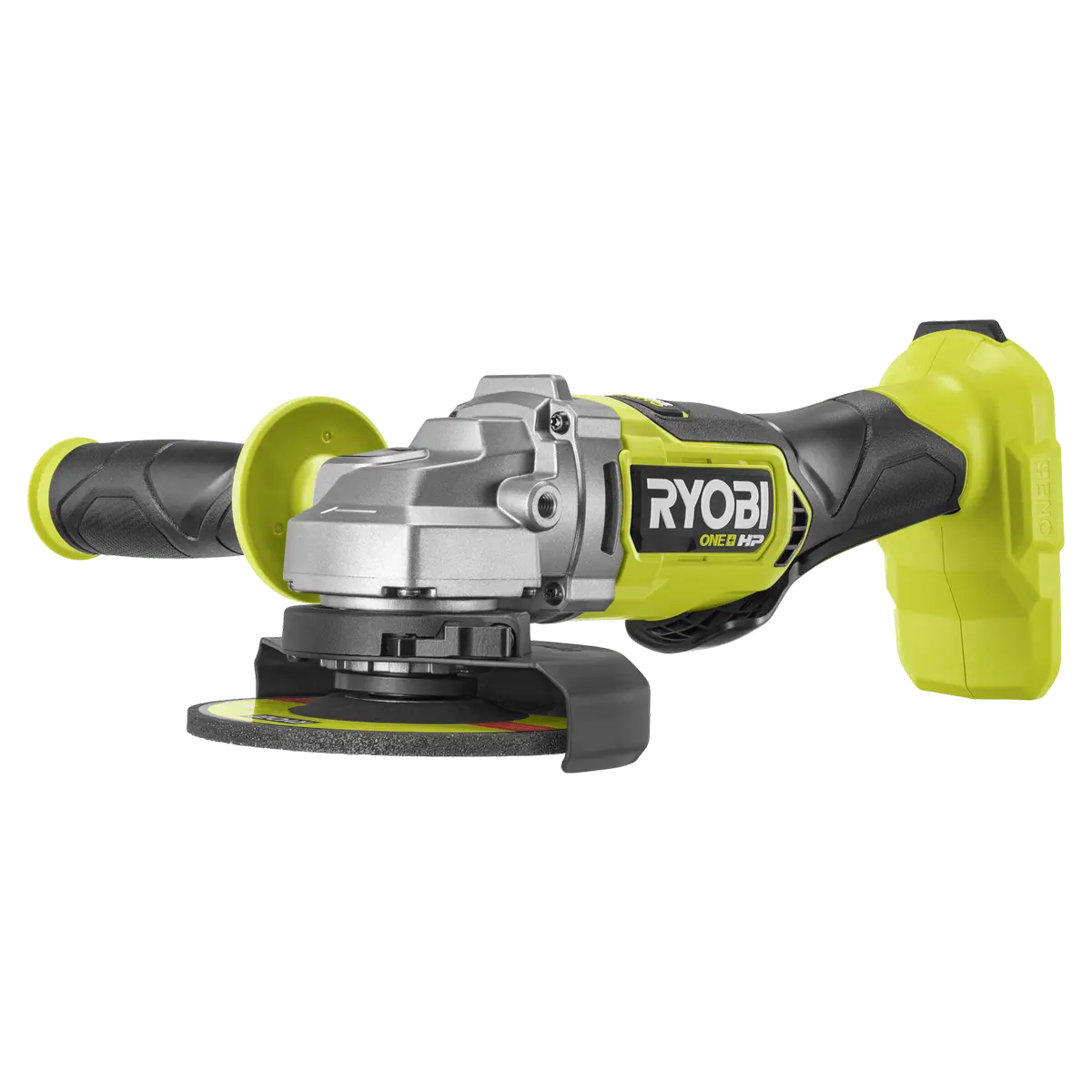
Exact-model product image. Tool only; battery and charger are not included.
The RAG18X1 runs a 125mm disc at 9,000rpm and weighs 1.7kg without a battery. It uses an M14 spindle, offers a three-position side handle and includes a grinding disc. The ONE+ platform makes it especially easy to justify for homeowners who already own compatible packs and chargers.
Ryobi advertises line-lockout protection and a non-locking paddle switch on this exact model. It does not advertise the full electronic brake and kickback-control suite found on the DeWalt and Bosch, so those features are not implied. This is a strong intermittent-use grinder, not the first choice for constant heavy fabrication.
The current price is $249 tool only. A grinder is still a high-draw tool: small ONE+ batteries can shorten runtime and constrain sustained output, while larger packs add working weight.
What owners say
Australian exact-model feedback is unusually substantial for this category and strongly positive. That review depth supports the recommendation but is not the reason it won; price, current brushless hardware, 125mm format, manageable weight and ecosystem value remain central.
Ryobi Australia states a four-year standard replacement warranty, extendable to six years for eligible ONE+ tools registered online within 30 days. Battery terms are separate. Ryobi's replacement-warranty model does not provide repair services or spare parts under that warranty approach.
Pros
- Strong $249 tool-only price
- 125mm HP brushless design
- Relatively light bare tool
- Huge ONE+ ecosystem
- Deep Australian owner evidence
Cons
- Fewer advertised advanced protection features
- Not intended for continuous heavy fabrication
- A decent battery is still essential
- Replacement-oriented warranty model
Bosch Professional GWS 18V-15 P 125mm BITURBO Angle Grinder 06019H6A00
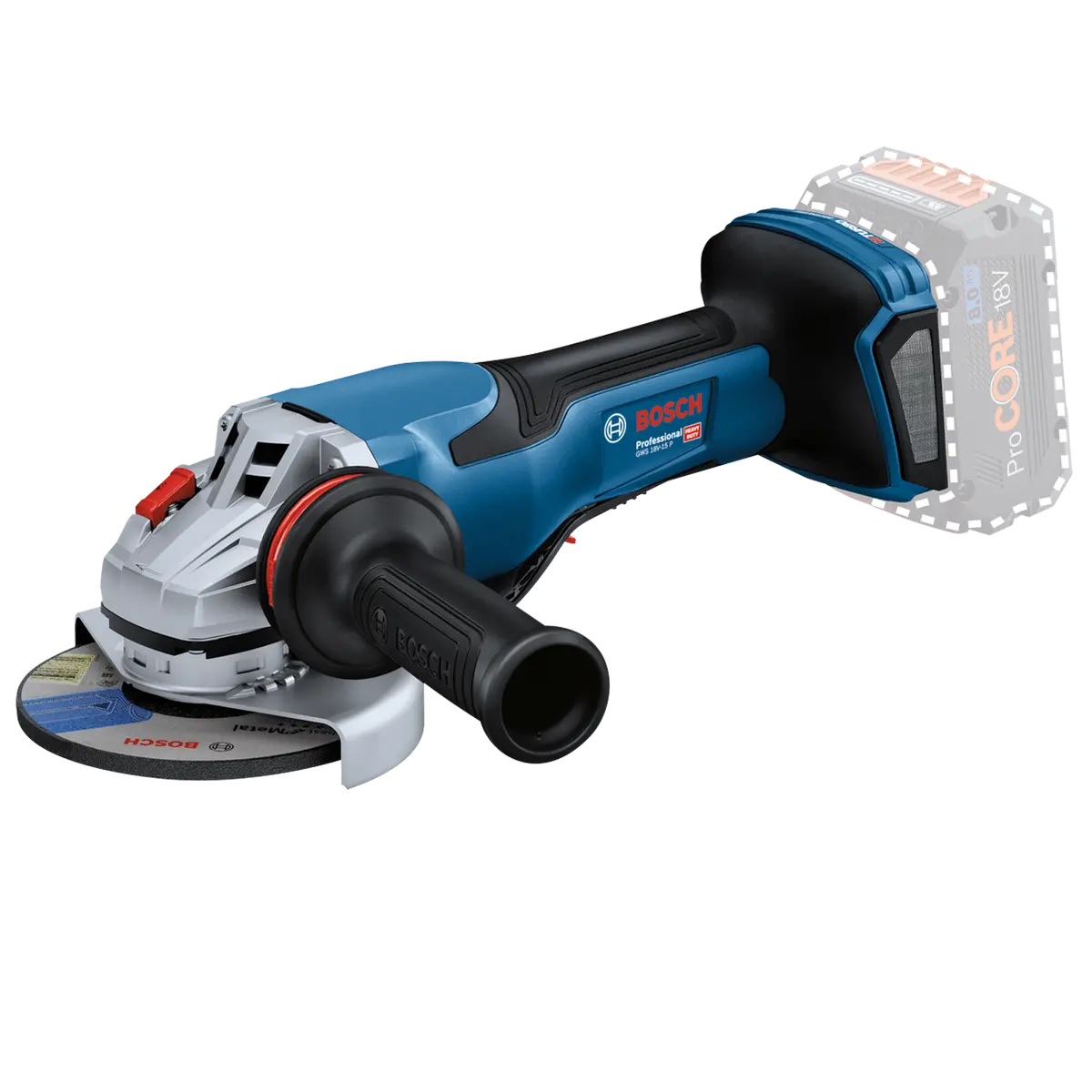
Exact-model product image. Tool only; battery and charger are not included.
The GWS 18V-15 P runs a 125mm disc at 9,800rpm and weighs 2.2kg before the battery. Its protection suite includes a PROtection paddle switch, KickBack Control, Drop Control, intelligent brake, restart protection and soft start. A Vibration Control side handle, quick-locking nut and clip-on metal cutting guard strengthen the complete package.
Bosch markets performance as equivalent to a 1,500W corded grinder. That is Bosch's manufacturer claim, not a Worth Buying measurement. Bosch specifies a ProCORE18V battery of at least 5.5Ah for maximum performance. The tool is also compatible with Bosch Professional 18V and AMPShare batteries.
The current Bunnings price is $519 tool only and the listing is special order. A suitable ProCORE battery adds substantial cost and working weight. The fixed-speed P model also lacks the speed-control versatility of the DeWalt; buyers who need adjustment should examine a verified variable-speed Bosch sibling rather than transferring PSC, C or SC features onto this exact model.
What owners say
Qualifying Bosch Professional tools can extend from standard coverage to six years after online registration within Bosch's specified window. Bosch also provides Australian repair and spare-parts support. Warranty does not cover consumables, normal wear or misuse.
Pros
- Very high Bosch-claimed output
- Brake, kickback and drop protection
- PROtection paddle and restart protection
- Vibration Control handle
- Professional repair and spares support
Cons
- Expensive bare tool
- Heavy with a high-output battery
- Maximum performance needs ProCORE
- Very limited Australian owner evidence
- Fixed-speed P variant
What matters when buying a cordless angle grinder
125mm or 115mm?
A 125mm grinder generally offers slightly more cutting depth, common accessory availability and broader serious DIY or trade usefulness. A smaller grinder can be lighter and cheaper. Never fit a disc larger than the grinder's rated maximum.
Battery platform
Compare total entry cost if you need a battery and charger. Existing packs can make an in-platform choice sensible, but safety, performance and exact tool suitability still matter.
Battery size
Small packs reduce working weight but shorten runtime and can limit high-output tools. Large packs improve runtime and potential output while making the grinder heavier and more rear-loaded.
Electronic braking
A brake reduces wheel spin-down after release. It does not make a grinder harmless or replace the correct guard, disc, PPE and two-handed control.
Kickback mitigation
Electronic clutch and KickBack Control systems can help reduce the reaction when a disc binds. They do not prevent every kickback event.
Paddle or slide switch?
A paddle or deadman switch cuts power when grip is released. Some slide switches allow lock-on operation and can be comfortable during long grinding sessions. Neither format removes the need for correct technique.
Variable speed
Speed adjustment is useful for flap discs, surface finishing, wire wheels and heat-sensitive work. Check the accessory's allowed speed and the exact tool manual.
Disc and guard compatibility
Use the correct disc type, bore or interface, rpm rating and guard. Never use an oversized or damaged disc, or a grinding disc for an application it was not designed to perform.
Angle grinder safety basics
Wear eye and appropriate hearing protection, and use respiratory protection when the material or dust requires it. Fit the correct guard and disc, inspect the disc for damage, confirm its speed rating, secure the workpiece and maintain two-handed control where the manual requires it. Allow the disc to reach operating speed before loading it and never twist a cutting disc in the cut.
Remove the battery before changing discs or guards, never bypass a safety switch and follow the exact manufacturer's instructions. Masonry and other silica-producing work require suitable dust control and respiratory precautions.
Which one should you buy?
Buy the DeWalt DCG416VSN-XJ if you want the strongest all-round combination of power, variable-speed control, electronic protection and ecosystem flexibility.
Buy the Ryobi RAG18X1 if you are a home DIY buyer or existing ONE+ owner and want a proper 125mm brushless grinder without spending trade-tool money.
Buy the Bosch GWS 18V-15 P if you grind or cut heavily and prioritise sustained output, safety electronics, repair support and professional battery architecture over price.
Frequently asked questions
Is a cordless angle grinder as powerful as a corded one?
Some premium current models are marketed at corded-equivalent output levels, but battery condition, pack type and sustained workload matter. Corded grinders remain attractive for long, uninterrupted grinding.
What size angle grinder is best for DIY?
A 125mm grinder is a useful Australian all-round size, offering practical cutting depth and broad accessory availability without moving to a large grinder. A smaller 115mm tool can still suit lighter work.
Can I use any 125mm disc on a 125mm grinder?
No. The disc type, bore or mounting interface, maximum rpm and intended application must all match the grinder and guard requirements.
How big a battery do I need?
There is no universal answer. Angle grinders draw substantial current, so larger high-output packs generally support better runtime and performance but add weight. Follow the exact manufacturer's battery guidance for demanding work.
Is kickback protection worth paying for?
It is a meaningful risk-reduction feature for frequent users because it can help reduce reaction when a disc binds. It does not replace the correct disc, guard, PPE, stable stance and proper technique.