
How we chose
Detailed methodology
We compared current Australian cordless 15- and 16-gauge finish nailers for drive evidence, nail-placement quality, fastener availability, magazine access, skin and working weight, firing behaviour, depth adjustment, dry-fire protection, battery-platform cost, Australian warranty and service, exact-model owner evidence and professional testing. Manufacturer specifications, retailer information, Australian owner feedback and international professional evidence remain separate. Worth Buying scores are editorial judgements, not blended customer-star ratings.
Serious contenders and alternatives
DeWalt DCN662N-XJ: is the strongest platform-specific alternative for XR owners. Its 16G straight format, 32–64mm range, micro nose and competitive professional pricing make it rational where compatible batteries already exist, but Ryobi wins consumer value while Milwaukee provides angled access.
DeWalt DCN660N-XE: remains a capable 16G angled second-fix tool. The current Milwaukee is the more refined premium angled recommendation, while the HiKOKI finalist is lighter and offers stronger 15G differentiation.
HiKOKI NT1865DSA(H4Z): is an excellent current-generation 16G straight model. It loses because Ryobi dominates consumer value and the ranked NT1865DAA creates a clearer high-holding-power recommendation.
Makita DBN601ZA: is a current 16G straight contender for LXT owners. Exact Australian owner evidence is still shallow and its current positioning does not clearly displace the three winners.
Bosch Professional 0601482200: has strong 15G specifications and a long registered warranty, but exact Australian owner evidence is extremely shallow and current pricing is high beside HiKOKI.
Milwaukee M18FN15GA-0C: is a strong M18 alternative for buyers who specifically want 15G. HiKOKI is lighter, currently cheaper and marginally extends the fastener ceiling.
Paslode B20722: has a light tool body and established trade history, but its battery-plus-fuel-cell system adds fuel cost, stocking and maintenance. Battery-only systems now avoid most reasons to accept those compromises.
HiKOKI 18V Gasless 15G Angle Finishing Nailer NT1865DAA(H4Z)
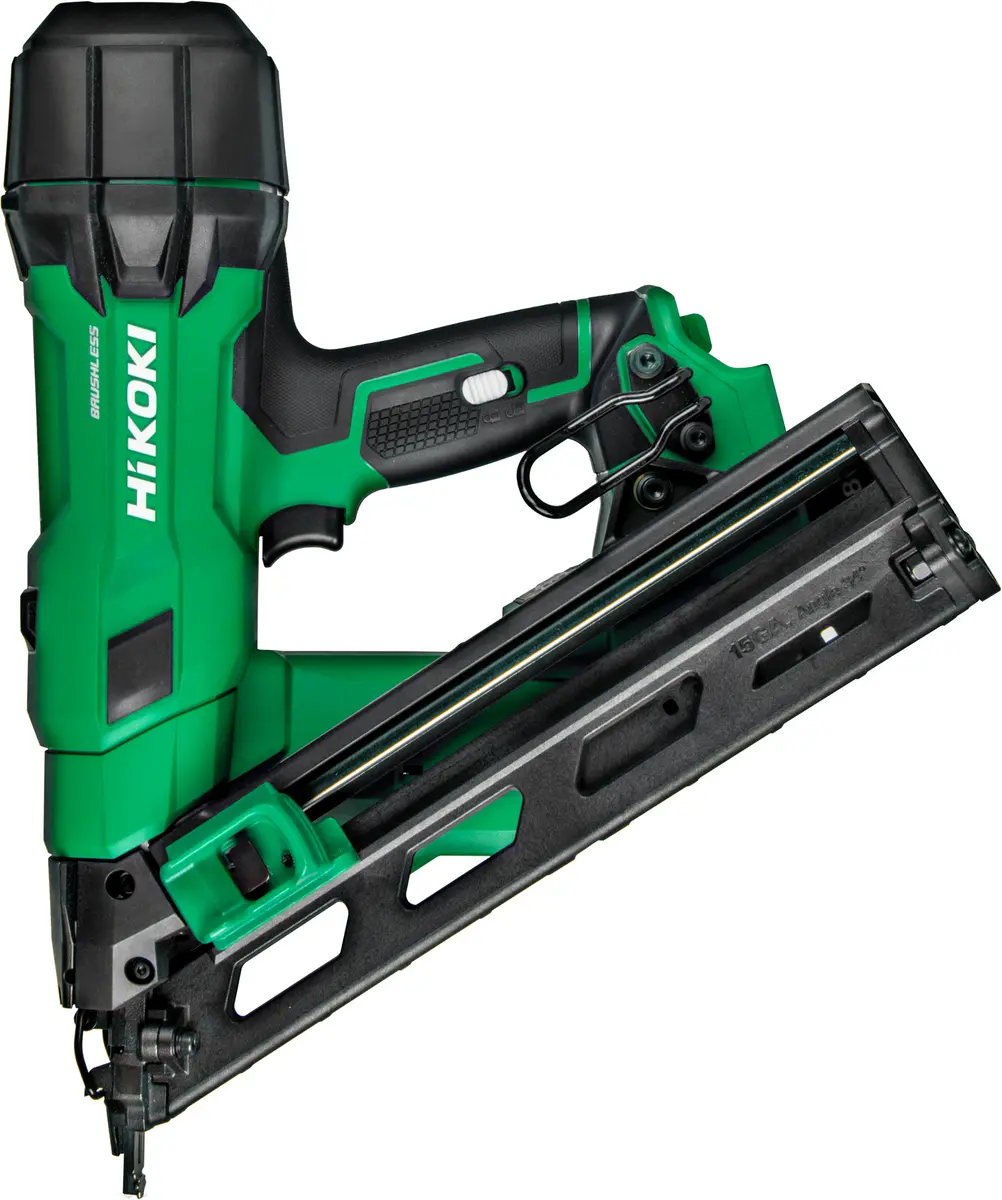
Exact current Australian NT1865DAA(H4Z) second-generation 15G model shown. Battery and charger are not included.
HiKOKI specifies 32–64mm 15G DA fasteners, a 100-nail magazine, up to three nails per second, selectable sequential and contact firing, tool-less depth control, dry-fire lockout, LED, three no-mar tips and its Air Spring Drive system.
Extended product analysis
The current second-generation design is materially lighter and slimmer at the nose than the older HiKOKI/Hitachi family. That improves sightline and corner reach while retaining the stronger hold of 15G DA fasteners for heavier architrave, door jambs, thick skirting, stair components and larger mouldings.
HiKOKI states up to about 2,350 nails with a BSL36A18X battery under its test conditions. Treat that as a manufacturer test result, not guaranteed real-world runtime. Battery size, timber, fastener and work pace will change practical endurance.
Evidence context
Current independent professional testing supports the lower weight, slim nose and strong cordless performance. Exact-model Australian owner depth is still small; one early exact-model report is useful but cannot establish broad reliability.
Pros
- Strong 15G holding power
- Only 2.66kg skin
- Slim, visible nose
- 34° corner access
- 32–64mm DA range
- Up to six years with eligible registration
Cons
- Larger hole than 16G
- Professional-grade skin price
- Long-term exact-model history is shallow
- Platform entry can cost more outside HiKOKI
Milwaukee M18 FUEL 16 Gauge Angled Finishing Nailer M18FN16GA-0C
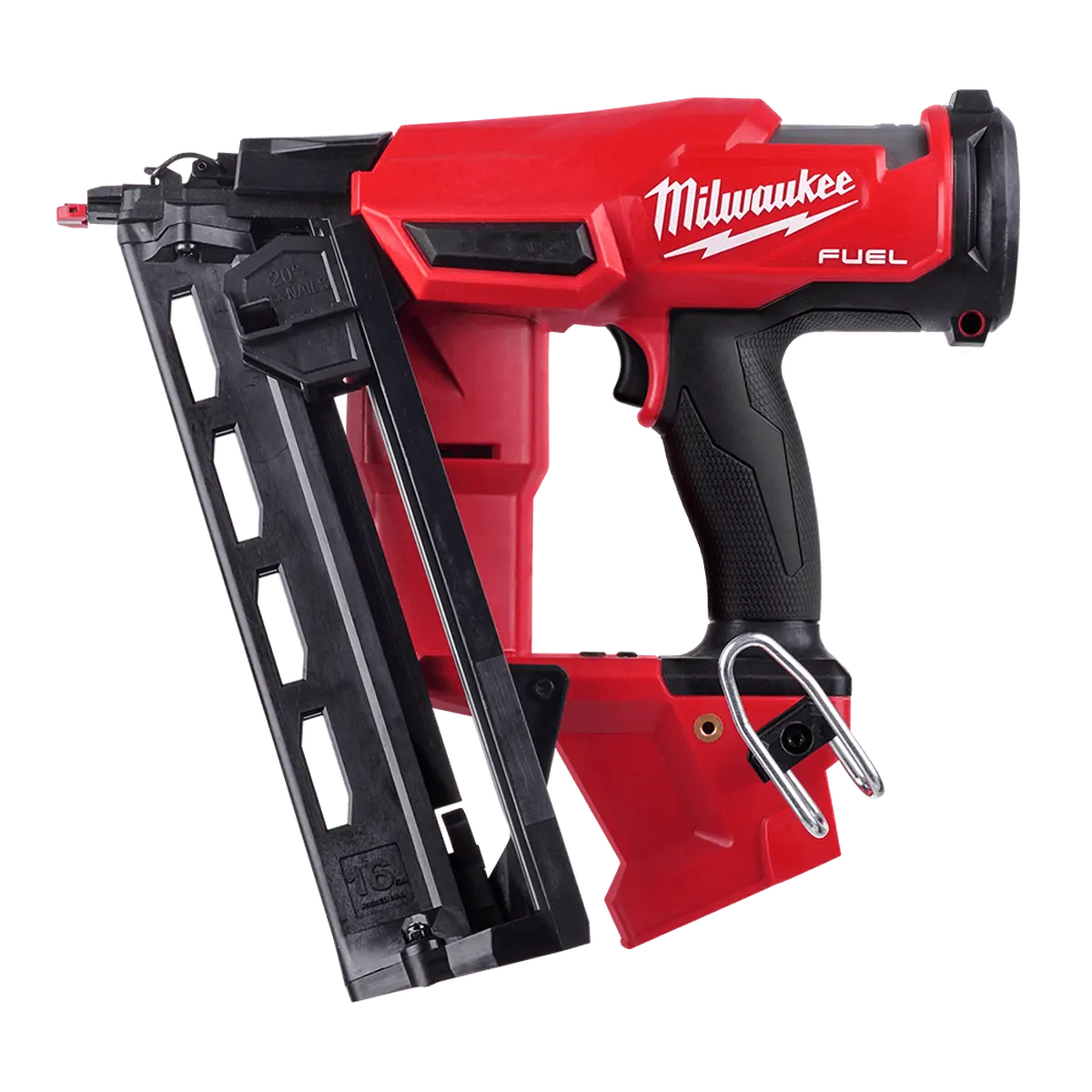
Exact current Australian M18FN16GA-0C generation shown, not the discontinued M18CN16GA. Battery and charger are not included.
Milwaukee specifies 32–63mm 16G fasteners, a 110-nail magazine, sequential and contact modes, 2.9kg skin weight and a five-year tool warranty. Its nitrogen-air-spring drive fires in about 0.05 seconds with zero ramp-up and up to three nails per second.
Extended product analysis
The 20° magazine provides useful access around internal corners, architrave, skirting, cabinetry and confined trim. Sixteen gauge leaves a smaller hole than 15G while retaining materially more holding power than typical 18G brads.
Milwaukee states up to 750 nails per charge with a 2.0Ah battery under test conditions. That battery also keeps balance lighter than a large pack, but runtime and drive behaviour vary with material, fastener, charge and setup.
Evidence context
Small exact-model Australian owner pools report positive skirting, 50mm-nail and hardwood experiences with pneumatic-like response. The pool is not large enough to claim statistical reliability; deeper international owner evidence remains separately labelled.
Pros
- Fast 0.05-second response
- Zero ramp-up
- 20° angled access
- Clear sightline and low recoil
- 110-nail magazine
- Five-year tool warranty
Cons
- Premium skin price
- Less hold than 15G
- Specialised angled fasteners
- Battery and charger cost extra
RYOBI 18V ONE+ 16GA C Brad Nailer R16GN18
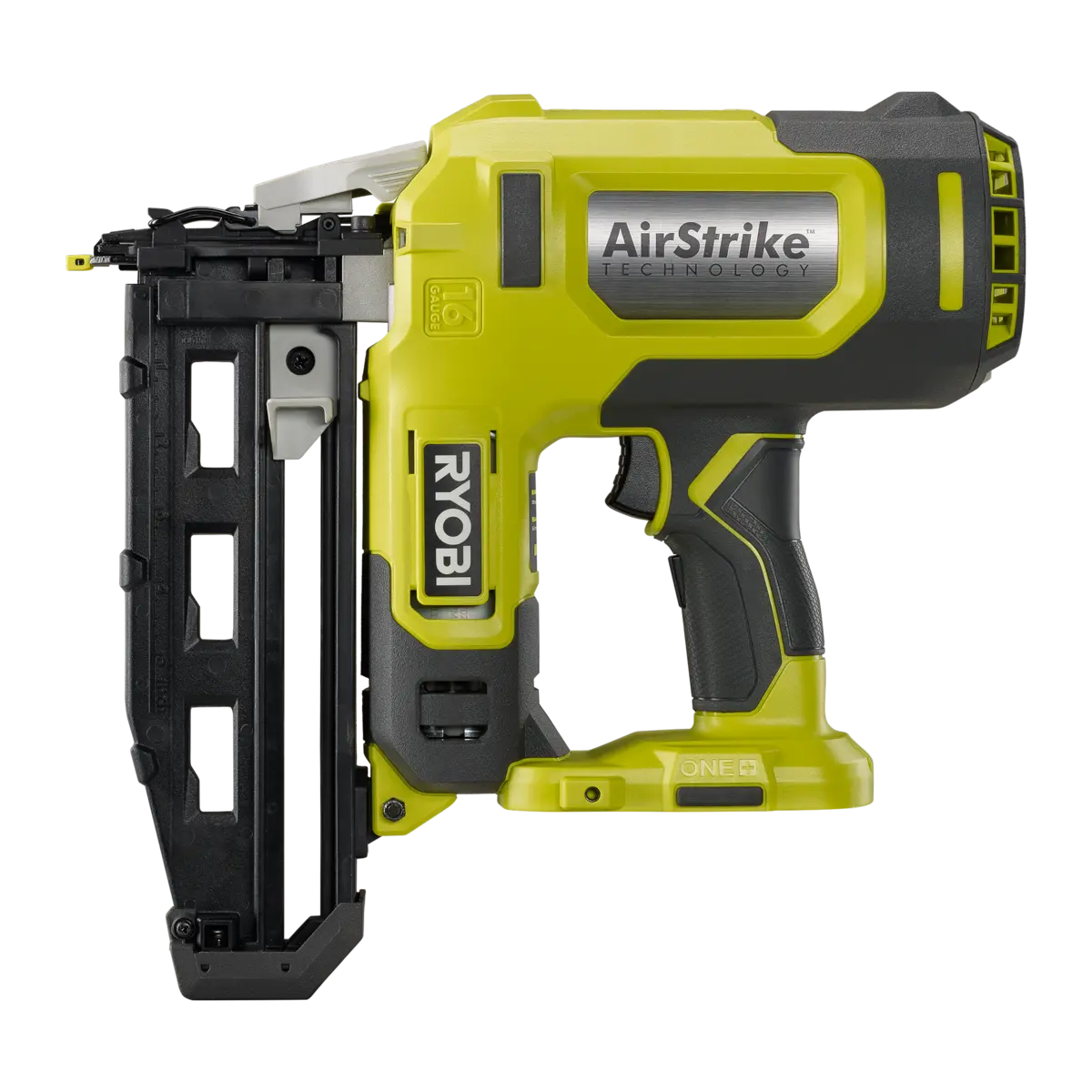
Exact current R16GN18 16G model shown. It is not the 18G R18GN18. Battery and charger are not included.
RYOBI specifies straight 16G C-series fasteners from 19–65mm, 2.7kg tool weight, tool-free depth adjustment and a 100-nail-class magazine. The tool includes a belt clip, 100 × 50mm nails and two no-mar pads, but no battery or charger.
Extended product analysis
Despite the “brad nailer” label, this is a 16G finishing tool suited to architraves, skirting, window trim, timber cladding and general finishing work. It must not be confused with the thinner 18G R18GN18.
The straight magazine makes common C-series nails easy to source and often inexpensive, but it cannot reach confined positions as easily as a 20° or 34° angled magazine. The recommendation is for DIY, renovation and occasional second-fix work—not daily full-time trade abuse.
Evidence context
The current Ryobi/Bunnings ecosystem carries more than 100 Australian owner ratings, with strong themes around usability, trim work, convenience and value. That is manufacturer/retailer-hosted customer evidence, not independent professional testing, and it does not prove trade durability.
Pros
- Low entry price
- 19–65mm 16G range
- Common straight C-series nails
- 2.7kg tool weight
- Huge ONE+ ecosystem
- Up to six years with eligible registration
Cons
- Not the professional durability pick
- Less corner access than angled tools
- Replacement rather than repair warranty model
- Australian retail is effectively Bunnings-only
Cordless finish nailer buying advice
Buying advice
15 gauge vs 16 gauge
Fifteen gauge is thicker, leaves a larger hole and provides stronger holding power for heavier architrave, door jambs, thick skirting, stair work and larger mouldings. Sixteen gauge leaves a smaller hole while retaining useful hold for skirting, architrave, cabinetry and general trim. An 18G brad nailer is thinner again and sits outside this guide's formal scope.
Angled vs straight magazines
An angled magazine reaches corners, cabinetry and awkward trim geometry more easily, but requires matching angled fasteners. A straight magazine uses widely available C-series nails and often lowers consumable cost, but its body can obstruct some confined placements. Angled is not automatically better.
Nail placement matters as much as power
A useful finish nailer needs a visible nose, repeatable depth, a no-mar tip and controlled recoil. Countersink consistency, surface marking, nail deflection, split risk and hole size matter more than headline power alone.
Hardwood claims need limits
No cordless finish nailer should be promised to sink maximum-length nails into every Australian hardwood. Species, density, grain, defects, fastener, battery charge, depth setting and approach angle all affect the result.
Battery platform changes value
An existing M18, HiKOKI, ONE+, DeWalt XR or Makita LXT setup can outweigh a small ranking difference. Compare the complete entry cost, including a suitable battery and charger, not just the advertised skin price.
Finish vs framing vs brad nailers
Finish nailers are second-fix tools for trim and moulding. Framing nailers drive larger structural fasteners for first-fix work. Typical 18G brad nailers suit lighter, more delicate trim. The product label alone is unreliable around 16G—check gauge and intended application.
Finish nailer safety
Wear eye protection, keep hands and bystanders clear of the fastening path and consider hearing protection where appropriate. Nails can deflect around knots, edges, dense grain and hidden fasteners. Check the substrate for hidden wiring or services where relevant.
Remove the battery before clearing jams, servicing or inspecting the nose or driver. Use only the exact compatible gauge, length, angle and collation; never defeat contact trips, trigger lock-offs or firing interlocks. Use sequential mode where controlled placement matters and follow the exact manufacturer's loading and jam-clearing instructions.
Which cordless finish nailer should you buy?
Buy the HiKOKI NT1865DAA(H4Z) for the best balance of professional holding power, low weight and angled access. Buy the Milwaukee M18FN16GA-0C when a smaller 16G hole, immediate response and M18 support matter most. Buy the RYOBI R16GN18 for renovation and DIY value, especially if you already own ONE+ batteries.
Frequently asked questions
Is 15 gauge or 16 gauge better for finish carpentry?
Fifteen gauge provides stronger holding power for heavier trim but leaves a larger hole. Sixteen gauge is a finer general-purpose second-fix option. The job, timber and desired finish determine which is better.
What is the difference between a finish nailer and an 18-gauge brad nailer?
Finish nailers commonly use thicker 15G or 16G fasteners with more holding power. An 18G brad nailer leaves a smaller hole and suits lighter or more delicate trim, but is not the same product class.
Are angled finish nailers better than straight nailers?
Angled magazines improve access in corners and confined positions. Straight magazines use simple, widely available fasteners. Neither geometry is automatically better for every buyer.
Can a cordless finish nailer sink nails into hardwood?
Suitable models can perform strongly in hard timber, but results vary by species, density, grain, fastener, nail length, battery charge and depth setting. Avoid universal guarantees.
Do cordless finish nailers need gas?
The three ranked tools do not. They use battery-powered spring or compressed-air drive systems. Some alternatives, including Paslode fuel-cell tools, use both a battery and gas cartridge.
Can I use any brand of finish nail in my nailer?
No. Brand may vary where permitted, but gauge, length, angle, collation and the exact manufacturer specification must match the tool.