How we chose
We assessed current Australian models, local pricing and availability, projection technology, light source, 4K architecture, brightness, black level, HDR, placement flexibility, smart features, audio, gaming, noise, weight, warranty, exact-model owner evidence and credible professional testing. The broadest recommendation is not automatically the projector with the highest score.
Worth Buying scores are editorial judgements, not customer ratings. Worth Buying Australia did not perform the laboratory measurements cited here. Manufacturer claims remain labelled and professional findings remain attributed.
Why these three won
BenQ GP520 gives most homes the cleanest price-to-convenience balance. Epson EH-LS12000B is built for a serious dark-room installation. XGIMI Horizon 20 bridges lifestyle convenience and enthusiast capability. That creates a clearer buying decision than ranking three superficially similar projectors.
Serious contenders
Epson EH-LS9000B (V11HC13153), about $7,499, is a highly credible lower-cost dedicated-cinema alternative with a laser source, 2,200 lumens, 8.3-million-pixel 4K output through pixel shifting, 2.1× zoom, broad powered lens shift and excellent gaming performance. It does not replace LS12000: professional comparisons find lighter blacks, while LS12000 retains stronger HDR output and image dynamism.
BenQ TK705i and TK705STi suit rooms needing different throw or brightness options, while W4100i targets enthusiasts. Hisense PX3/PX4-class models are strong ultra-short-throw alternatives but belong in a dedicated UST comparison. JVC and Sony offer serious premium cinema options at substantially higher prices.
BenQ GP520
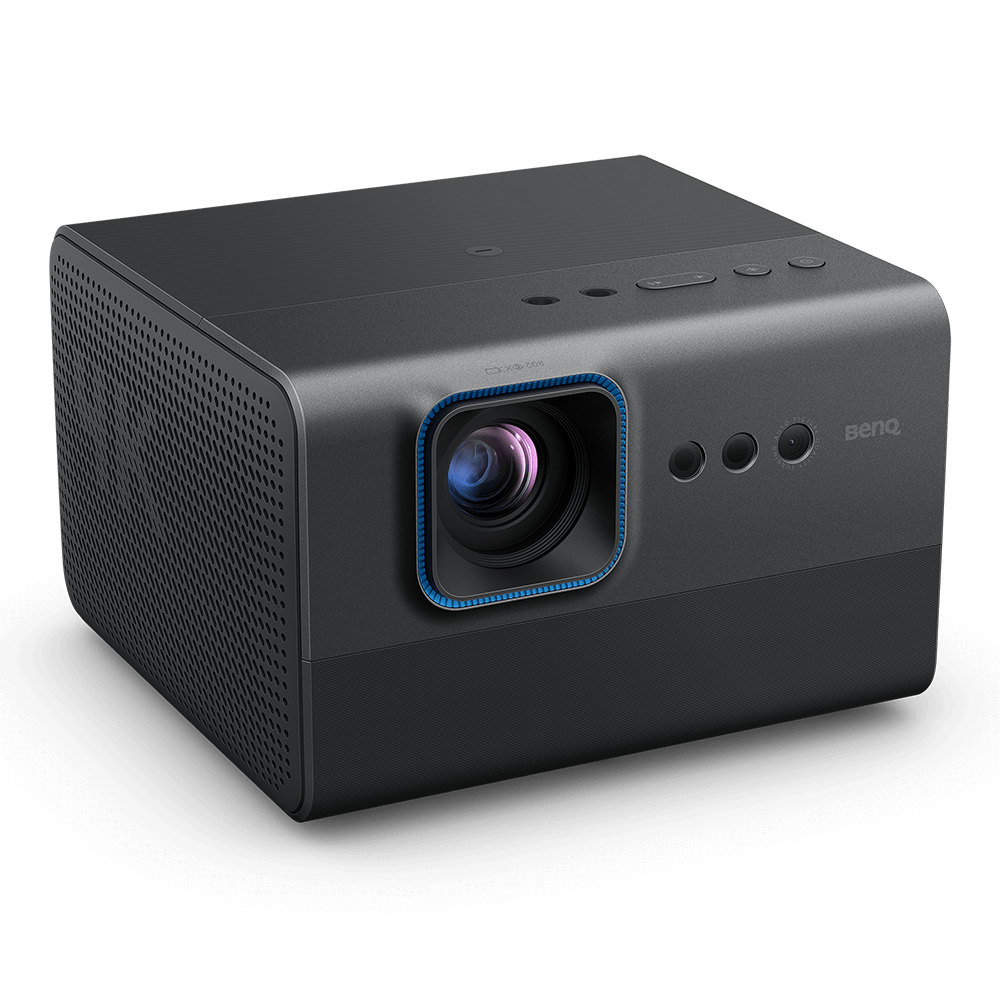
BenQ's Australian GP520 is a compact 4LED DLP projector with 3840 × 2160 on-screen output, 2,600 ANSI lumens, a 200,000:1 light-source-dimming contrast claim and rated light-source life of 20,000 hours in normal use or 30,000 hours in Eco. Those longevity and contrast figures are manufacturer ratings, not guarantees of identical real-world performance.
Google TV, Netflix support, Google Cast, Wi-Fi 6, Bluetooth 5.2, two HDMI 2.1 inputs, eARC and two 12W speakers make it unusually self-contained. Gaming is useful rather than elite: BenQ specifies 17.9ms at 1080p/60 and 4K/60, and 4K input tops out at 60Hz. It should not be described as a 4K/120 projector.
What Hi-Fi and TechRadar found the GP520 sharp, bright for its price and class, attractive and easy to use, with good motion and latency suitable for casual gaming. They also identified average black depth, a need for some manual picture adjustment and the possibility of DLP rainbow artefacts. Those are publication findings, not Worth Buying tests.
Its automatic geometry tools are useful for temporary placement, but heavy keystone and digital zoom processing discards usable pixels. For the cleanest picture, place the projector square to the screen and treat digital correction as a convenience rather than a substitute for physical alignment.
Key details
| Technology / light | DLP · 4LED |
|---|---|
| Resolution / brightness | 4K UHD output · 2,600 ANSI lumens |
| HDR / platform | HDR10, HDR10+, HLG · Google TV |
| Gaming | 4K/60 maximum · 17.9ms specified at 1080p/60 and 4K/60 |
| Audio / size | 2 × 12W · about 241.3 × 151 × 225mm · 3.7kg |
| Price snapshot | About $1,599 promotional; RRP about $2,199 |
Owner and professional evidence
Pros
- Strong current value and 2,600 ANSI-lumen rating
- Sharp 4K entertainment image
- HDR10+ and integrated Google TV
- Useful 24W speaker output
- Compact, approachable setup
Cons
- Middling black levels
- Fixed optical system and no extensive lens shift
- No 4K/120 input
- Possible DLP rainbow artefacts
- Heavy digital correction compromises image quality
Epson EH-LS12000B · V11HA47053
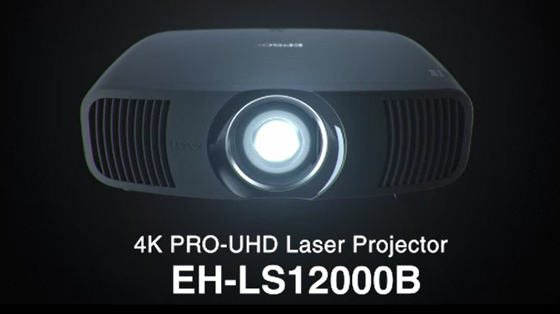
The exact Australian V11HA47053 uses Epson's 3LCD architecture with 0.74-inch 1080p panels shifted four ways to display a full 8.3-million-pixel 4K image on screen. It does not use native 3840 × 2160 LCD panels. High-quality pixel shifting can still produce extremely sharp images, so the architecture is not a reason to dismiss it.
Epson rates both white and colour output at 2,700 lumens and dynamic contrast at 2,500,000:1. Its laser source, Scene Adaptive Gamma, HDR10, HDR10+ and HLG support target serious large-screen HDR. Professional testing supports excellent detail, rich cinematic colour, strong projector HDR brightness and deeper blacks than the less expensive LS9000.
Placement flexibility is exceptional: powered focus, 2.1× optical zoom, ±96.3% vertical and ±47.1% horizontal powered lens shift, a 1.35–2.84 throw ratio and image sizes from 50 to 300 inches. The two HDMI inputs include eARC/ARC on HDMI 2 and support 4K/120 input. It is quiet at about 30dB normal or 22dB in quiet mode.
What Hi-Fi's professional assessment supports the projector's HDR, colour, detail, black depth and optical flexibility, while noting the high cost and settings learning curve. The best HDR result can require thoughtful preset choices, and some very dark material can expose colour or tone-mapping quirks. There is no built-in streaming platform or all-in-one sound system.
Key details
| Exact AU code | V11HA47053 |
|---|---|
| Technology / 4K | 3LCD · 1080p panels shifted four ways for 8.3-million-pixel output |
| Brightness / HDR | 2,700 lumens white and colour · HDR10, HDR10+, HLG |
| Optics | 2.1× powered zoom · ±96.3% V / ±47.1% H lens shift |
| Gaming / noise | 4K/120 input · about 30dB normal / 22dB quiet |
| Weight / price / warranty | About 12.7kg · about $9,199 · 3 years |
Owner and professional evidence
Pros
- Excellent HDR projection and strong black depth
- 2,700-lumen laser source
- Broad powered lens shift and 2.1× zoom
- 4K/120 input support
- Quiet operation and 3-year warranty
Cons
- Very expensive, large and heavy
- No integrated streaming platform
- No all-in-one audio experience
- Menus and settings can be confusing
- Pixel-shifted rather than native-panel 4K
XGIMI Horizon 20
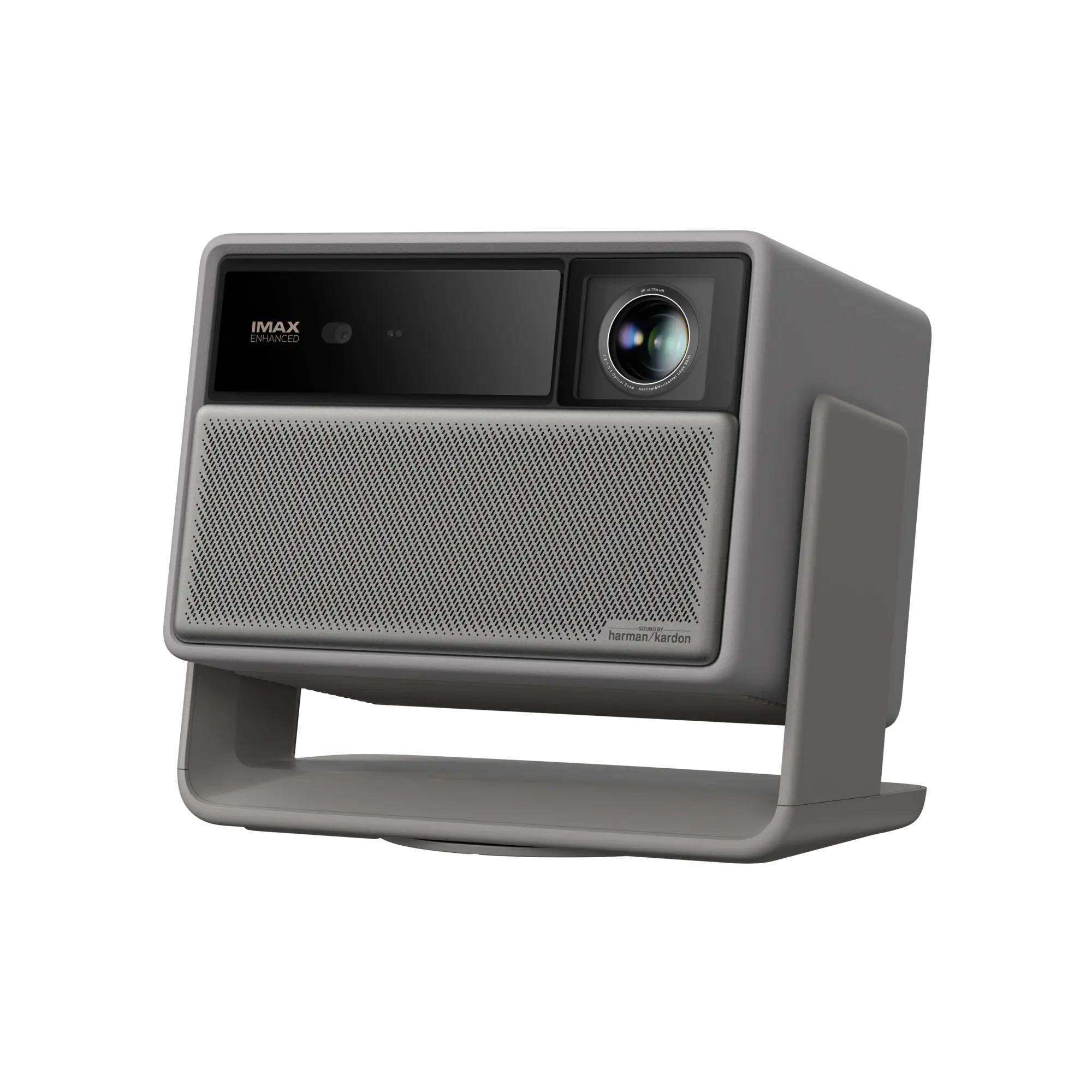
XGIMI Australia specifies the exact Horizon 20 with an RGB triple-laser light source, 4K output, a 3,200 ISO-lumen manufacturer rating, 20,000:1 manufacturer contrast claim, Dolby Vision, HDR10+, IMAX Enhanced, Filmmaker Mode and Google TV. Its integrated stand, optical zoom, lens shift and two 12W Harman Kardon speakers make it much easier to deploy than Epson's permanent-installation model.
RTINGS independently tested the exact Horizon 20 and found great contrast for its type, strong image depth, excellent out-of-box accuracy, outstanding colour volume and quiet normal-mode operation. It also found near-black detail below the best alternatives and DLP rainbow or colour-tearing artefacts that can affect sensitive viewers. Mitigation may introduce trade-offs.
Gaming support needs resolution context. XGIMI lists about 3ms at 4K/60, 2.2ms at 1080p/120 and 1ms at 1080p/240. That does not mean 4K/240. VRR and ALLM add flexibility, but buyers should match the chosen resolution, refresh mode and processing settings to their source.
The price partly buys integration. Built-in smart hardware can age sooner than a replaceable streaming box, and the Horizon 20 does not match the LS12000's black depth or optical sophistication. Proper placement still beats aggressive automated correction.
Key details
| Technology / light | DLP · RGB triple laser |
|---|---|
| Resolution / brightness | 4K output · 3,200 ISO lumens claimed |
| HDR / platform | Dolby Vision, HDR10+, IMAX Enhanced · Google TV |
| Optics | Optical zoom · lens shift · 1.2–1.5:1 throw ratio |
| Gaming | 4K/60 plus high-refresh 1080p modes · VRR · ALLM |
| Audio / weight / price | 2 × 12W Harman Kardon · about 4.8kg · $3,999 |
Owner and professional evidence
Pros
- RGB triple-laser light source
- Dolby Vision, HDR10+ and Google TV
- Optical zoom, lens shift and integrated stand
- Excellent colour volume in exact-model testing
- Useful integrated speakers and simple setup
Cons
- Expensive for an all-in-one
- DLP rainbow effect remains possible
- Not the dedicated-cinema black-level leader
- Integrated smart hardware can age sooner than modular sources
- Some judder and colour-tearing quirks
What matters when buying a projector
Projector versus a large TV
Projectors win on sheer image size and cinema feel. TVs usually win on daylight brightness, black levels, HDR consistency and switch-on simplicity. A projector does not automatically beat a premium 85-inch TV; compare the room, screen and complete system cost.
DLP versus 3LCD
DLP can be compact and sharp, which suits all-in-one designs, but some viewers see brief rainbow artefacts. 3LCD avoids the DLP colour-wheel rainbow effect and can deliver strong colour and white-light output. Neither architecture is universally superior.
Lamp, LED or laser
Traditional lamps are replaceable consumables whose brightness declines. LED suits compact, long-life designs with moderate output. Laser supports long rated life, quick start and high output. A 20,000-hour rating is not a guarantee of identical useful brightness for every hour.
Native versus pixel-shifted 4K
Pixel shifting can display 8.3 million addressable pixels on screen without using a native 3840 × 2160 imaging panel. Epson LS12000 demonstrates that excellent sharpness depends on the complete optical and processing system, not a label alone.
Brightness numbers
ANSI and ISO lumens are different measurement systems. Real cinema brightness changes with picture mode, image size, screen gain, calibration, room light and HDR settings. Preserve each manufacturer's stated unit and do not rank projectors by one number alone.
Throw and placement
Calculate throw distance before buying. Optical zoom and lens shift preserve image quality better than heavy digital keystone correction. Epson gives installers far more physical flexibility than GP520, while Horizon 20 brings useful optical adjustment to an all-in-one body.
Screen versus wall
A clean wall can work casually, but a proper screen improves uniformity, geometry and colour consistency. Ambient-light-rejecting screens help in suitable rooms but are not magic daylight fixes and must match the projector's throw geometry.
Projector HDR
Projectors cannot reproduce HDR like high-end TVs. Tone mapping, room darkness, screen size and light output drive the result. Dolby Vision support on Horizon 20 does not guarantee OLED-like highlights or blacks.
Gaming
Look at input lag and the resolution attached to each refresh rate. GP520 is primarily 4K/60. Epson supports 4K/120. Horizon 20's highest refresh rates are 1080p modes, while 4K tops out at 60Hz.
Installation and safety
Do not obstruct projector ventilation or ignore manufacturer clearance requirements. Use properly rated ceiling mounts and fixings, secure cables, and never improvise a mount. The 12.7kg Epson deserves particular care and professional installation may be sensible. Do not stare into a high-output beam, and isolate power before servicing or relocating equipment.
Which projector should you buy?
Choose the BenQ GP520 if you want the best balance of price, simplicity and strong 4K entertainment for a normal home.
Choose the Epson EH-LS12000B if you are building a serious dedicated cinema and picture performance matters more than convenience or cost. The EH-LS9000B is a strong lower-cost alternative if its lighter blacks and lower brightness are acceptable.
Choose the XGIMI Horizon 20 if you want premium all-in-one convenience, Dolby Vision, integrated Google TV and more optical flexibility than mainstream lifestyle projectors.
Frequently asked questions
Is a projector better than a large TV?
A projector is better when image size and cinema atmosphere dominate. A large TV is generally brighter, simpler and more consistent with HDR in everyday light. Compare the whole room and audio/screen budget rather than only display price.
How many lumens do you need for a home projector?
There is no universal number. Screen size, room light, screen gain and picture mode all change usable brightness. Roughly 2,000-plus rated lumens can suit many homes, but a dark cinema may prioritise black level while a bright lounge needs more output and light control.
Is native 4K better than pixel-shifted 4K?
Native 4K panels have a direct architectural advantage, but premium pixel-shift systems can still display 8.3 million pixels on screen with exceptional detail. Lens quality, alignment, processing, contrast and tone mapping also matter.
Do you need a projector screen?
No for casual use, but a proper screen usually improves uniformity, geometry and predictable colour. Choose screen size and material for the projector, throw, seating and ambient light rather than assuming any white wall is equivalent.
Is laser better than LED?
Laser commonly enables higher output and suits premium cinema machines, while LED can deliver long life and compact size at lower cost. Either can be excellent. Compare actual picture, noise, brightness maintenance, warranty and replacement economics.
What is the difference between long-throw and ultra-short-throw?
Long-throw projectors sit several metres from the screen and often offer more installation flexibility. Ultra-short-throw models sit close to the wall but need careful furniture, screen and alignment choices. UST is a distinct category, not automatically the best fit for every room.