How we chose
Queue 2.3 reassessed portable BBQs currently sold in Australia. The shortlist prioritises useful cooking area, genuine transport practicality, burner control, hooded versatility, current local support and clearly attributed ownership evidence.
Manufacturer specifications, family/platform history, exact-model customer evidence and Worth Buying editorial scores remain separate. A small backyard barbecue is not treated as a camping BBQ unless its weight, packed shape and fuel setup are genuinely travel-friendly.
Weber Baby Q Premium Q1200N LPG
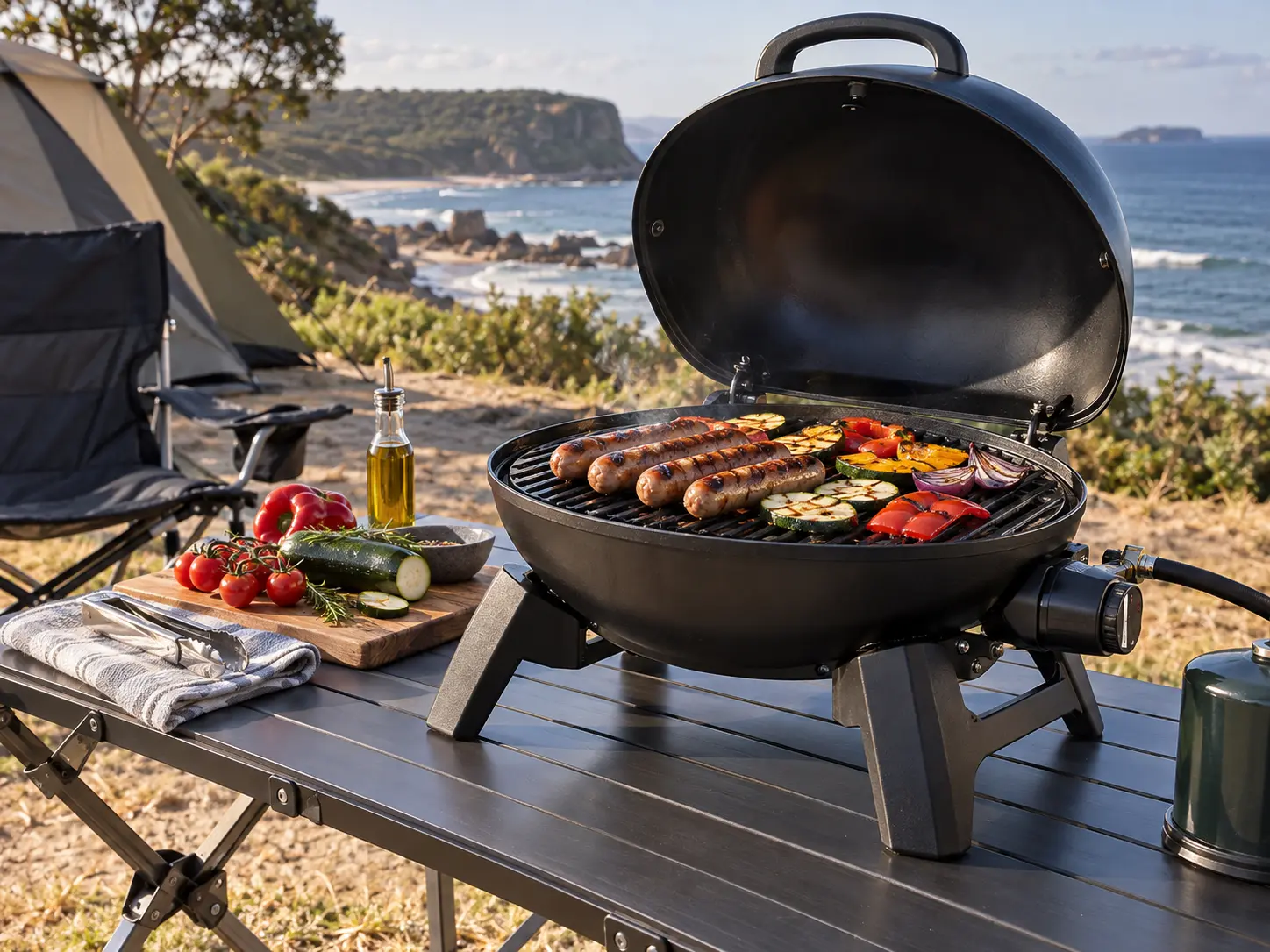
Illustrative editorial image showing the correct compact hooded gas-BBQ architecture, not an exact product photograph.
The current third-generation Premium Q1200N combines a 10.6MJ burner, high-domed lid, thermometer, removable side tables and porcelain-enamelled cast-iron grill in an approximately 11kg body. It researched at about $399 direct from Weber Australia.
The broader Baby Q Series sits at 4.4/5 from 494 ProductReview reviews, while the current Q1000N showed 4.5/5 from nine reviews. Those figures establish mature platform history and early current-generation context; they are not presented as 494 exact Q1200N reviews.
Extensive Australian Baby Q history; current exact-generation evidence is smaller
Owners commonly praise even cooking, compact size, roasting, easy cleaning and long service life. Material negatives include the premium one-burner price, accessory costs and isolated current-generation ignition, quality or support reports.
Pros
- Reliable all-round cooking
- High hood supports roasting
- Compact enough for vehicle travel
- Strong parts and accessory ecosystem
- Deep Australian platform history
Cons
- Expensive for one burner
- No true two-zone gas cooking
- Hotplates, cart and cover add cost
- 11kg before fuel and accessories
- Bayonet compatibility must not be assumed
Ziegler & Brown Ziggy Twin Grill LP Gas
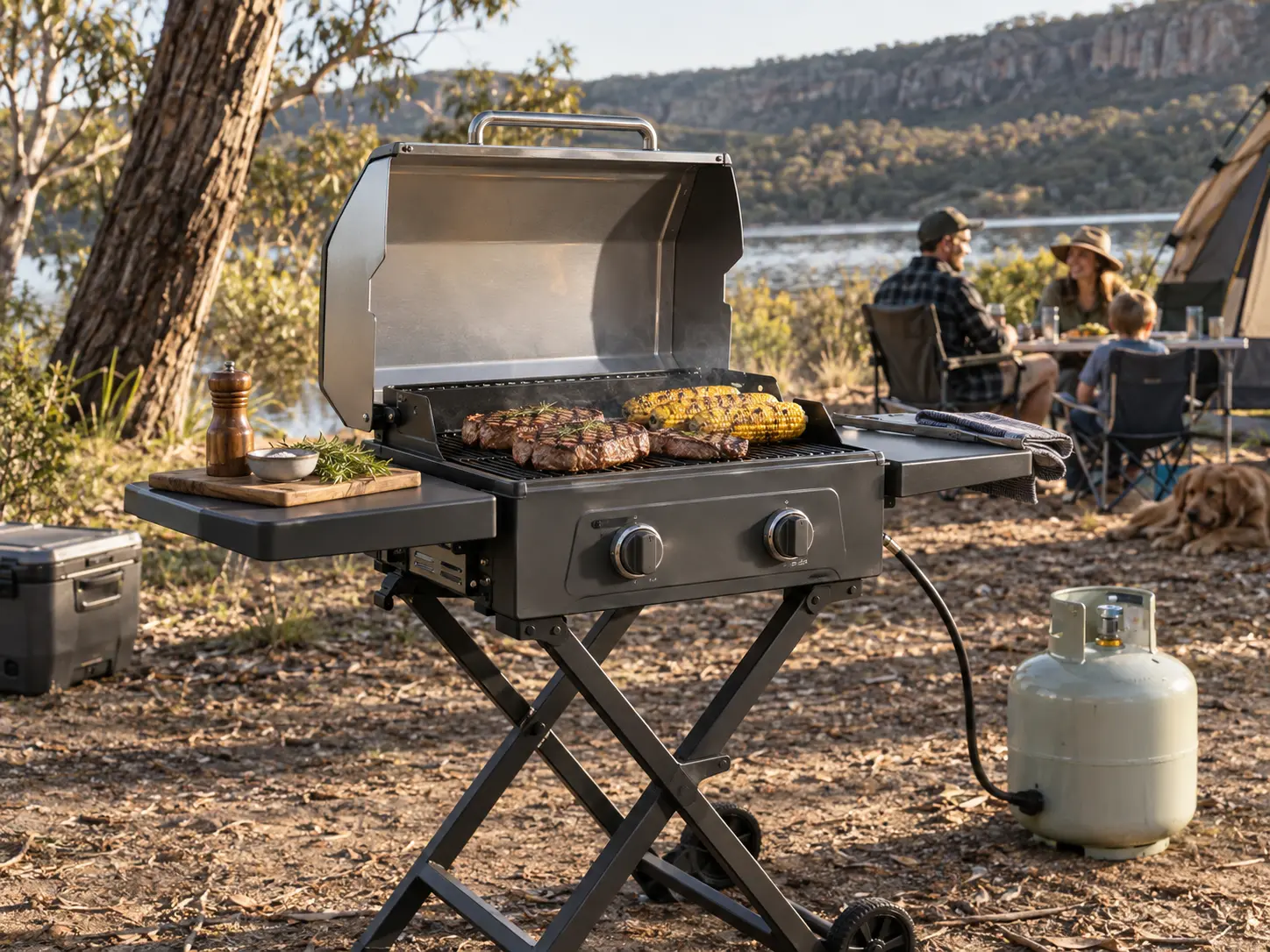
Illustrative editorial image showing a two-burner hooded gas-BBQ architecture, not an exact product photograph.
Two independently controlled burners let the Ziggy run different temperatures simultaneously, while its deep hood supports roasting. The grill-only price was around $599 during research, but cart, stand and promotional bundles vary, so the exact package needs checking.
ProductReview shows 4.2/5 from 148 reviews for the LP Gas variant and 4.1/5 from 189 across the broader Twin Grill family. The substantial pool includes long-term praise for cooking flexibility and convenience, alongside recurring complaints about high-heat searing, wind blow-out, ignition corrosion, parts and support.
Large Australian owner pool with strong positives and meaningful complaints
Many owners report versatile cooking, convenient independent burners and good caravan or family sizing. Heat output, wind sensitivity, ignition corrosion, replacement-part cost and support recur often enough that they should remain visible.
Pros
- Two independent burners
- More family cooking space
- Good roasting flexibility
- Substantial exact-product evidence
- Strong caravan/base-camp fit
Cons
- About 22kg before fuel/accessories
- Heat and searing complaints
- Wind can affect burners
- Parts and support complaints exist
- Package and cart pricing varies
Weber Go-Anywhere Charcoal Barbecue
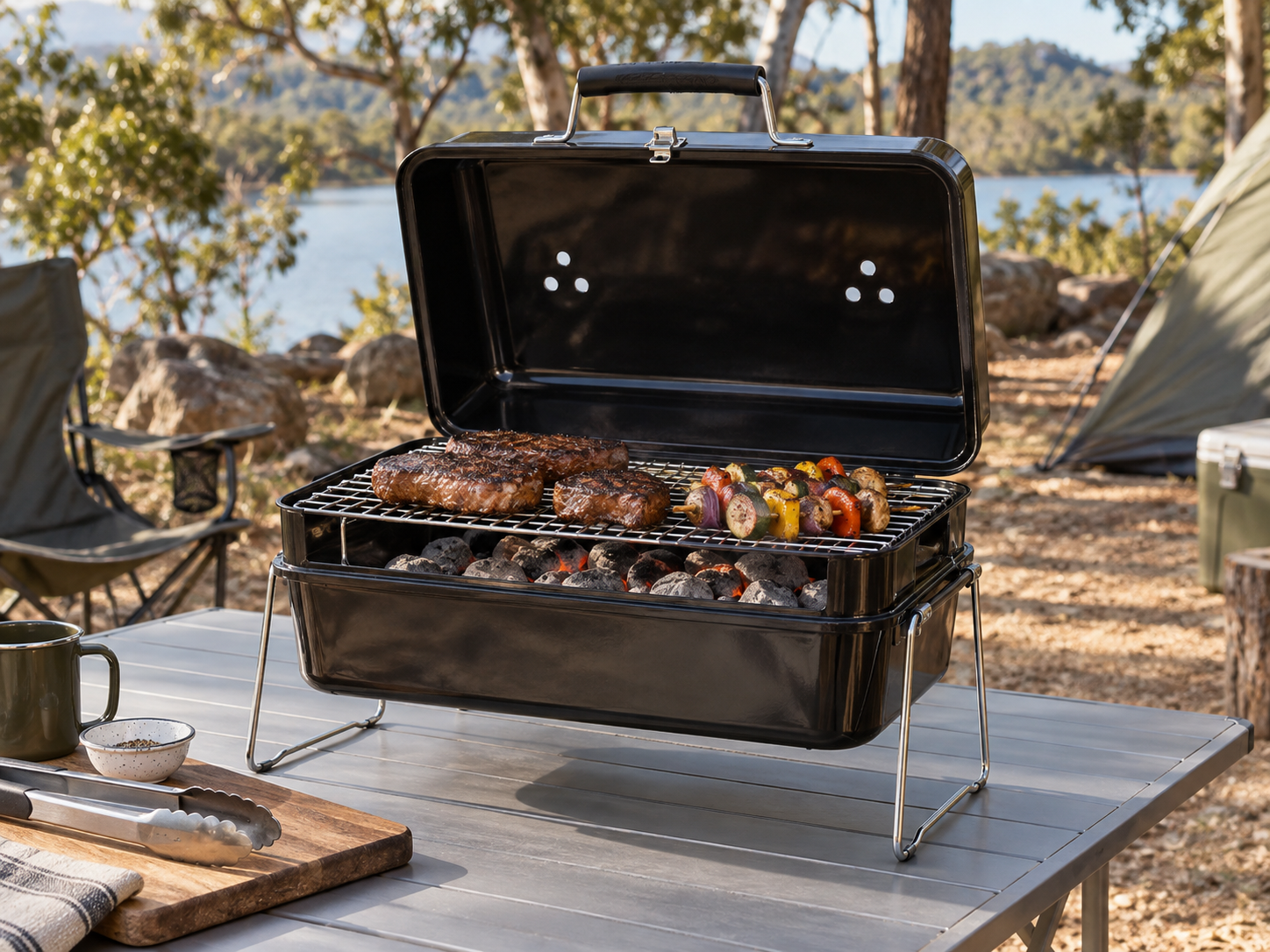
Illustrative editorial image showing the correct compact rectangular charcoal architecture, not an exact product photograph.
The Go-Anywhere costs about $149.95 and uses a compact rectangular cookbox, lid and base vents, plated cooking grill and folding legs that secure the lid for transport. At about 6.6kg, it is the easiest locked pick to carry and does not need a gas cylinder.
Charcoal takes longer to light and shut down, creates ash and may be prohibited during fire-danger periods or under campground rules. Restrictions differ across jurisdictions and conditions, so check the relevant state or territory authority and the campsite before use.
Limited exact-model Australian customer volume
The architecture is simple and established, but Queue 2.3 did not establish a substantial independent Australian exact-model pool. Broader Weber kettle or charcoal-family scores are therefore not transferred to this product.
Pros
- Much cheaper than premium gas models
- No gas bottle or regulator
- Compact rectangular packed shape
- Folding legs secure the lid
- Classic charcoal cooking
Cons
- Slower lighting and preheating
- Ash and hot-coal disposal
- Fire restrictions may prohibit use
- Smaller cooking area
- Fuel must be carried and kept dry
Gas or charcoal?
Gas
Fast to start, easy to adjust and simple to shut down. It suits repeated campsite meals, but the cylinder, hose, regulator and safe storage add bulk beyond the BBQ's listed weight.
Charcoal
Simple hardware and distinctive flavour, but slower startup, ash management and local fire restrictions matter. Charcoal is not automatically permitted at every campground or during every fire-danger period.
Portability and burner count
Look beyond the appliance weight. Packed dimensions, awkward handles, removable tables, unsecured grill plates, grease trays, stands and the fuel supply all affect whether a BBQ is practical in your vehicle.
A single burner keeps a unit compact and is enough for most small-group cooking. Two burners add genuine heat zones for simultaneous foods and indirect cooking, but the BBQ becomes larger and heavier. More burners do not automatically make a better camping setup.
Grills, hotplates and hooded cooking
A grill lets fat drain and suits steaks, chops and sausages. A hotplate is better for eggs, bacon, onions, pancakes and delicate foods; on many portable BBQs it is an optional accessory whose cost and storage space should be included.
A proper hood expands the menu to roasts, thicker cuts and indirect cooking. That is a major reason the Baby Q and Ziggy are more versatile than a flat camp grill, although suitable clearances and manufacturer instructions still apply.
Wind, caravan gas and fire restrictions
Strong wind can disrupt portable gas burners. Position the BBQ as the manufacturer permits and use only safe shelter that preserves required ventilation and clearances—never enclose a gas appliance dangerously to block wind.
Do not assume any portable LPG BBQ can connect directly to any caravan gas bayonet. Certification, regulator arrangements, flame-failure requirements, hoses and fittings can differ. Follow both manufacturers' requirements and use licensed gas work where required.
Charcoal and open-flame rules vary by campsite, jurisdiction and conditions. Check the campground and the relevant state or territory fire authority before lighting the BBQ, especially during a Total Fire Ban.
Which one should you buy?
Choose the Baby Q Premium for the strongest all-round balance of portability, cooking versatility and mature ownership history. Choose the Ziggy Twin when two heat zones and family capacity justify extra weight and more mixed evidence. Choose the Go-Anywhere when budget, packed simplicity and charcoal cooking matter most—and its use is permitted.
Frequently asked questions
What is the best camping BBQ in Australia?
The Weber Baby Q Premium Q1200N is the best overall pick here for its compact 11kg body, strong hooded cooking versatility and deep Australian Baby Q ownership history.
Is a Weber Baby Q good for camping?
Yes, for many couples and small families. It is portable rather than ultralight, and the total setup also includes a gas cylinder and any stand, hotplate or cover you carry.
Is a one-burner or two-burner BBQ better for camping?
One burner is simpler and more compact. Two burners allow independent heat zones and simultaneous cooking, but add weight, size and cost.
Can I connect a camping BBQ to a caravan gas bayonet?
Do not assume compatibility. Check the BBQ and caravan manufacturer requirements, approved regulator and hose arrangement, appliance certification and applicable gas rules; use licensed gas work where required.
Can I use a charcoal BBQ during a Total Fire Ban?
Rules differ by state or territory, fire-ban category, location and campground. Check the relevant fire authority and campsite rules for the day and place of use rather than relying on a single Australia-wide answer.