
Bushman Original SC35-52 — 2026 HD
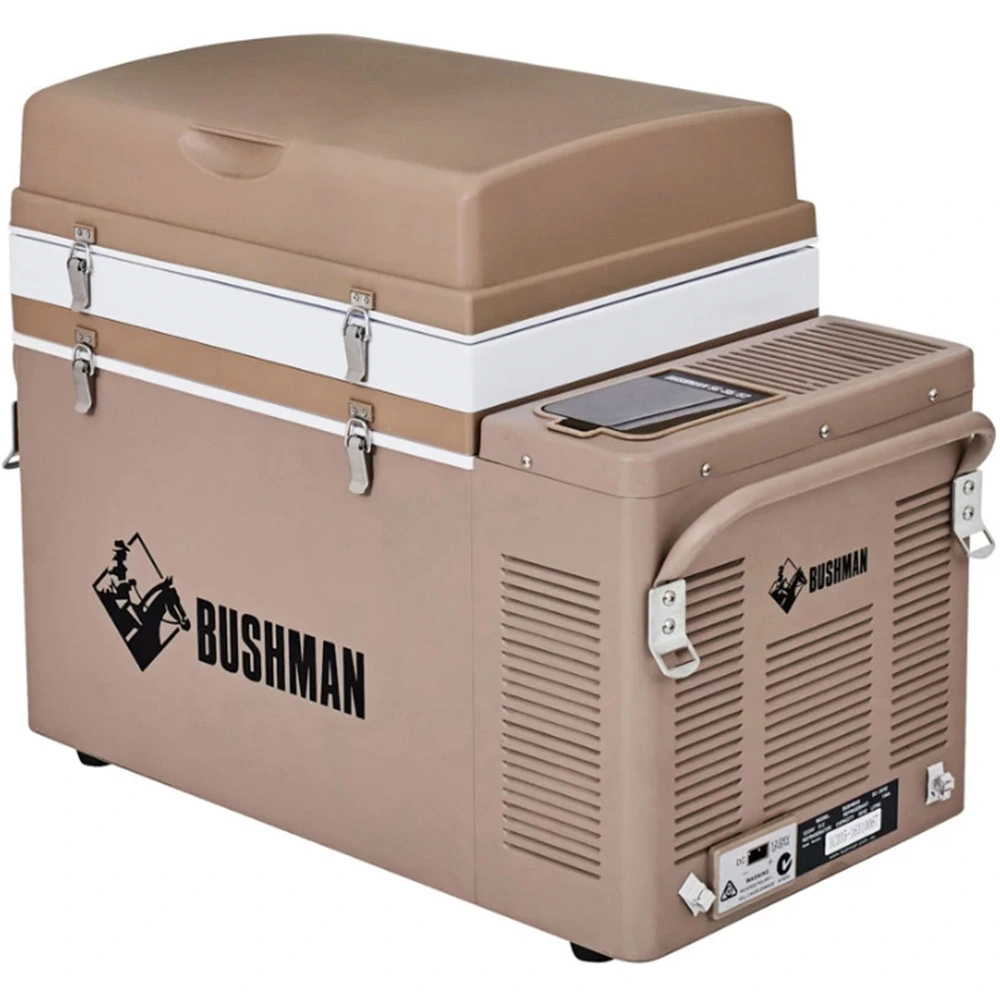
Original SC35-52 platform product image; confirm the current HD revision supplied.
The current HD manufacturer specification is 22.5kg; capacity and height change with the lid and collar configuration.
Specifications
| Revision | Current manufacturer offer: 2026 HD; confirm retailer-supplied revision. |
|---|---|
| Capacity | 35 / 42 / 45 / 52L configurations; one temperature zone. |
| Footprint | 690 × 385mm. |
| Height | 380 / 475 / 465 / 545mm for 35 / 42 / 45 / 52L respectively. |
| Weight | 22.5kg, current manufacturer HD specification. |
| Compressor | BD35-HD, current HD revision. |
| Battery protection | HD manual: 9.6V cut-out; 10.9V restart. |
| Express warranty | 3 years whole fridge; 7 years compressor under stated 2026-model coverage; terms apply. |
Extended product analysis
Configurable capacity and vehicle fit
The Original Bushman's main advantage is its modular capacity. The collar and lid configurations let one cabinet serve different packing needs, rather than requiring a larger fridge for every trip. The footprint stays the same, but height changes substantially; check the selected configuration against the vehicle, slide and opening clearance.
Current HD revision and ownership history
The Original platform has extensive owner history and a direct Australian parts and service route. However, the current 2026 HD version changes the compressor and construction details. Older reviews remain useful evidence about the platform's layout and ownership experience, but they cannot establish long-term reliability of the new compressor. Some retailer listings retain older specifications, so confirm which revision will be supplied.
Warranty and service
Historical owner complaints include starting or controller issues, cables and latches, alongside long-use positive reports. These accounts deserve consideration without being presented as proven defects in the new HD hardware. The current express warranty states three years for the whole fridge and seven years for the compressor; inbound warranty freight is the owner's responsibility under the stated terms, with repaired-return freight covered by Bushman.
Power planning
Power planning remains a limitation. Current manufacturer documents contain conflicting consumption figures and test conditions, so we do not use them to promise a particular battery runtime or an efficiency win. Allow for ambient heat, ventilation, food load, lid openings and the selected temperature when sizing the power supply.
Pros
- Configurable 35–52L capacity
- Same footprint across configurations
- Established Original-platform ownership history
- Direct Australian parts and service route
Cons
- New HD compressor lacks long-term evidence
- Height changes with lid/collar configuration
- Conflicting manufacturer consumption figures
- Inbound warranty freight at owner expense
Dometic CFX5 45
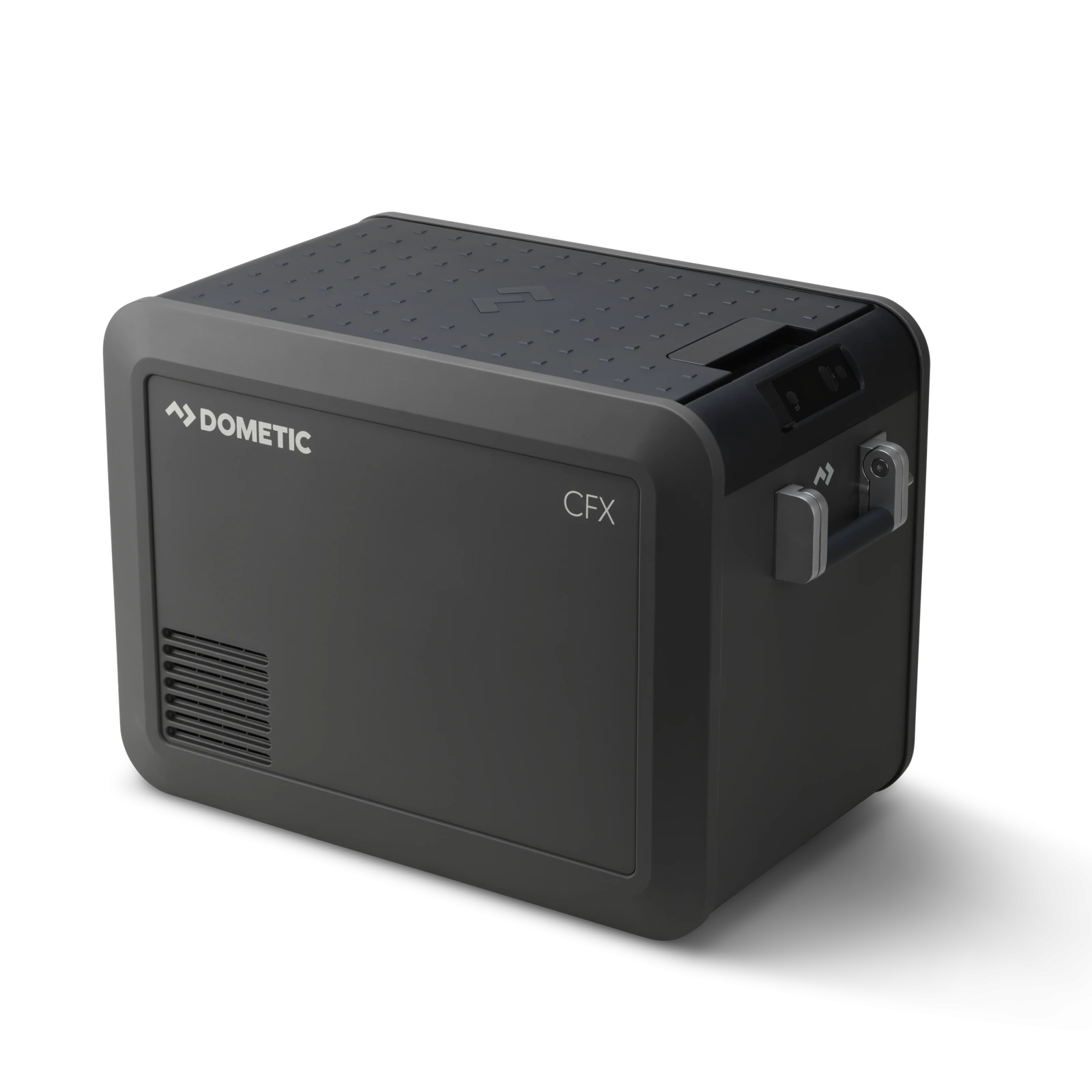
Exact Australian CFX5 45 product image.
Specifications
| Australian SKU | 9620015959. |
|---|---|
| Capacity | 46L (IEC); single zone. |
| External dimensions | 694D × 398W × 476H mm. |
| Net weight | 18.90kg, current Australian manufacturer specification. |
| Power | 12/24V DC and 100–240V AC. |
| Connectivity | Bluetooth through MobileCooling. |
| Australian refrigerant | R600a. |
| Express warranty | 5 years for CFX5 under current Australian manufacturer terms. |
Extended product analysis
Connected features and fit
The CFX5 45 provides a premium connected option for buyers who want Bluetooth control through Dometic's MobileCooling app. The Australian model is a 46L single-zone fridge/freezer. It still needs careful vehicle-fit planning: allow room for ventilation, lid movement, cables and secure mounting beyond the cabinet's published dimensions.
Ownership and reliability reports
Ownership evidence is mixed. Overseas owners report successful trips and effective cooling, while several describe non-starting or dead-on-arrival units and latch trouble. Those recurring complaints matter when considering remote travel, but the reports do not establish a measured failure rate. The US version also differs in refrigerant and electrical specifications, so its compressor and thermal outcomes cannot simply be treated as Australian-model results.
Regional evidence and performance
The international evidence remains useful for shared aspects such as handling, controls and latch design. Positive controlled US testing supports the performance of the tested version, rather than proving Australian energy consumption or long-term reliability. The REI customer-rating pool includes six incentivised reviews. We have not used unlike test conditions to declare it an efficiency winner.
Warranty and remote use
Dometic's current Australian warranty expressly includes five-year cover for CFX5. Confirm the selling channel's assessment and freight arrangements, particularly before remote use. A warranty term is useful protection, but does not promise an immediate replacement or eliminate downtime; reliable installation and a practical backup plan still matter.
Pros
- Bluetooth control through MobileCooling
- 46L single-zone capacity
- Vehicle and mains power
- Five-year Australian express warranty
Cons
- Overseas startup and latch complaints
- US hardware differs from Australian model
- Vehicle-fit clearance still required
- Warranty does not eliminate downtime
iTechworld iFROST 40L IF40
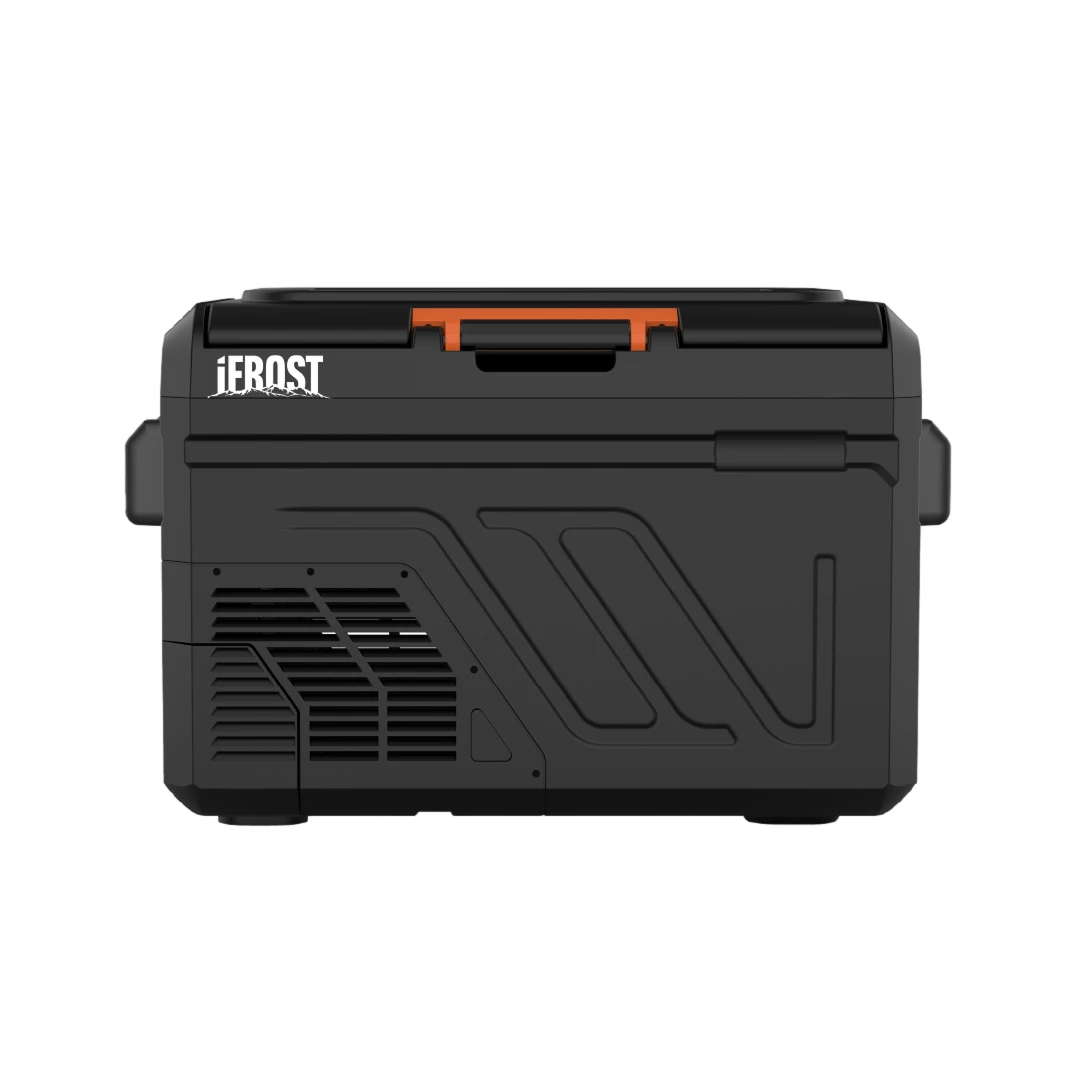
iTechworld product image: IF40 base fridge. Internal battery, slide and cover are optional.
Specifications
| Australian model | iFROST 40L, SKU IF40. |
|---|---|
| Capacity | 40L; single zone, fridge OR freezer. |
| Dimensions | 689L × 406W × 440H mm; extra opening/ventilation clearance required. |
| Base weight | 17kg without optional internal battery. |
| Settable temperature | −22°C to +24°C. |
| Power | 12/24V DC; supplied mains adapter and DC cable. |
| Compressor | LG. |
| Lid | Reversible/removable, access from either side. |
| Optional battery | 230Wh lithium-ion; sold separately from base fridge. |
| Solar input | Internal battery required; compatible unregulated 16–31.5V panel, 10A maximum, minimum 50W. |
| Express warranty | 2 years; Australian consumer guarantees are separate. |
Extended product analysis
Weight, dimensions and access
The IF40 earns its place for practical handling and fit. Its 17kg base is lighter than the other two featured fridges. The cabinet is 440mm high—lower than the Dometic and Bushman’s expanded configurations, but taller than the Bushman in its 35L configuration. The two-way lid helps where access is tight. The trade-off is a smaller 40L capacity. Check lid swing, ventilation, cable space and any slide before relying on cabinet dimensions alone.
Cooling and owner experience
Australian owners describe successful camping and hot-weather trips, alongside uneven temperatures, unwanted freezing, cooling problems and warranty replacements. A separate thermometer can help assess the packed compartment: the displayed temperature does not establish every item's temperature. The available evidence does not justify a promise of long-term remote-expedition reliability.
Power and optional battery
The base fridge runs from vehicle or mains power; its 230Wh internal battery is optional. Solar charging through the fridge requires that pack and a compatible unregulated panel within the manual's voltage and current limits. Published average-current figures lack the conditions needed for a fair efficiency comparison, and externally powered multi-day trips do not establish internal-battery endurance.
Warranty and support
The maker advertises two-year express cover and an assessment, repair or replacement process. A distributed IF40 repair network, stocked internal parts and assured remote turnaround were not established. Its appeal is lower lifting weight, compact fit and flexible power options for ordinary trips; longer advertised cover and other cost advantages are available from competing models, so we do not award it Best Value.
Pros
- 17kg base without optional battery
- 440mm closed height
- Reversible/removable lid
- Vehicle, mains and optional-battery power
Cons
- Smaller 40L capacity
- Uneven-temperature and freezing reports
- Internal battery sold separately
- Remote repair turnaround not established
Single-zone versus dual-zone
Buying advice
All three recommendations are single-zone units: each can run as a fridge or a freezer, but not both simultaneously. Single-zone fridges are simpler and make efficient use of one compartment. If you need frozen and chilled food at the same time, see our Best Dual-Zone Camping Fridges guide.
Capacity and vehicle fit
Roughly 20–30L suits day trips or compact solo use; 35–50L is the common couple or small-family touring range; 50L+ gives more storage but grows heavier and harder to fit. Measure the real space, including lid and ventilation clearance.
Power use and battery planning
A compressor fridge cycles on and off. Ambient heat, set point, insulation, ventilation, loading and lid openings all affect daily use. Maximum current and 24-hour average amp-hours are different measurements and should not be compared as though identical.
Australian heat and ventilation
A fridge inside a hot sealed canopy works much harder. Keep compressor vents clear, avoid direct sun where practical, use an insulated cover when appropriate and pre-cool the fridge and food before departure.
Battery, wiring and voltage drop
Do not rely on a vehicle starter battery while parked. Touring setups usually use an auxiliary battery, power station or solar with low-voltage protection. Long, thin cabling can cause cut-outs and apparent fridge faults, so correct wiring matters.
Freezer operation around -18°C usually requires substantially more energy than holding food and drinks near 3–5°C. Because these appliances are often used remotely, long warranties and Australian parts or service support have real value.
Which one should you buy?
Choose Bushman for configurable capacity, Dometic for premium connected features, or IF40 when a 17kg base and 440mm closed height are priorities. These are research-based recommendations; WBA has not performed hands-on comparative testing.
How we chose
Detailed methodology
We compared current Australian products by compressor and power design, usable capacity, AC/DC support, vehicle fit, warranty and service, owner evidence for the specific model or product family and realistic touring value. Manufacturer specifications and claims remain separate from customer experience.
Frequently asked questions
What is the best portable fridge in Australia?
Choose Bushman for configurable capacity, Dometic for premium connected features, or IF40 for its 17kg base and 440mm closed height. Choose according to your packing, power and handling needs.
What size camping fridge should I buy?
About 35–50L suits many couples and small families. Smaller fridges save space and weight; larger ones suit longer trips but require more room, lifting effort and battery planning.
How much battery power does a 12V fridge use?
There is no honest single answer. Daily use depends on heat, insulation, ventilation, temperature setting, contents and lid openings. Manufacturer figures need comparable test conditions. Bushman’s current documents conflict, and IF40’s published average-current figure lacks those conditions; neither supports a confident duration promise. Add a practical reserve.
Can I run a portable fridge from my car battery?
While driving, a correct outlet can power it. While parked, prolonged use can flatten the starter battery; touring systems normally use an auxiliary battery or power station with low-voltage protection.
Is a single-zone or dual-zone camping fridge better?
Single-zone models are simpler and use one compartment as either fridge or freezer. Dual-zone models are better when chilled and frozen food must be carried simultaneously.
Does IF40 include a battery, and can it charge from solar?
The base fridge does not include its optional 230Wh internal battery. Solar charging through the fridge requires that pack and a compatible unregulated 16–31.5V panel, 10A maximum and at least 50W. It is one zone: fridge or freezer, not both independently.