How we chose
Queue 2.3 assessed current Australian exact models, availability, street pricing, capacity, energy efficiency, reverse tumbling, moisture sensing, bedding and fabric-care features, installation depth, maintenance, warranty, owner feedback and provenance, professional testing and meaningful complaints. Manufacturer claims and professional testing remain attributed. Worth Buying has not physically laboratory-tested these dryers.
Electrolux 700 Series 9kg Heat Pump Dryer EDH903R7SC
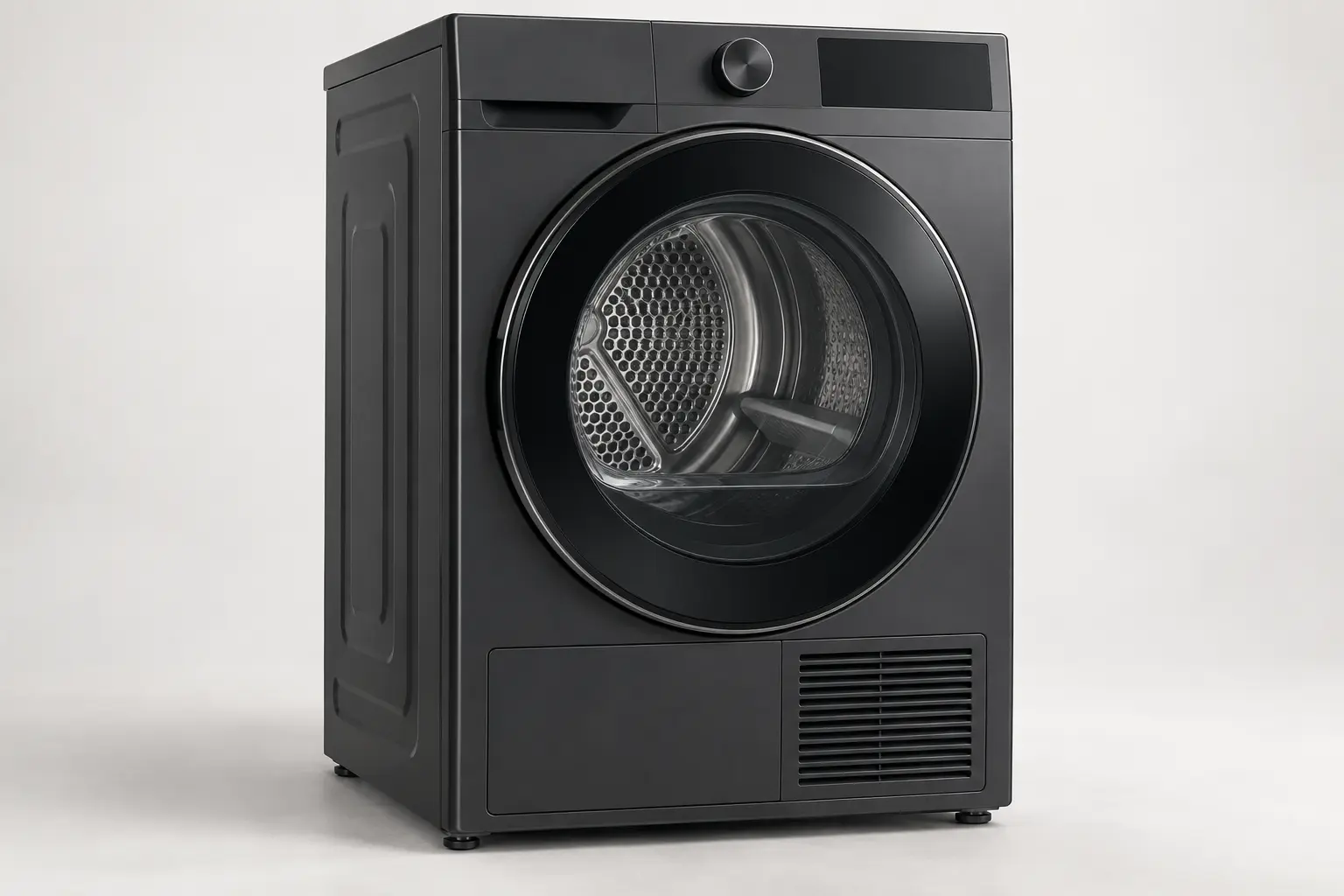
Illustrative editorial image, not an exact product photograph.
The 9kg EDH903R7SC carries a 9-star energy rating and rated annual use of 129kWh. Reverse Plus changes drum direction to reduce bedding bunching, while 3DSense reads moisture deeper in fabrics. SensiCare adjusts the cycle around the load, and DelicateCare plus Woolmark Blue certification make the machine more convincing for varied family wardrobes than a dryer sold mainly on efficiency.
Bedding+, Duvet, Wool, Silk and Hygiene programs give bulky and specialist loads their own treatment. Extra AntiCrease can keep the drum moving after a cycle, and the stainless-steel drum and connectivity are useful additions. Wi-Fi is convenience rather than a reason to pay the premium.
The trade-offs remain real. Its 662mm depth is substantial, the two-year headline warranty is ordinary at this price, and heat-pump cycles can still be lengthy. Some owners report occasional slightly damp loads that need a dryness adjustment or extra cycle, while the broader control set can take longer to learn than a basic vented dryer.
Strong exact-model owner evidence
Some retailer reviews are syndicated from Electrolux Australia or New Zealand, and some may have been collected through promotional programs. The pool is mature and useful, but it is not described as entirely independent.
Pros
- Reverse tumbling for large items
- 3DSense and SensiCare moisture control
- Strong fabric-care and bedding programs
- 9-star energy rating
- Mature exact-model owner evidence
Cons
- Costs substantially more than Haier
- Deep 662mm cabinet
- Cycles can still be lengthy
- Ordinary two-year warranty
- Part of the review pool is syndicated or promotional
Haier 500 Series 9kg Heat Pump Dryer HDHP90NW1
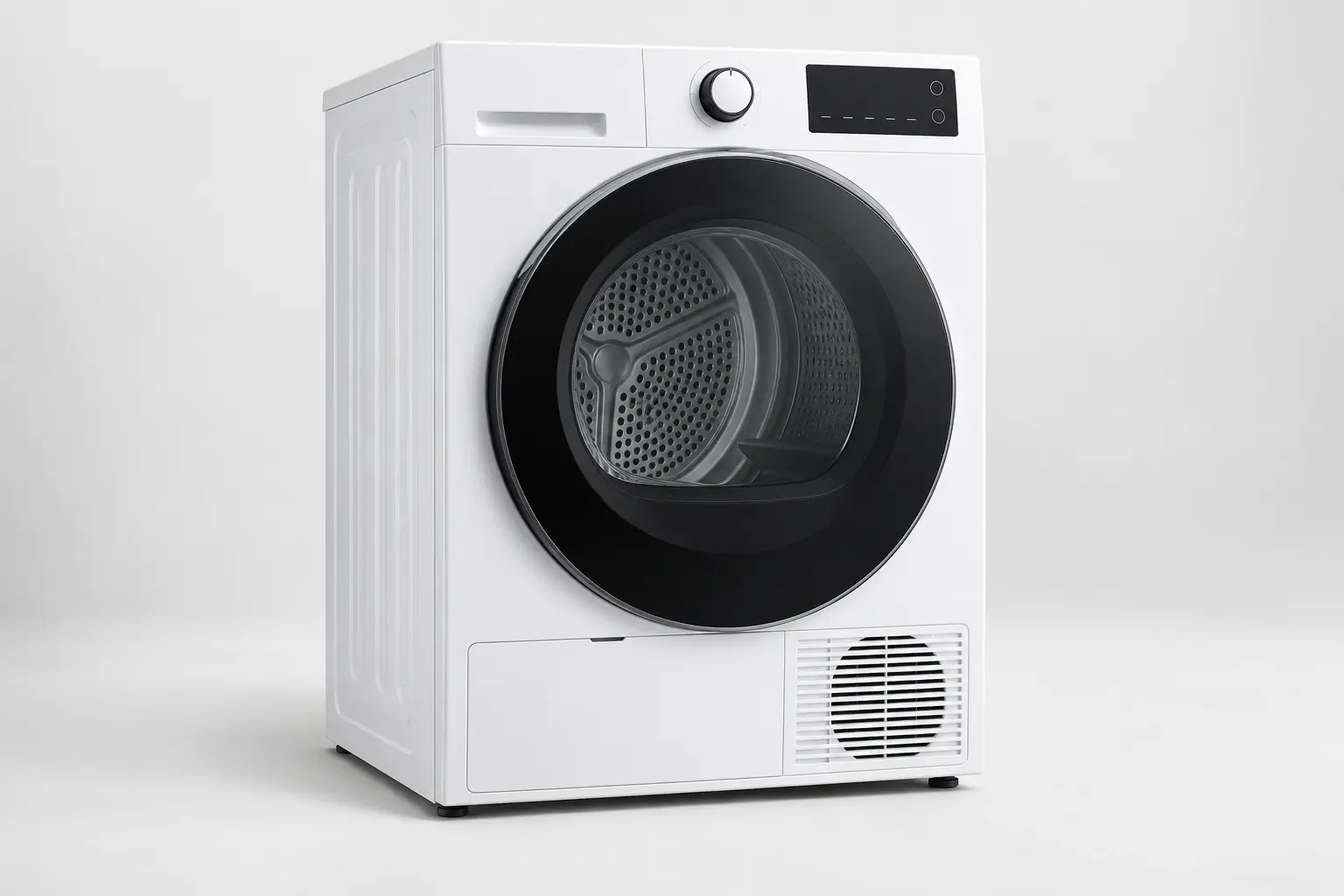
Illustrative editorial image, not an exact product photograph.
The HDHP90NW1 is rated at 126kWh/year and changes drum direction fully to reduce tangling. A dedicated Bedding cycle, sensor drying with three dryness levels, rack drying, Sanitise, Woolmark Blue and 14 specialist cycles make the lower price unusually credible. Its reversible door can also solve a practical installation problem the LG cannot.
The included rack suits items that should not tumble, and the available programs cover towels, wool, shirts, infant wear, mixed loads and a 30-minute express option. Wi-Fi and smart support are secondary conveniences; reverse tumbling, capacity and price are the decision-level features.
At 678mm deep it is the deepest recommendation here, so measure carefully. Haier's premium reputation is less established than some costlier brands, and the value advantage narrows if street pricing returns close to the $1,299 RRP. Like every heat-pump dryer here, it trades faster vented-style cycles for lower-temperature efficiency.
Strong / extensive exact-model regional owner evidence
The retailer pool includes Australian and New Zealand evidence plus syndicated reviews from the dark colour variant. That is accepted regional evidence, but it is not represented as 80 independent Australian white-model-only reviews.
Pros
- Exceptional capability around $1,000
- Full reverse tumbling
- Reversible door and included rack
- 9-star energy rating
- Strong regional owner evidence
Cons
- Very deep 678mm cabinet
- Value narrows near full RRP
- Less established premium reputation
- Cycles remain slower than vented drying
- Evidence includes regional and colour-variant syndication
LG Series 9 10kg AI Heat Pump Dryer DXH9-10W
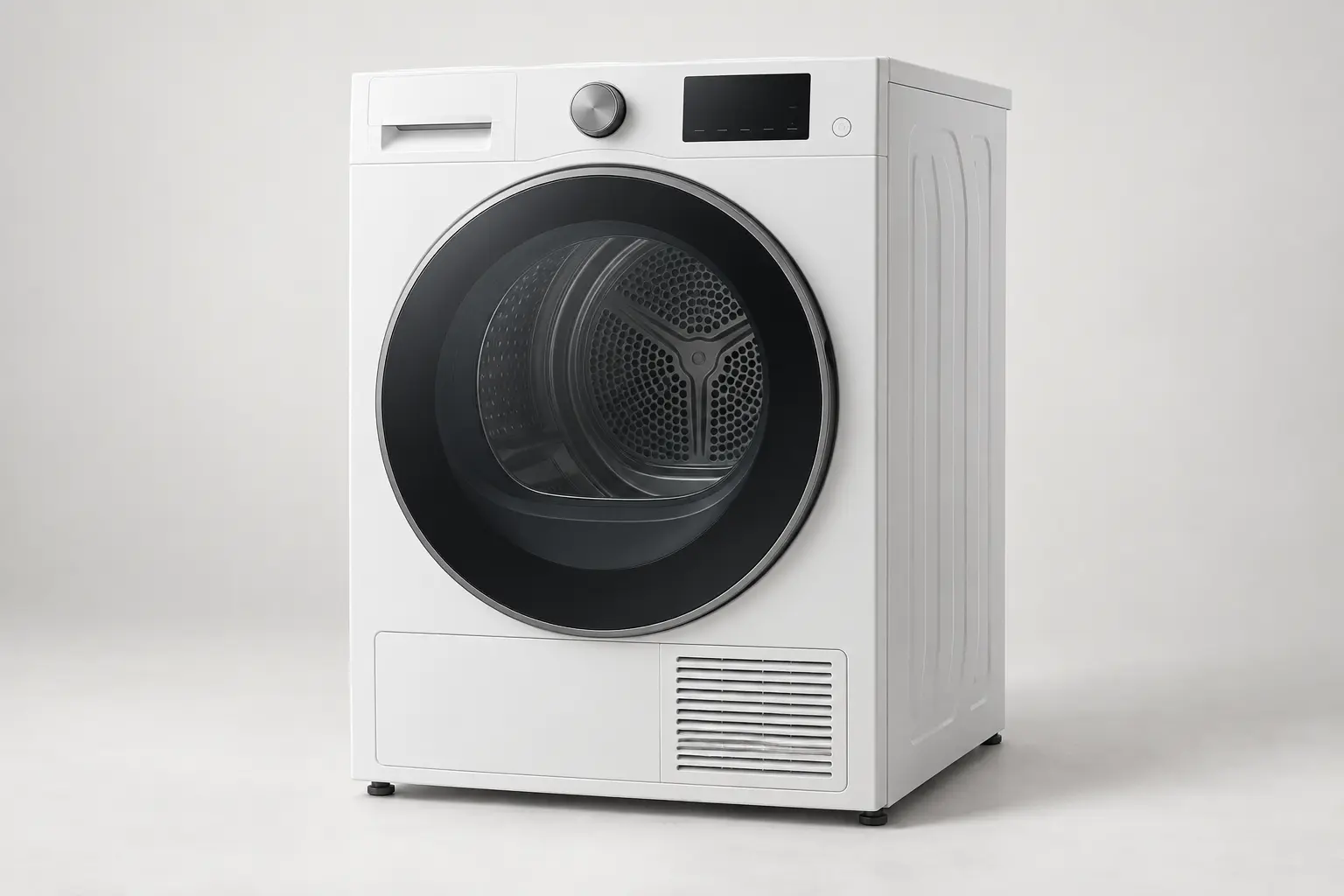
Illustrative editorial image, not an exact product photograph.
The DXH9-10W uses LG's Dual Inverter Heat Pump system with AI Dry, sensor and load sensing. Its 10kg drum is useful for high weekly laundry volume, large clothing loads and towels. AI Dry is available only for appropriate loads under LG's specified conditions, so it should not be described as controlling every full 10kg program.
Auto-cleaning condenser operation removes one routine task, while the dual lint filter, ThinQ monitoring, energy tracking, Smart Diagnosis and Smart Pairing support LG's broader laundry ecosystem. Auto-clean does not mean maintenance-free: lint filters still need cleaning, drainage needs inspection and owners must follow the manual.
LG's TurboDry 81-minute claim comes from controlled testing with a 5kg mixed load, not a full 10kg cycle. The door is not reversible, the machine weighs 55kg and exact-model owner evidence remains modest. Its additional eight-year warranty applies to inverter compressor or motor parts only; the whole product does not have a ten-year warranty.
Growing exact-model owner evidence
Pros
- Largest 10kg capacity here
- 9-star energy rating
- Auto-clean condenser
- Useful sensors and ThinQ monitoring
- Strong fit with LG front-load laundry systems
Cons
- Costs significantly more than Haier
- Owner evidence remains modest
- Door is not reversible
- Program load limits still apply
- Additional warranty is parts-only, not whole-product cover
What matters when buying a heat pump dryer
Reverse tumbling matters for sheets
Sheets and doona covers can wrap into a ball when the drum keeps turning one way. Reverse tumbling changes direction to reduce tangling, bunching and damp centres. It does not guarantee perfect bedding drying, but it is a genuine buying distinction.
Efficiency comes with longer cycles
Heat-pump dryers use lower temperatures and substantially less energy than conventional vented dryers, but usually take longer. Compare energy labels between similar capacities and judge dryness, load handling and sensor accuracy together rather than calling a two-to-three-hour cycle automatically defective.
Capacity is not bedding performance
Nine kilograms is a strong general family size; 10kg helps with frequent large clothing and towel loads. Headline capacity does not apply to every specialist program, and drum behaviour can matter more than one extra kilogram when drying sheets.
Depth is easy to miss
These dryers are approximately 660–678mm deep before practical clearances. Measure cabinet depth, door swing, hoses and stacking compatibility. A nominal 600mm-wide machine can still project well beyond shallow cabinetry.
Auto-clean is not maintenance-free
LG's system reduces condenser-cleaning work, but owners still need to clean lint filters, inspect drainage and follow maintenance instructions. No dryer should be treated as self-maintaining.
Tank or direct drainage
Condensed moisture can collect in an internal tank or, where installation permits, drain away through a hose. Direct drainage avoids emptying the tank but is a convenience rather than a requirement.
A promising model to watch
The Fisher & Paykel DH8060P5 combines 8kg capacity, 9-star efficiency, 113kWh/year, full reverse tumbling, TangleProtect, a Sheets mode, reversible door and strong pricing around $1,200–$1,250. It was not selected because its exact-model owner evidence was still extremely young—around three Appliances Online reviews. Earlier discontinued DH8060 owner history is not transferred onto this new model.
Which one should you buy?
Choose the Electrolux EDH903R7SC for the strongest all-round mix of reverse tumbling, moisture sensing, fabric care, bedding programs and established evidence.
Choose the Haier HDHP90NW1 when value matters most. It gives up little in core capability while costing substantially less.
Choose the LG DXH9-10W when 10kg capacity and an auto-clean condenser genuinely matter enough to justify the premium and developing owner pool.
Frequently asked questions
Are heat pump dryers worth it in Australia?
They make the strongest case for households that use a dryer regularly and value lower-temperature fabric care and high energy efficiency. Occasional users may not recover the higher purchase price quickly enough to justify the upfront cost.
Why do heat pump dryers take longer?
They recirculate air and dry at lower temperatures rather than exhausting large amounts of heated air. That reduces energy use and can be gentler on fabrics, but it normally extends cycle time.
What size heat pump dryer should I buy?
Nine kilograms suits many families. Ten kilograms is useful when large towel or clothing loads are genuinely frequent. Check the permitted load for each program because delicate, wool, express and AI cycles may accept much less than the headline capacity.
Why do sheets tangle in some dryers?
A large sheet can wrap around itself as the drum turns continuously in one direction. Reverse tumbling changes direction and can reduce balling and damp centres, although load size and how items are placed still matter.
Do heat pump dryers need plumbing?
Not necessarily. Condensed water can usually collect in a removable tank. Many installations can instead use direct drainage, which saves emptying the tank when a suitable drain is available.