How we chose
We assessed current Australian exact models, local availability, street pricing, rated capacity, spin speed, energy and water efficiency, detergent systems, refresh features, cabinet depth, owner evidence, review provenance, CHOICE brand and test context, warranty, service context and overall value. Worth Buying Australia did not physically laboratory-test these washing machines.
Serious contenders reassessed
Fisher & Paykel WH9060P4 remains a strong 9kg option with Steam Care and broad positive retailer feedback, but Bosch offers the cleaner combination of features, exact-model evidence and value. Electrolux EWF9043R7SC/R7SCS is another credible 9kg contender, although its review provenance includes syndication and alternate variants.
Westinghouse WWF8024M5WA/WAS has a very large positive retailer pool but materially more mixed independent evidence. LG remains a strong Australian front-loader brand; overlapping current generations made the exact-model shortlist less clear. Higher Miele W1 models add features such as QuickPowerWash, SteamCare or TwinDos at substantially higher prices. ASKO and Samsung remain credible alternatives for the right buyer.
Bosch Series 8 9kg Front Load Washing Machine with i-DOS WGG244A1AU
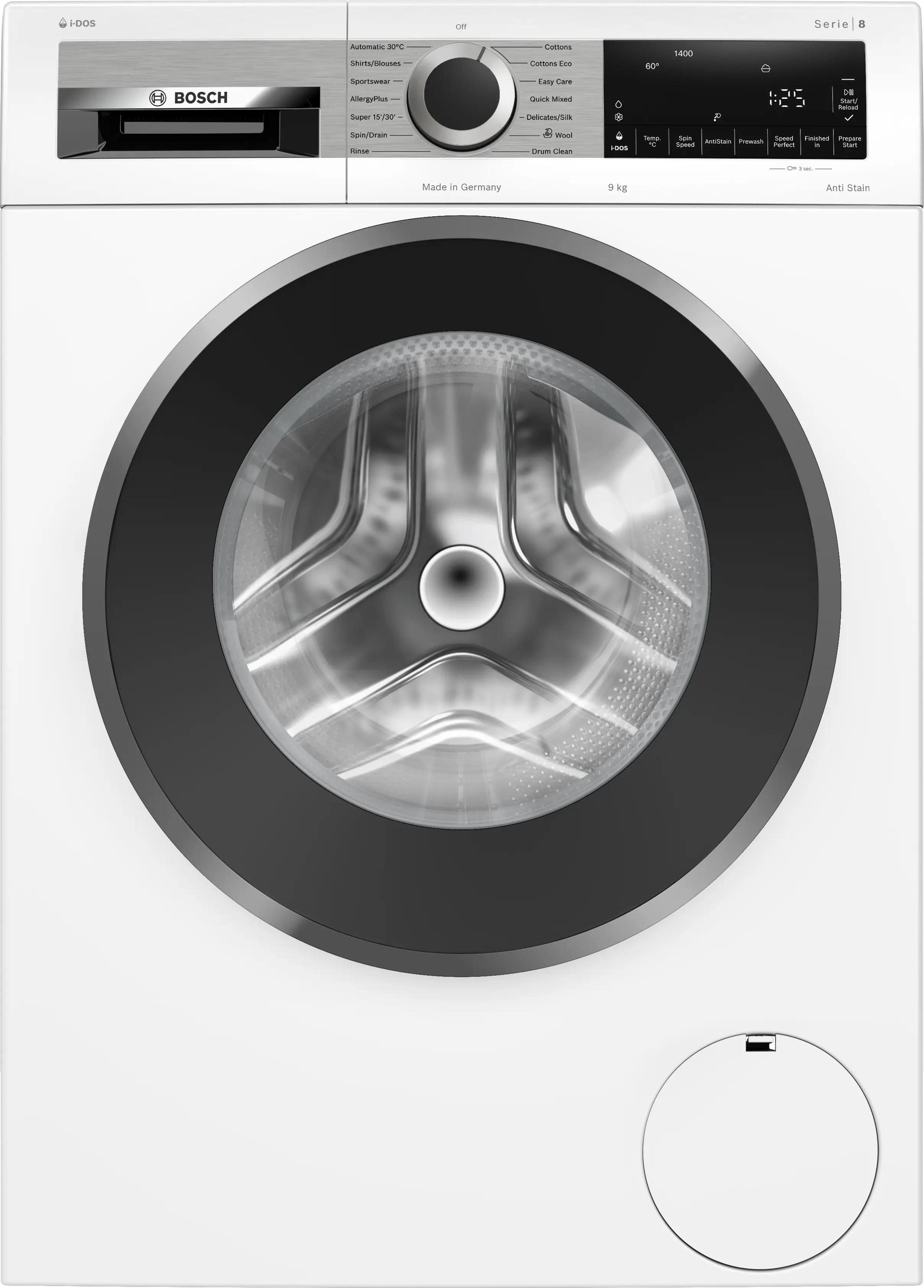
The WGG244A1AU combines a 9kg rated wash capacity and 1400rpm maximum spin with 5-star energy and 4.5-star WELS ratings. Its 590mm quoted cabinet depth is relatively manageable for a full-size front loader, although buyers still need clearance for the door, hoses, taps and wall connections.
i-DOS automatically dispenses detergent based on the selected program and load settings. It can reduce repeated measuring and help control overdosing, but it adds setup, detergent-compatibility considerations and system complexity. Buyers who prefer manual dosing should not pay for it merely because it is the headline feature.
AntiStain, AllergyPlus, ActiveWater Plus, VarioDrum, Reload and AquaSecure add useful capability without changing the core proposition: a premium-mainstream washer with strong evidence and family-friendly capacity. The research-period street price was roughly $1,400–$1,500, below Bosch's $1,699 direct context but still well above the Haier.
What owners say
Pros
- Useful 9kg family capacity
- i-DOS automatic detergent dosing
- 5-star energy and 4.5-star WELS ratings
- 1400rpm maximum spin
- Extensive current exact-model evidence
Cons
- Much more expensive than the Haier
- i-DOS adds complexity
- 9kg is unnecessary for some households
- Cabinet depth excludes installation clearances
- Feature richness does not make every cycle fast
Haier 300 Series 8.5kg Front Load Washing Machine HWF85KW1
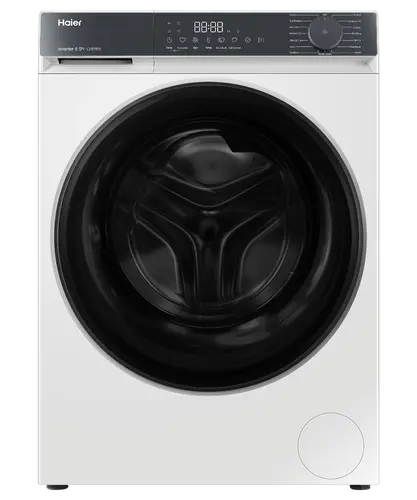
At about $642 during research, the white HWF85KW1 undercuts the Bosch dramatically while retaining the fundamentals: 8.5kg rated capacity, 1400rpm maximum spin, a 5-star energy rating and 4.5-star WELS result. Current rating data lists 185kWh/year and 73L/cycle.
The 565mm cabinet is the shallowest here, which can help in tighter laundries, though practical hose and door clearances still matter. Steam Refresh, Express 15, Add a Garment, Drum Clean, Wool, Mixed, Towels and Outdoor cover the programs most households are likely to use. The BLDC motor and anti-bacterial gasket treatment round out a sensible value package.
It does not include automatic detergent dosing and its two-year parts-and-labour warranty is ordinary. Documentation also varies between 14 and 15 program descriptions, while retailer copy sometimes mixes the white HWF85KW1 with the dark HWF85KB1. The recommendation and image here are specifically the white model.
What owners say
Pros
- Strong value near the $642 research price
- 8.5kg capacity and 1400rpm spin
- 5-star energy and 4.5-star WELS ratings
- Relatively shallow 565mm cabinet
- Strong retailer exact-model evidence
Cons
- Very small independent exact-model sample
- Two-year warranty is ordinary
- No automatic detergent dosing
- Simpler feature set than Bosch
- Program counts and colour references vary in some copy
Miele W1 8kg Active WEA125 WCS
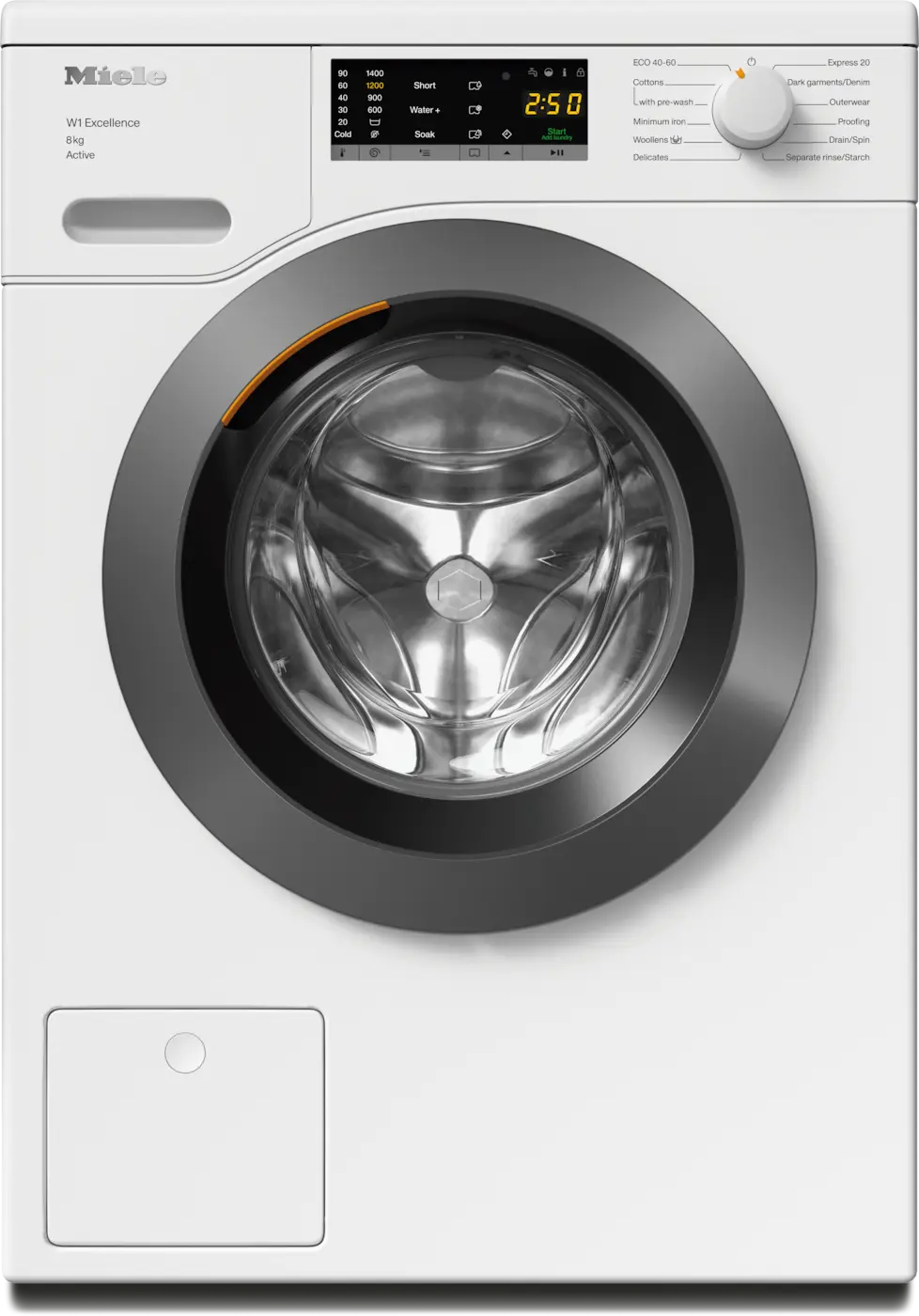
The WEA125 WCS is intentionally a simpler Miele. It has an 8kg rated capacity, 1400rpm maximum spin, Honeycomb drum, AddLoad, CapDosing and Watercontrol-System. Its program list covers Cottons, Delicates, Woollens, Express 20, dark garments/denim, outerwear, ECO 40–60 and core rinse/spin functions.
The premium case is not feature abundance. This model lacks TwinDos, QuickPowerWash and a feature-heavy smart display, while the 636mm cabinet and approximately 82kg machine weight demand careful installation planning. At roughly $1,549 promotional pricing during research, it also costs far more than the Haier despite its smaller capacity.
Miele leads CHOICE's current front-loader brand data, including reliability around 91% and a Best Brand score around 82%. That is strong brand-level context—not proof that this exact WEA125 is the single most reliable washing machine. The standard manufacturer warranty is two years; any paid extension must remain separate from that standard term.
What owners say
Pros
- Reliability-led W1 platform
- Honeycomb drum and AddLoad
- Simpler premium operation
- 1400rpm maximum spin
- Very strong brand-level reliability context
Cons
- Only 8kg at roughly $1,550 promotional pricing
- Standard warranty is only two years
- Heavy at about 82kg
- No TwinDos or QuickPowerWash
- Smaller exact-model evidence pool than Bosch
What matters when buying a washing machine
Front load versus top load
Front loaders generally clean well, use less water and energy, and spin faster. Top loaders can be easier to load, run shorter cycles and cost less. The right architecture depends on the buyer; top loaders are not inherently inferior for every household.
Capacity is a rated limit
Seven to eight kilograms often suits smaller households, 8.5–9kg suits many families and 10kg or more can help with large households or bulky loads. Rated kilograms do not describe literal drum volume, and specialist programs can impose lower limits.
Spin speed and drying
A higher maximum spin can remove more water, but fabric type, program, load balance and the speed actually reached all matter. A 1400rpm headline does not guarantee equally dry laundry from every cycle. If machine drying matters, see our heat pump dryer guide.
Automatic dosing
Automatic detergent systems can improve convenience and dosing consistency while reducing overdosing. They also add setup, detergent compatibility considerations and maintenance complexity. They are useful—not universally necessary.
Long Eco cycles are normal
Eco programs commonly trade time for reduced water and energy use. A long cycle is not automatically a defect; wash result, resource use and the household's schedule need to be considered together.
Measure installation depth
Nominal cabinet depth does not include every hose, tap, plug, door or wall-clearance requirement. Measure the actual laundry space and follow the exact installation guide before ordering or stacking appliances.
Remove transport bolts correctly
Transport bolts must be removed exactly as the manufacturer instructs before the first wash. Keep them for future moves and do not improvise mechanical removal or installation steps outside the supplied manual.
Warranty is not reliability
Standard warranty, paid extensions, exact-model owner history and brand-level reliability are different evidence. A longer warranty does not automatically prove the machine will be more reliable.
Which one should you buy?
Choose the Bosch WGG244A1AU for the strongest all-round mix of 9kg capacity, i-DOS, efficiency and mature exact-model evidence.
Choose the Haier HWF85KW1 when value and a shallower 8.5kg machine matter more than premium automation.
Choose the Miele WEA125 WCS when long-term brand reliability and the simpler W1 platform matter more than features per dollar.
Frequently asked questions
Is a front loader better than a top loader?
Front loaders generally use less water and energy and can reach higher spin speeds. Top loaders can be easier to load, cheaper and faster on some cycles. The better choice depends on space, mobility, budget and washing habits.
What size washing machine do I need?
Seven to eight kilograms often suits smaller households, while 8.5–9kg is a practical family range. Ten kilograms or more can help with high laundry volume and bulky loads, but program-specific limits still apply.
Is automatic detergent dosing worth it?
It is useful for frequent washers who value convenience and consistent dosing. It is less compelling for buyers who prefer manual control, use specialist detergents or want the simplest possible machine.
Why do front-loader cycles take so long?
Eco programs often use longer wash action to reduce energy and water consumption. Faster programs exist, but may have smaller load limits or different efficiency and cleaning trade-offs.
Which washing-machine brands are most reliable in Australia?
CHOICE's current front-loader brand data places Miele first, followed by LG and Bosch. That is brand-level evidence based on the available data; it does not prove every model from one brand is more reliable than every competing exact model.