How we chose
We assessed exact Australian models, current-generation status, local availability and pricing, panel type, local-dimming design, published exact-size zone counts, HDR brightness, dark-room contrast, blooming, reflections, viewing angles, motion, gaming, HDMI capability, HDR formats, smart platforms, audio, warranty, Australian owner evidence and credible professional testing.
Worth Buying scores are editorial judgements, not calculations from customer star ratings. Manufacturer zone and brightness figures remain manufacturer data unless independently measured. Worth Buying Australia did not conduct the external laboratory or specialist tests described below.
Why two TCL models remain
The C8L and C7L serve different buyers. C8L has materially denser local dimming, more HDR headroom and better blooming control; C7L retains most practical features at roughly $600 less. Hisense U7S provides a genuine alternative built around anti-reflection treatment, native 165Hz gaming and VIDAA.
Serious near-misses
Samsung QN80H QA65QN80HAWXXY is bright, capable and gaming-friendly, but TCL offers a stronger specialist Mini-LED value case at current prices. LG QNED86B 65QNED86BSA is a credible price-driven alternative with Dolby Vision, webOS and 144Hz-class VRR, but the finalists make a clearer local-dimming and value case. TCL C6L and Hisense U6S are cheaper entry points, while Sony BRAVIA 9 K-65XR90 remains technically excellent but current exact-model Australian stock is inconsistent. Discounted 2025 runouts can be good buys, but volatile stock makes them poor reproducible winners.
TCL C8L 65-inch Premium SQD-Mini LED Google TV 65C8L
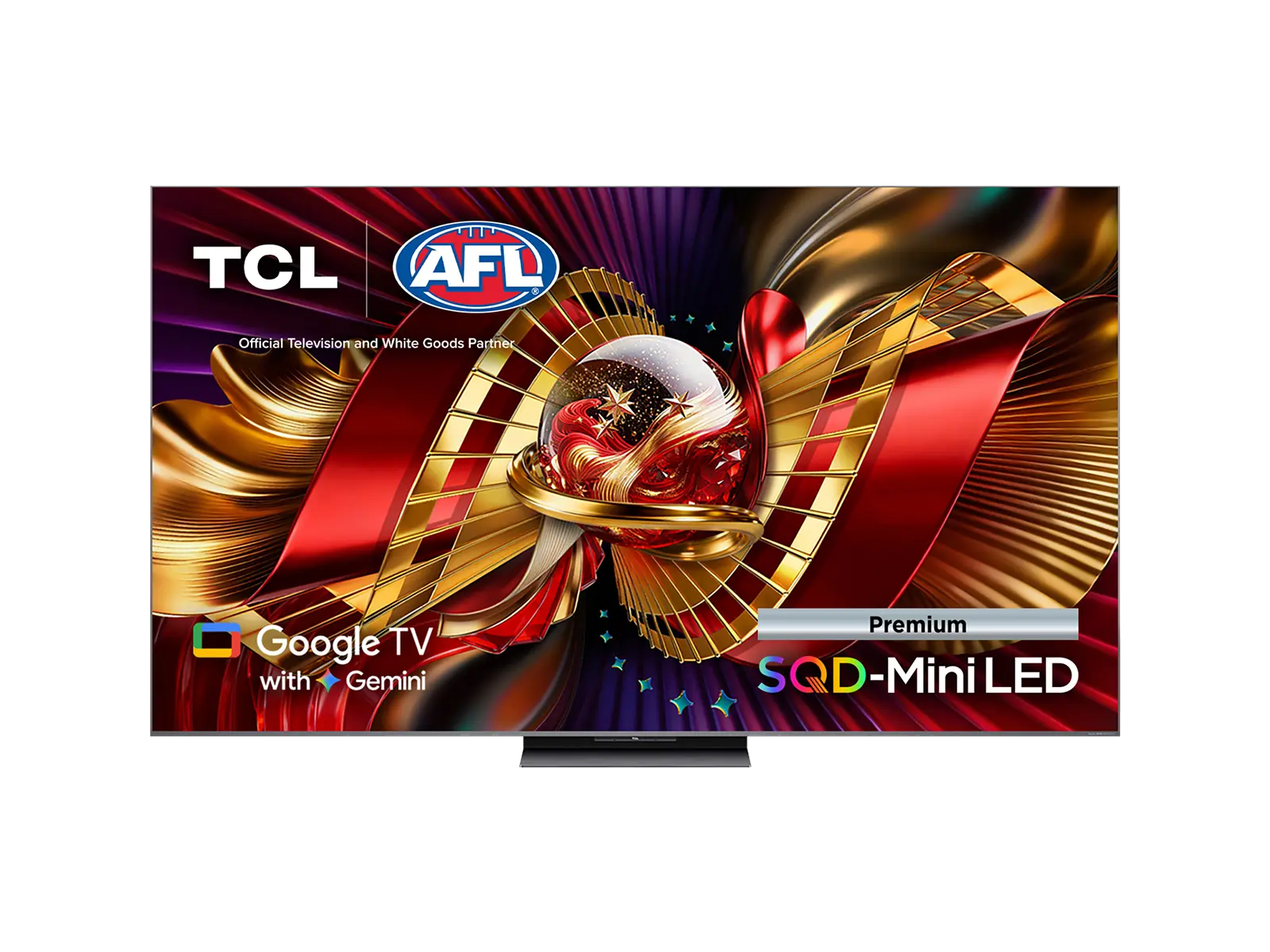
TCL Australia lists the exact 65C8L with SQD-Mini LED, a WHVA 2.0 Ultra panel, 2,040 precise-dimming zones, Super QLED colour, TSR AiPQ processing, Google TV and Bang & Olufsen-tuned audio. Its “up to 5,000 nits” HDR figure is a TCL claim under defined conditions, not a Worth Buying measurement or sustained full-screen output.
Australian specialist hands-on comparison found the C8L had stronger blooming control, dynamic range and panel performance than C7L. BTTR Australia's testing reported strong HDR colour and detail without obvious blooming around bright objects in demanding real-world viewing, while still finding room-light reflections. International C8L/QM8L-family testing provides context on price/performance, brightness and gaming, but exact Australian specifications remain the authority for 65C8L.
It is still an LCD: difficult scenes can expose halos, viewing angles do not match OLED, and room reflections are not eliminated. The current snapshot price is about $600 above C7L, Google TV asks more ecosystem involvement than some buyers want, and Australian exact-model owner evidence is still sparse.
Key details
| Exact model | 65C8L · 65-inch SQD-Mini LED |
|---|---|
| Dimming | 2,040 precise-dimming zones |
| HDR | Dolby Vision IQ, HDR10+, HLG |
| Platform / audio | Google TV · Bang & Olufsen-tuned audio |
| Price snapshot | About $2,295 promotional; TCL RRP $2,999 |
| Warranty | 3-year TCL television manufacturer's warranty; terms apply |
Owner and professional evidence
Pros
- Very strong local-dimming specification
- Excellent HDR potential and broad format support
- Strong real-world blooming control
- Modern gaming connectivity
- Google TV and strong integrated audio
Cons
- Significantly dearer than C7L
- LCD blooming can still appear in difficult scenes
- Reflections are not completely controlled
- Owner evidence remains limited
- Viewing angles cannot match OLED
TCL C7L 65-inch SQD-Mini LED Google TV 65C7L
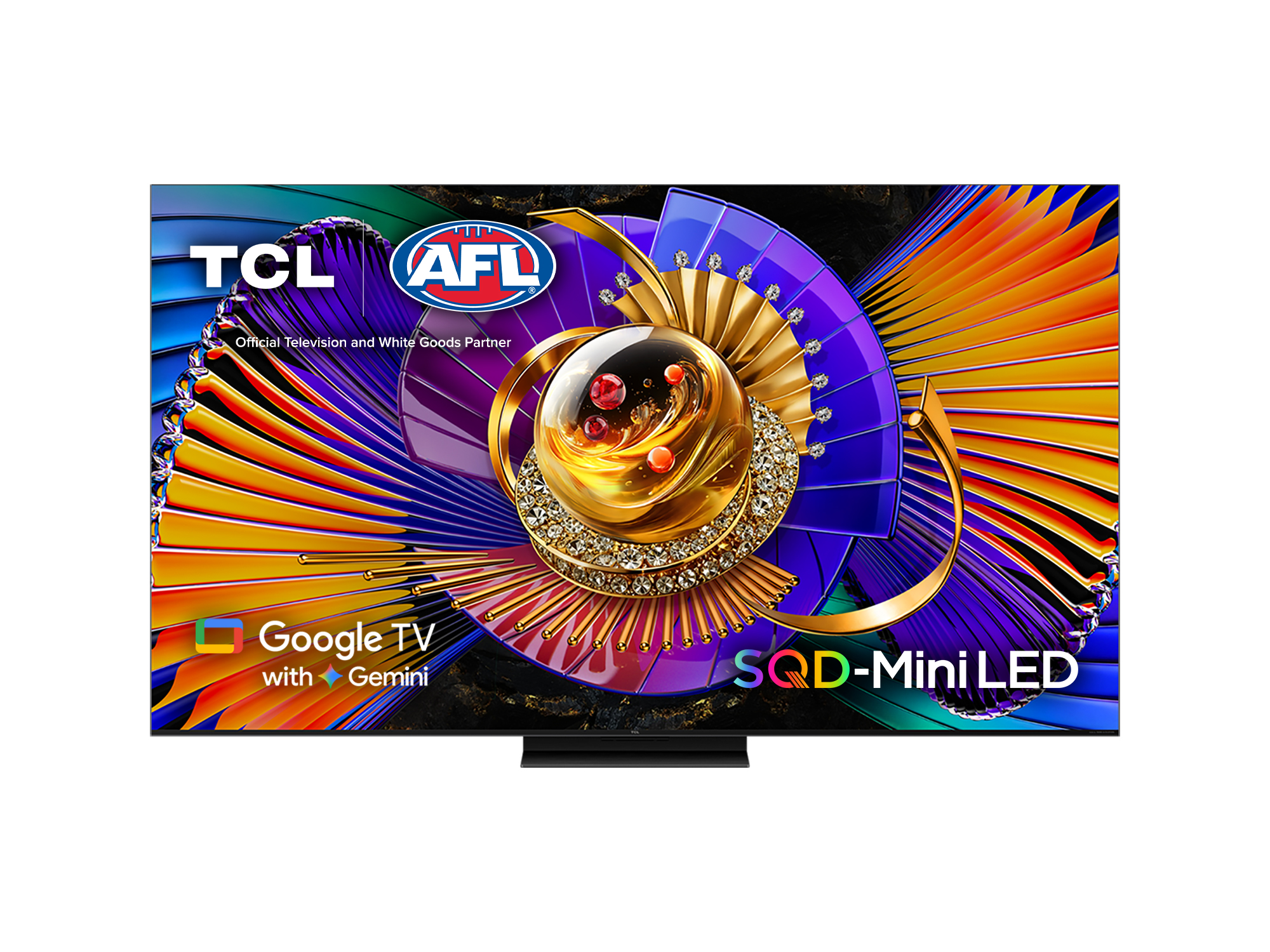
TCL Australia lists the 65C7L with SQD-Mini LED, an HVA 2.0 Pro panel, 1,152 precise-dimming zones, TSR AiPQ processing, Google TV, high-refresh gaming and Bang & Olufsen audio. It supports Dolby Vision IQ, HDR10+ and HLG. TCL's “up to 3,000 nits” figure is a manufacturer peak claim, not a guarantee of full-screen brightness.
Australian hands-on comparison places C7L as the stronger-value choice for many households while retaining a meaningful distinction: C8L has denser local dimming, greater dynamic range and more refined blooming control. Zone count alone does not decide picture quality, but the 65-inch figures are exact and help explain the real product separation.
The early owner pool is positive but small. The Good Guys showed seven exact-model reviews, a 5.0/5 snapshot and 100% recommendation; its disclosure says verified purchasers may have received incentives. We keep separate retailer pools and screen sizes separate rather than creating an artificial aggregate.
Key details
| Exact model | 65C7L · 65-inch SQD-Mini LED |
|---|---|
| Dimming | 1,152 precise-dimming zones |
| HDR | Dolby Vision IQ, HDR10+, HLG |
| Gaming | High-refresh features including 288Hz VRR Game Accelerator |
| Price snapshot | About $1,695 street/promotional; TCL RRP $2,495 |
| Warranty | 3-year TCL television manufacturer's warranty; terms apply |
Owner and professional evidence
Pros
- Excellent current value
- Serious exact-size dimming-zone count
- Dolby Vision IQ and HDR10+
- High-refresh gaming
- Google TV and good integrated audio
Cons
- Less refined local dimming than C8L
- Lower HDR ceiling
- Small exact-model review sample
- Some owner reviews potentially incentivised
- LCD viewing-angle limits remain
Hisense U7S 65-inch ULED MiniLED 165Hz 4K TV 65U7SAU
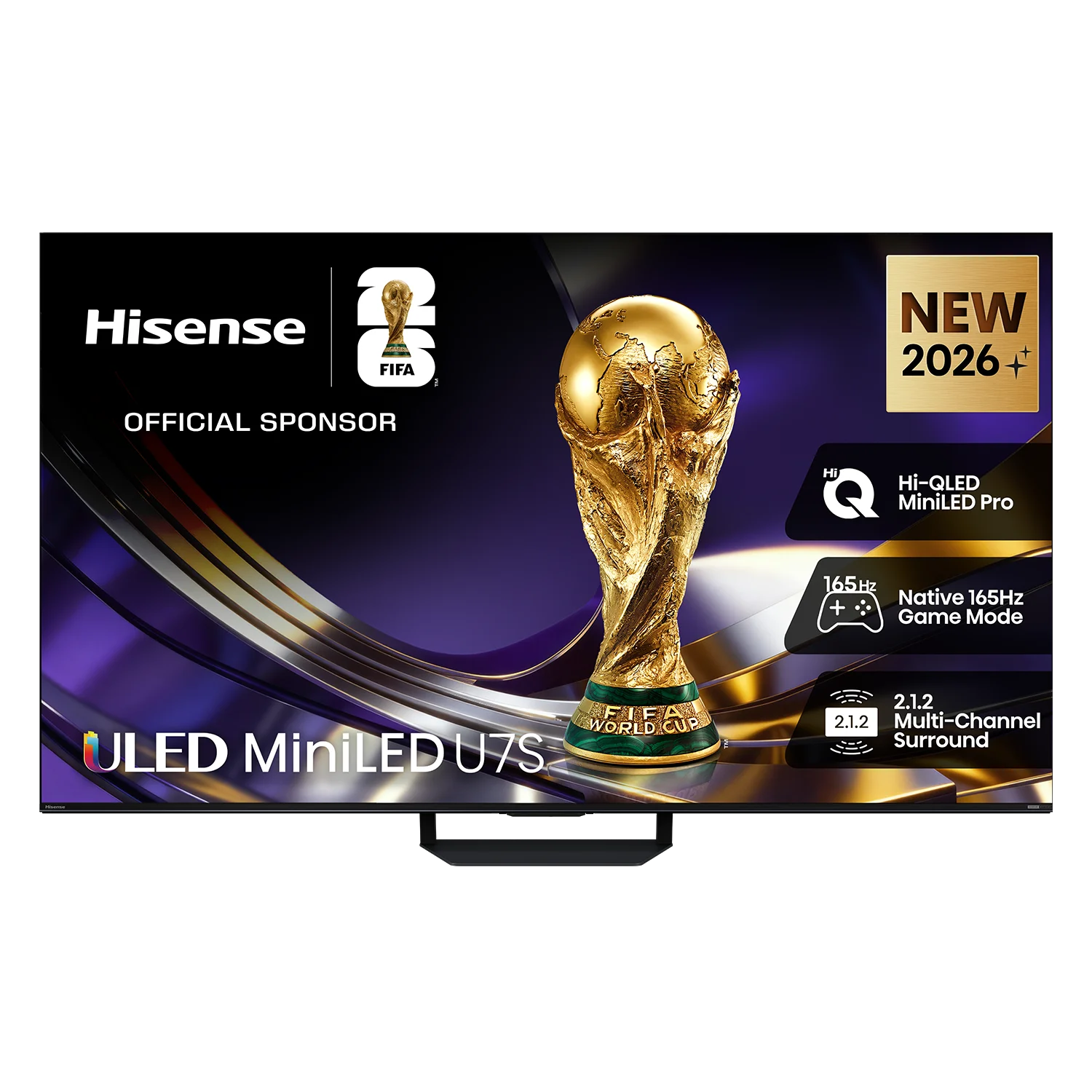
Hisense Australia lists the exact 65U7SAU with Hi-QLED MiniLED Pro, a native 165Hz panel, Anti-Reflection & Glare-Free treatment, Hi-View AI Engine Pro, 2.1.2-channel audio, Dolby Vision IQ, HDR10+ Adaptive, HDR10, VRR, VIDAA U9 and four HDMI 2.1 inputs. The “up to 3,000 nits” figure is Hisense's peak claim, not sustained full-screen output.
Exact-model Australian owner comments repeatedly mention effective non-reflective screen behaviour, a clear picture and straightforward setup, which supports its positioning. Its native 165Hz panel and four-input HDMI 2.1 specification are especially attractive for compatible PCs, consoles and sport—although consoles do not become 165fps devices merely because the panel supports 165Hz.
The evidence boundary matters. International U7S Pro laboratory results are not transferred onto 65U7SAU because exact hardware equivalence has not been established. Hisense also does not publish a directly comparable exact 65-inch dimming-zone count on its Australian page, so we do not invent one. VIDAA has good Australian coverage, but buyers with niche apps should check availability.
Key details
| Exact model | 65U7SAU · 65-inch Hi-QLED MiniLED Pro |
|---|---|
| Refresh / connectivity | Native 165Hz · four HDMI 2.1 inputs · VRR |
| HDR | Dolby Vision IQ, HDR10+ Adaptive, HDR10 |
| Platform / audio | VIDAA U9 · 2.1.2-channel audio |
| Price snapshot | About $1,595 promotional; listed positioning about $2,199 |
| Warranty | 3-year Hisense warranty; terms apply |
Owner and professional evidence
Pros
- Strong anti-reflection positioning
- Native 165Hz and four HDMI 2.1 inputs
- Dolby Vision IQ and HDR10+ Adaptive
- Competitive promotional price
- Positive exact-model Australian owner evidence
Cons
- VIDAA rather than Google TV
- Exact-Australian professional testing is limited
- Exact 65-inch zone count is not clearly published
- Brightness claim needs qualification
- Review provenance includes possible incentives
Mini-LED buying advice
Mini-LED is still LCD
Many smaller LEDs sit behind an LCD panel so the backlight can be controlled in smaller areas. This can increase brightness, HDR impact and black depth, but it is not pixel-level self-emission like OLED.
Zone count is not the whole picture
More zones can help, but dimming algorithms, native panel contrast, optical design, processing, response speed and tone mapping all affect the result. Do not rank TVs purely by zone count.
Blooming can still happen
Halos appear when a bright object shares a dimming zone with dark surroundings—often around subtitles, stars or bright logos. Better systems reduce it strongly; no Mini-LED should be described as zero-blooming in all content.
Peak brightness needs context
Manufacturer “up to” HDR figures use specific test conditions. They are not sustained full-screen brightness or a direct measure of total picture quality. Here they are labelled as manufacturer claims.
Mini-LED versus OLED
OLED usually wins for pixel-level blacks, viewing angles and freedom from backlight blooming. Mini-LED can win on brightness, large-screen value and freedom from OLED's organic-pixel retention mechanism. Neither universally wins.
Viewing angle matters
LCD image quality can change off-axis. Buyers with large sectional lounges or viewers seated far to the side should consider angle performance rather than assuming front-on results apply everywhere.
Brightness and reflections differ
A very bright TV can overcome ambient light yet still show mirror-like reflections. Anti-reflection or matte treatments can reduce glare while changing perceived contrast in other ways. Consider both traits.
Gaming claims need context
Look for 4K/120Hz+, VRR, ALLM, suitable HDMI 2.1 ports, input lag and Game Mode dimming. A 165Hz television does not make a PS5 run at 165fps; higher rates mainly benefit compatible PCs.
Normal television care applies
Provide ventilation, follow mounting clearances, keep vents open and clean to manufacturer instructions without spraying harsh cleaner on the panel. Mini-LED avoids OLED-style burn-in, but LCD panels and backlights can still develop faults.
Which Mini-LED TV should you buy?
Buy the TCL C8L 65C8L if you want the strongest all-round Mini-LED here and will pay for better local dimming, HDR headroom and blooming control.
Buy the TCL C7L 65C7L if you want most of the premium Mini-LED experience for substantially less.
Buy the Hisense U7S 65U7SAU if your room is bright, reflections or gaming are priorities, or its current promotional price puts it well below the TCLs.
Frequently asked questions
Is Mini-LED better than OLED?
Not universally. Mini-LED can be brighter, strong in bright rooms and free from OLED's organic-pixel retention mechanism. OLED offers pixel-level blacks, no backlight blooming and wider viewing angles. Your room, seating and use decide which strengths matter.
Does Mini-LED get burn-in?
It does not use OLED's organic pixels, so it does not have OLED-style burn-in. LCD panels and backlights can still age or fail, so this is not a promise of permanent immunity from all display faults.
Do more local-dimming zones always mean a better TV?
No. Zone count can improve control, but algorithms, panel contrast, optics, response speed and processing are also decisive. Exact-size zone figures are useful context, not a complete ranking.
Is Mini-LED good for bright rooms?
Generally yes, especially models combining high brightness with effective reflection handling. Brightness alone does not remove reflections, so assess surface treatment too.
Is Mini-LED good for gaming?
Yes when the exact model has modern HDMI inputs, 4K/120Hz or higher support, VRR, ALLM and low latency. Also check whether local dimming remains effective in Game Mode.