How we chose
We assessed current Australian availability, exact Australian models, 2026 and carry-over status, street pricing, dark-room contrast, HDR brightness, colour, near-black behaviour, reflections, viewing angle, motion, gaming, HDR formats, smart platforms, audio, warranty, exact-model Australian owner evidence and credible professional testing.
Worth Buying scores are editorial judgements, not calculations from customer star ratings. Worth Buying Australia did not conduct RTINGS, Tom's Guide or other publications' laboratory tests; measurements below remain attributed to those sources.
Why two LG models remain
The C6 is the strongest mainstream balance, while the G6 is a material step up in brightness, HDR colour and reflection handling rather than a cosmetic variant. Samsung's S95H adds a genuinely different bright-room, QD-OLED proposition. Artificial three-brand variety would have weakened the final shortlist.
Serious near-misses
Sony BRAVIA 8 II K65XR80M2 remains a strong movie-focused 2025 OLED with Dolby Vision, but its price, older generation, gaming trade-offs and current ownership caveat kept it outside the final three. Samsung S90H QA65S90HAWXXY is a strong-value 2026 OLED near $3,295, but the exact Australian panel identity should not be inferred from overseas variants and it omits Dolby Vision. Panasonic Z95B is technically impressive but not officially available in Australia. Deeply discounted 2025 flagships may be good buys, but inconsistent clearance stock makes them poor reproducible winners.
LG OLED evo AI C6 65-inch OLED65C6PSA
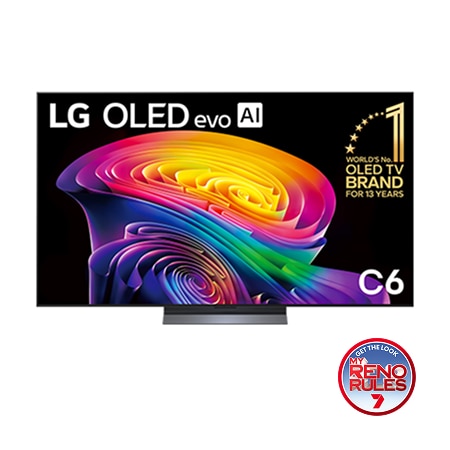
The 65-inch Australian C6 uses LG's Alpha 11 AI Processor 4K Gen3, a native 120Hz OLED panel and VRR support up to 165Hz. All four HDMI inputs support the serious gaming feature set, including VRR, NVIDIA G-SYNC compatibility, AMD FreeSync Premium, ALLM and Game Optimiser. HDR support covers Dolby Vision, HDR10 and HLG; webOS 26 handles smart features and the built-in system is 40W, 2.2-channel.
RTINGS' independent 2026 C6-family testing found excellent HDR brightness, perfect OLED blacks without blooming, strong colour, excellent low-quality-content cleanup, very strong gradients and exceptionally responsive gaming. It also identified aggressive brightness limiting in large bright areas and low-frame-rate stutter caused by OLED's near-instant response. These are RTINGS findings, not Worth Buying measurements. Tom's Guide's laboratory comparison also found the C6 highly competitive for colour accuracy, HDR and latency.
It is not the brightest OLED here. Large bright scenes remain more constrained than small highlights, reflection handling trails S95H and G6, built-in sound is adequate rather than flagship-grade, and the smaller AI Magic Remote may frustrate buyers who prefer a traditional numeric layout. This exact 65-inch OLED65C6PSA must not be confused with the larger C6H implementation; we do not transfer C6H tandem-panel claims to it.
Key details
| Exact model | OLED65C6PSA · 65-inch 4K OLED evo |
|---|---|
| Refresh / VRR | 120Hz native / up to 165Hz VRR |
| HDR | Dolby Vision, HDR10, HLG |
| Audio | 40W, 2.2-channel |
| Price snapshot | About $3,995 at major Australian retailers |
Owner and professional evidence
Pros
- Excellent overall OLED picture
- Strong HDR and Dolby Vision
- Excellent processing and gaming support
- Four HDMI inputs
- Meaningfully cheaper than premium flagships
Cons
- Weaker reflection handling than S95H or G6
- Large bright scenes remain brightness-limited
- Built-in audio is only moderate
- Small new remote may annoy traditional users
Samsung S95H OLED 65-inch QA65S95HAWXXY
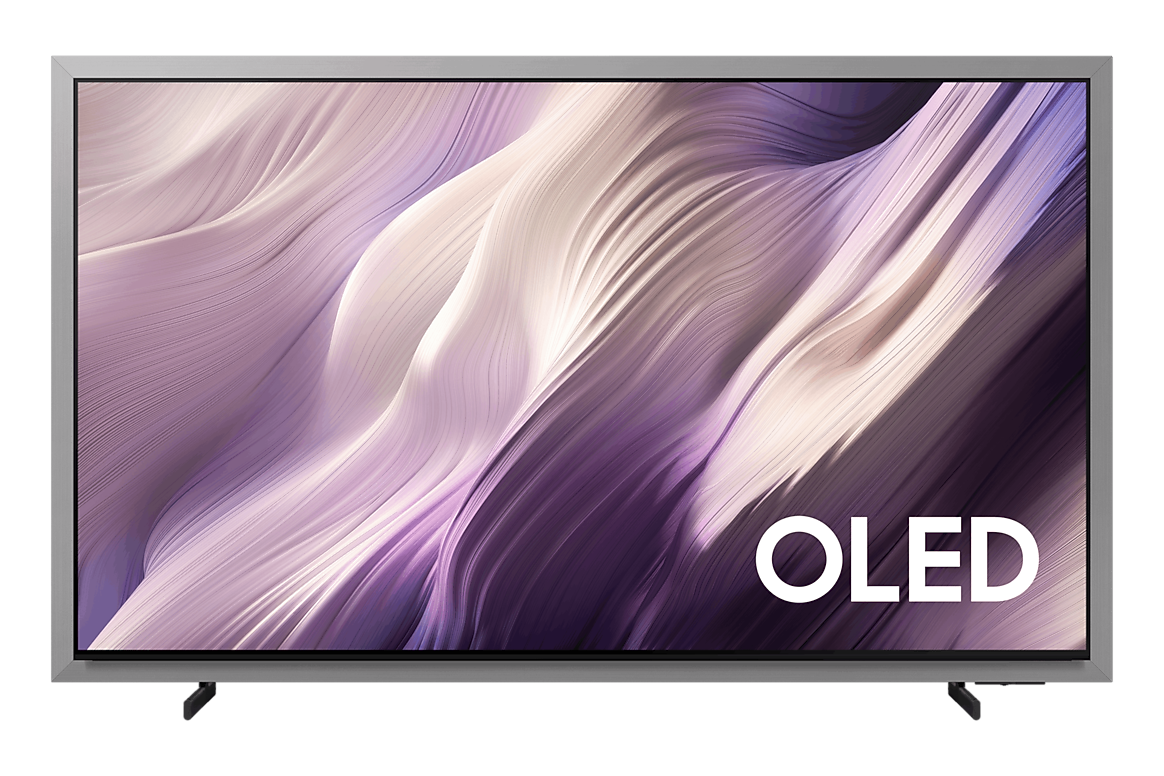
The Australian flagship combines its NQ4 AI Gen3 processor, OLED HDR Pro, Glare Free display, HDR10+, up-to-165Hz VRR, four HDMI connections, FreeSync Premium Pro, Dolby Atmos, 70W 4.2.2-channel audio and Tizen. Samsung lists independent certifications for defined glare-reduction, black-performance and colour tests; those are certification claims, not Worth Buying laboratory results.
Tom's Guide measured approximately 2,721 nits on a 10% HDR window in its laboratory review. RTINGS also found the 2026 flagship significantly brighter and more vivid than S90H, with very strong gaming and reflection control. Results depend on mode, window and sample and are attributed to the publications.
The Glare Free coating is extremely effective at suppressing mirror-like reflections, but the story is nuanced: strong ambient light can lift the QD-OLED panel's perceived black level. It is better described as exceptionally effective glare suppression with OLED-class dark-room blacks—not perfect blacks in every lighting condition. Samsung omits Dolby Vision in favour of HDR10+, the matte presentation will not suit every dark-room purist, and the roughly $5,295 price is steep.
Key details
| Exact model | QA65S95HAWXXY · 65-inch flagship QD-OLED |
|---|---|
| Gaming | VRR up to 165Hz, four HDMI inputs, FreeSync Premium Pro |
| HDR | HDR10+, HDR10, HLG; no Dolby Vision |
| Audio | 70W, 4.2.2-channel, Dolby Atmos |
| Price snapshot | About $5,295 at major Australian retailers |
Owner and professional evidence
Pros
- Exceptional HDR highlight brightness
- Vivid QD-OLED colour
- Superb glare suppression
- Excellent gaming and wide viewing angles
- Strong integrated audio
Cons
- Expensive
- No Dolby Vision
- Ambient light can reduce perceived black depth
- Matte-screen look will not suit every dark-room purist
LG OLED evo AI G6 65-inch OLED65G6PSB
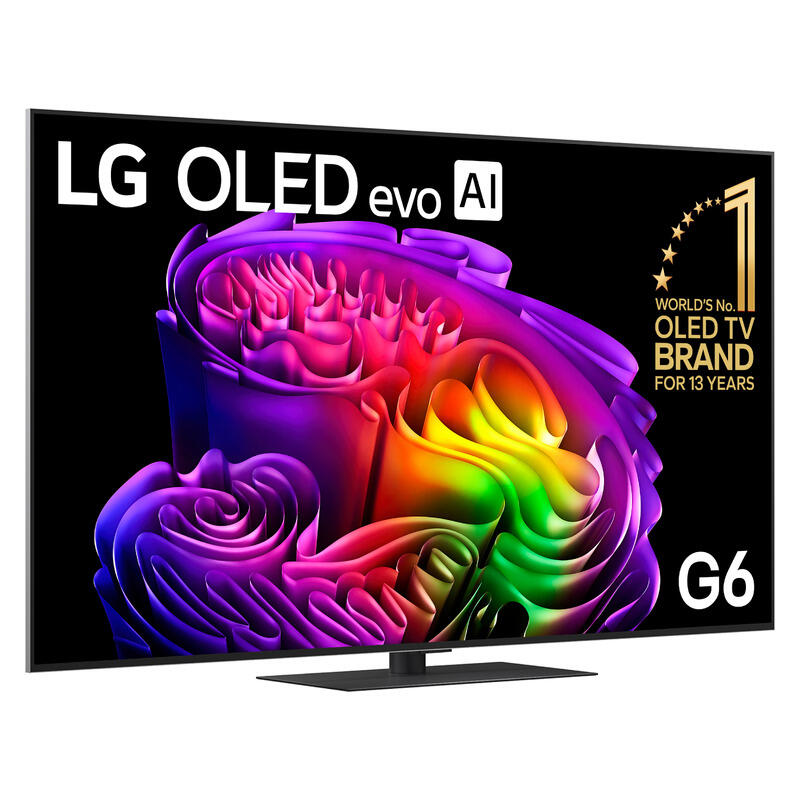
The Australian G6 uses LG Hyper Radiant Colour, Brightness Booster Ultra, Reflection Free Premium certification and the Alpha 11 AI Processor 4K Gen3. It has a native 120Hz panel, VRR up to 165Hz, four HDMI inputs, Dolby Vision, HDR10 and HLG, plus G-SYNC, FreeSync Premium, ALLM, Game Optimiser and 60W 4.2-channel audio through webOS 26.
RTINGS' direct comparison found materially better image quality than C6 through higher brightness, stronger reflection handling, more vivid HDR colour and somewhat better HDR accuracy. Australian specialist coverage confirms the exact OLED65G6PSB identity and its stronger brightness/reflection position. These are external findings, not Worth Buying measurements. LG's manufacturer brightness multipliers are not repeated as though the G6 were 3.9 times brighter than C6; that claim uses a defined comparison with B6.
The C6 remains enough OLED for most households and costs around $1,000 less. Premium brightness does not abolish OLED's full-screen limits, and even the stronger 60W audio is not equivalent to a serious sound system. Early exact-model Australian owner feedback is positive, but four reviews cannot prove long-term reliability.
Warranty: LG backs the G6 with a one-year parts-and-labour product warranty, including the panel, plus four additional years of panel-parts replacement coverage under its limited panel warranty. Terms apply. This is not a five-year full-TV warranty, and Australian Consumer Law rights apply independently.
Key details
| Exact model | OLED65G6PSB · 65-inch premium 4K OLED evo |
|---|---|
| Refresh / VRR | 120Hz native / up to 165Hz VRR |
| HDR | Dolby Vision, HDR10, HLG |
| Audio | 60W, 4.2-channel |
| Price snapshot | About $4,995 at major Australian retailers |
Owner and professional evidence
Pros
- Materially brighter than C6
- Premium reflection handling and strong HDR colour
- Dolby Vision and excellent gaming
- Better integrated audio than C6
- Extended limited panel warranty
Cons
- Approximately $1,000 over C6
- Value improvement is smaller than price increase
- Built-in audio still cannot replace serious external sound
- Early Australian exact-model owner pool is small
OLED-specific buying advice
OLED blacks are pixel-level
Each OLED pixel generates its own light and can switch off, creating extremely deep blacks, no LCD-style local-dimming halos and excellent dark-room contrast. OLEDs still differ in brightness, colour volume, processing, coating and near-black handling.
QD-OLED versus LG-type OLED
QD-OLED can deliver very strong colour volume, bright highlight colour and wide viewing angles. LG's current premium implementations combine high brightness, Dolby Vision, strong gaming flexibility and different reflection treatments. Neither architecture universally wins.
Bright rooms need more than brightness
Surface treatment, panel brightness and ambient black behaviour all matter. S95H has superb glare suppression; G6 has premium reflection control; C6 suits many rooms but is the weakest of these against harsh reflections.
Dolby Vision versus HDR10+
LG C6 and G6 support Dolby Vision. Samsung S95H does not, using HDR10+ instead. S95H remains an extremely capable HDR television; the practical difference is source-format compatibility and buyer preference.
All three are serious gaming TVs
Each supports 4K/120Hz-class console gaming, VRR and ALLM, with high-refresh PC capability where supported. LG and Samsung offer four-input flexibility. A dedicated gaming-TV guide may weigh specialist priorities differently.
Burn-in risk is not zero
Modern pixel-refresh, logo mitigation and panel-care systems reduce risk, and normal mixed viewing should not be treated as inevitably damaging. Persistent dashboards, fixed PC UI, extreme news-ticker use and signage-style workloads remain higher risk.
Leave panel care enabled
Avoid prolonged static imagery where practical, keep built-in OLED care features on, allow manufacturer-required standby maintenance cycles and follow cleaning instructions. Never spray harsh cleaner directly onto the panel.
Size can change hardware
We compare 65-inch models because it is a major Australian premium-TV size and provides consistent pricing. Do not assume every size in a series uses identical panel technology, performance or chassis.
Which OLED TV should you buy?
Buy the LG C6 OLED65C6PSA if you want the OLED that makes the most sense for most Australians.
Buy the Samsung S95H QA65S95HAWXXY if your room is bright and glare control or HDR impact matters more than Dolby Vision.
Buy the LG G6 OLED65G6PSB if you want a more premium Dolby Vision OLED with stronger brightness and reflection control, LG's extended limited panel coverage, and can accept the price premium.
Frequently asked questions
Is OLED better than Mini-LED?
It depends on the room and use. OLED wins for pixel-level blacks, viewing angles and freedom from local-dimming blooming. Mini-LED can make more sense for extremely bright rooms, very large sizes or buyers with higher static-content risk.
Can OLED TVs get burn-in?
Yes, permanent image retention remains possible, but it should not be presented as inevitable. Modern mitigation works well for normal mixed viewing; persistent static dashboards, fixed desktop UI, news tickers and signage-like use create more risk.
Is QD-OLED better than regular OLED?
Not universally. QD-OLED can offer outstanding colour volume and highlight colour, while LG's current OLEDs add Dolby Vision, broad gaming flexibility and different brightness or reflection approaches. The room, sources and budget matter more than tribal panel labels.
Is the Samsung S95H good without Dolby Vision?
Yes. It remains an exceptionally capable HDR TV with excellent brightness, colour and HDR10+ support. Buyers with a strong Dolby Vision preference should choose LG C6 or G6 instead.
Which OLED is best for gaming?
All three are strong, with 4K/120Hz console support, VRR, ALLM and high-refresh PC options. C6 is the best-value all-round choice, S95H is strongest for bright rooms, and G6 combines premium LG picture quality with the same serious gaming flexibility.