
How we chose
Detailed methodology
We compared current Australian rooftop tents for tent mass, packed profile, sleep area, mounting requirements, setup and pack-down, shell and fabric construction, ventilation, mattress support, warranty, local installation and parts support, owner evidence and total installed value. Manufacturer specifications, retailer information, Australian owner feedback, international owner feedback and professional testing remain separate. Worth Buying scores are editorial judgements, not blended customer-star ratings.
Serious contenders and alternatives
DARCHE Streamliner 1250: is the strongest low-profile alternative at about 150mm closed, with a 50mm memory-foam mattress, anti-condensation layer and three-year warranty. Its 69kg mass, preorder state during research and narrower wedge sleeping area kept it outside the top three.
The Bush Company LX27 Gen 2: offers expedition-grade aluminium construction and an exceptionally low profile, but its roughly 73kg mass, premium cost and specialist audience make it less suitable for the mainstream buyer.
The Bush Company AX27: adds an 80mm dual-density mattress, tall interior and roof-cargo capability, but at about 99kg and expedition pricing it is a specialised choice.
San Hima Jervis: combines low mass with strong headline specifications, but the exact-model ownership, professional testing and support evidence remains shallower than the finalists.
DARCHE Ridgeback ECO: is a high-quality premium aluminium alternative with good ventilation and anti-condensation support. Weight, price and overlap with the Streamliner and iKamper positions prevented a formal ranking.
ARB Esperance Roof Top Tent V2 802200V2
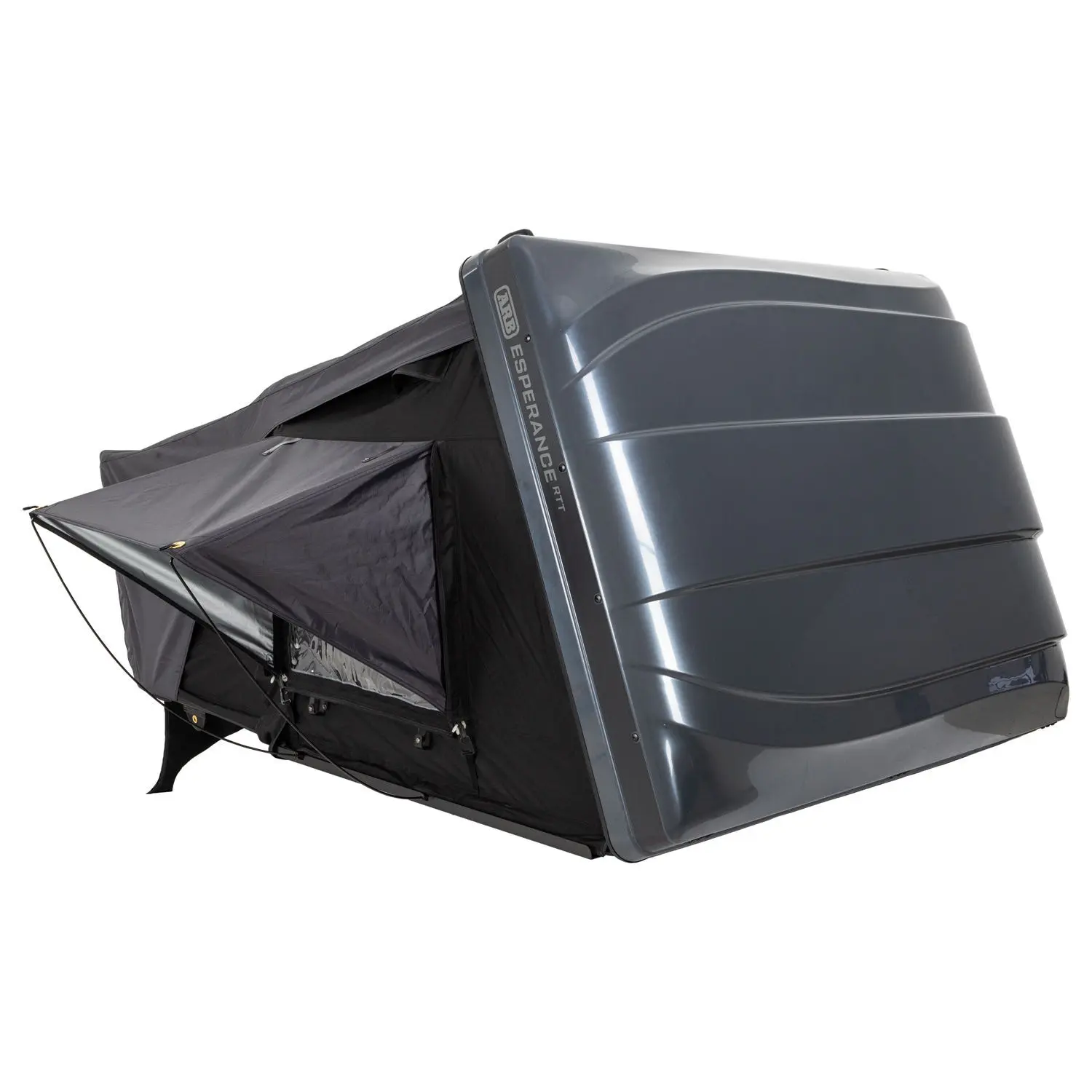
Exact current Australian Esperance V2 product 802200V2 shown.
The V2 uses an ABS hard shell, PU-coated polycotton body, removable 210D rain fly, insulated roof lining, midge-proof mesh, moon roof, high-level vents, integrated lighting, storage pockets and an internally stored telescopic ladder.
Extended product analysis
ARB's current V2 feature material states a 50mm convoluted egg-crate foam mattress. A legacy structured field on the same page still says 40mm; the current V2 feature specification is the relevant one. The closed shell is approximately 1520 × 1220 × 330mm and the sleeping area is about 2000 × 1430mm.
The two extra high-level vents and removable clear weather panels improve airflow control. Ventilation and insulation can reduce condensation risk but cannot eliminate moisture in cold or humid conditions.
Evidence context
Australian V2 owner evidence is still modest. Earlier Esperance shell reports are predecessor context only and are not presented as proof of a V2 defect.
Pros
- 58kg current AU specification
- Three-year warranty
- Fast gas-strut deployment
- Improved high-level ventilation
- National fitment and service network
- Compact bedding can remain inside per ARB
Cons
- Mid-premium purchase price
- ABS rather than aluminium shell
- 50mm mattress is not the plushest finalist
- 330mm packed height is not class-leading
Adventure Kings Tourer X Aluminium AKTA-RTTPS_02
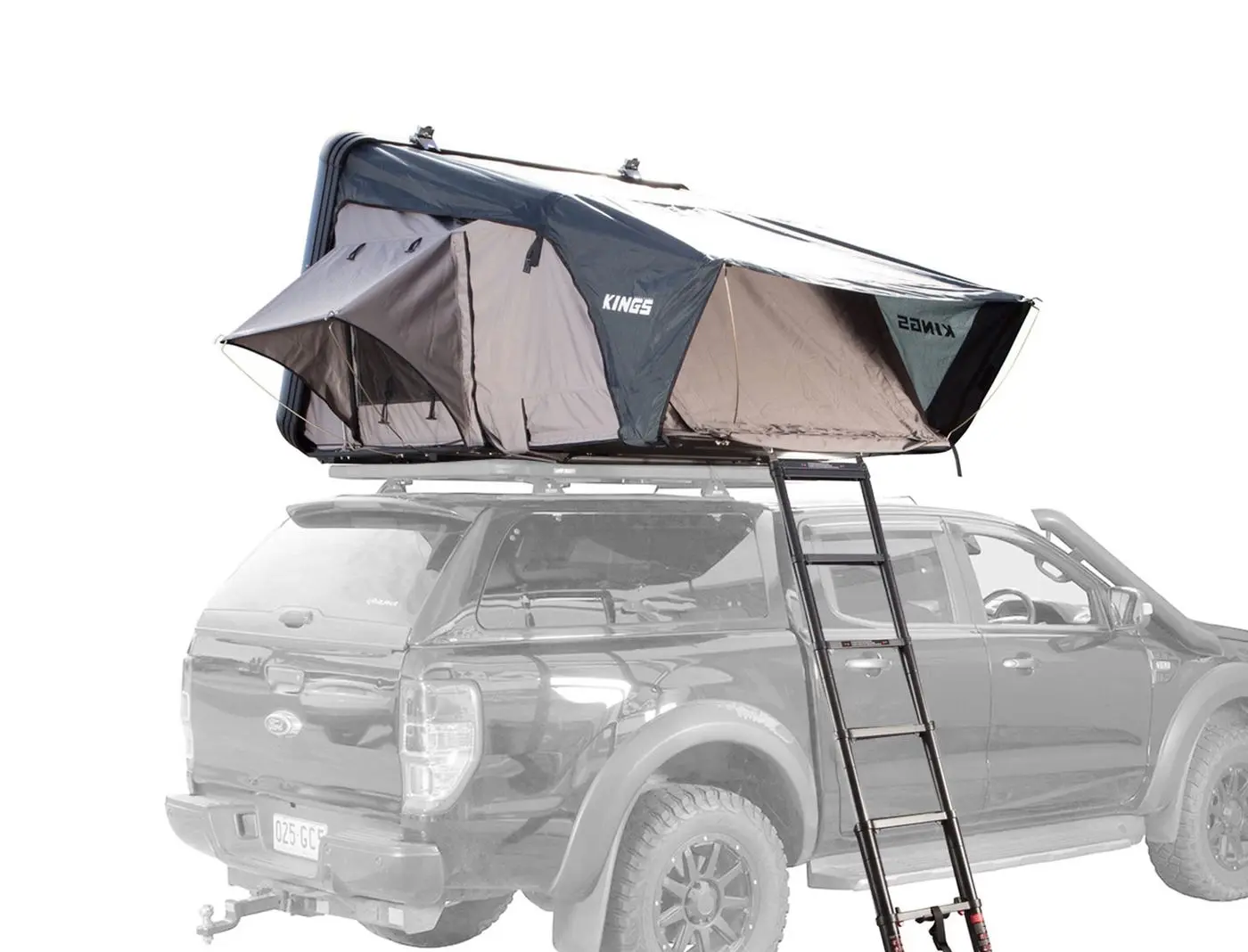
Exact current Tourer X Aluminium product AKTA-RTTPS_02 shown.
The Tourer X weighs 64.5kg, closes to 210mm high and opens to an approximately 2030 × 1560mm tapered sleeping area. It uses a 280gsm polycotton body, extruded aluminium shell, permanently attached fly, midge-proof mesh and accessory rails.
Extended product analysis
The 35mm high-density foam mattress is its clearest compromise. Owner feedback includes satisfactory space, setup and touring use, but also mattress, ladder adjustment, bedding-storage and delivery concerns. That evidence is mixed, not a universal failure claim.
Kings claims about two-minute setup. Treat that as a manufacturer claim; real setup includes ladder adjustment, windows, parking and any bedding changes.
Pros
- Aluminium hard shell
- Low 210mm closed height
- Large tapered sleeping area
- Integrated accessory rails
- Broad company store network
- Often heavily discounted
Cons
- Thin 35mm mattress
- One-year warranty
- Mixed owner feedback
- Bedding upgrades can make closing harder
- Promotional pricing is volatile
iKamper Skycamp 3.0 Mini — Rocky Black
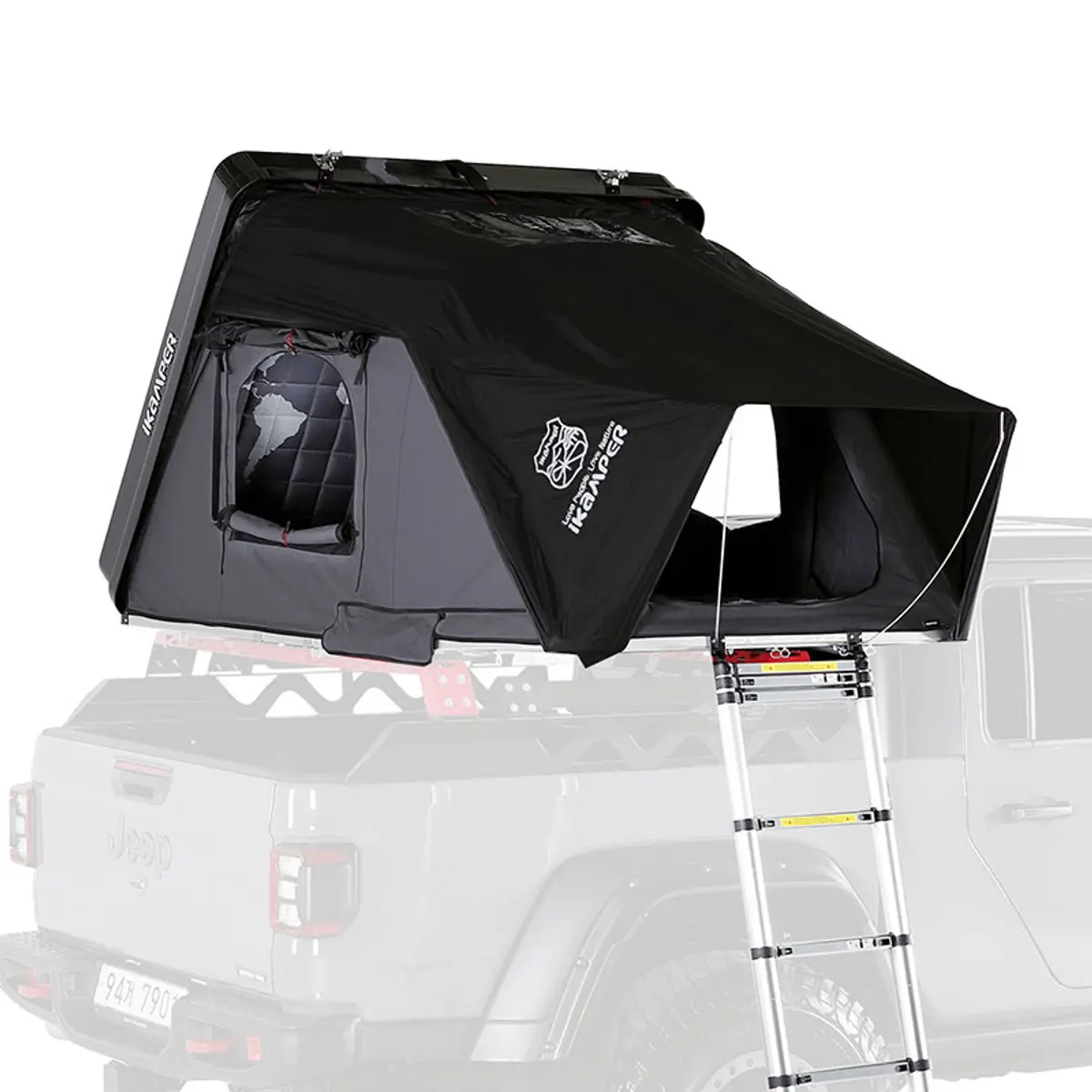
Exact current Skycamp 3.0 Mini Rocky Black generation shown, not the full-size Skycamp or a 2.0 model.
The Australian product page specifies a 2100 × 1300mm sleep area, 1460 × 1400mm closed footprint, 340mm closed height, breathable 300gsm blackout polycotton, 75D ripstop rain fly and a dual-layer FRP shell with an insulating air layer.
Extended product analysis
The current exact Australian page lists a 60mm insulated nine-zone polyfoam mattress. Other range material has shown 70mm, so this guide uses the exact current product-page specification. The honeycomb aluminium floor includes insulation and a cork layer.
iKamper states a 560–990mm crossbar-distance range and a universal claw mounting system. That establishes mounting geometry only; each crossbar and rack still needs an adequate load rating.
Evidence context
International exact-model evidence is broader than the Australian pool and commonly supports fast setup, comfort and compact two-person usability. It does not establish Australian warranty or dealer performance.
Pros
- Approximately 57kg
- Supportive 60mm insulated mattress
- Insulated shell and floor
- Compact closed footprint
- Blackout polycotton canvas
- Suitable bedding can remain inside per iKamper
Cons
- Very expensive
- Two-year limited warranty
- Smaller than family-size fold-out tents
- Narrower Australian dealer network than ARB
- 340mm closed height is not ultra-low
How to choose a rooftop tent
Buying advice
Dynamic and static roof loads
Dynamic load applies while the vehicle is moving. Count the tent, rack, platform, mounting hardware and other roof cargo. Static load applies while parked and may also need to account for occupants, bedding and accessories. Never invent a static rating where the vehicle or rack manufacturer does not publish one, and do not assume a generic multiplier.
Fitment is both geometry and strength
Check vehicle mounting points, roof construction, crossbar spacing, rack or platform instructions, fastener clearance and any off-road derating. A tent can physically fit while still exceeding a roof or rack rating.
Total installed cost
Budget beyond the tent price for crossbars or platform, vehicle-specific feet, installation labour, upgraded hardware, freight, annexes, ladder extensions, anti-condensation mats, electrical work and security hardware.
Weight, clearance and handling
A rooftop tent adds mass high on the vehicle and raises total height. This can affect handling, crosswind sensitivity, braking feel, fuel use and clearance. Calculate vehicle height plus rack, installed tent and any top-mounted accessory before garages, car parks, ferries or low awnings.
Ladder access
Ladder entry can be awkward at night, in rain or on uneven ground, and may not suit people with limited mobility, frequent night-time toilet trips, small children or pets. A rooftop tent is not automatically more convenient than a ground shelter.
Mattress and bedding
Thickness is only one comfort factor; foam density, support, insulation, occupant weight and long-term compression matter too. Do not assume every tent closes with bedding inside. Follow model-specific guidance and test the intended bedding before touring.
Weather, heat and condensation
Buying advice
No rooftop tent is completely waterproof in every condition. Follow the exact setup and maintenance instructions, secure the tent for expected wind, preserve drainage and dry a tent that was packed wet as soon as practical. Ventilation, insulated shells and anti-condensation layers can reduce moisture but do not eliminate it. In hot Australian conditions, prioritise mesh area, cross-flow, high-level vents, blackout fabric and shade planning.
Safe installation and touring
Use only approved mounting hardware, observe the vehicle, rack and tent instructions, and recheck fasteners at the intervals specified by the manufacturers. Secure the ladder on stable ground, keep entry clear, never exceed the lowest applicable rating, and drive conservatively after adding roof mass. Manufacturer wind testing or setup times are controlled claims, not guarantees for every site or storm.
Which one should you buy?
Choose the ARB Esperance V2 for the most balanced combination of mass, rapid setup, ventilation, warranty and Australian installation support.
Choose the Adventure Kings Tourer X when a large bed, aluminium shell and low purchase cost matter more than stock mattress comfort, warranty length and evidence consistency.
Choose the iKamper Skycamp 3.0 Mini when minimum tent mass and premium two-person comfort justify the highest price.
Frequently asked questions
How much roof load do I need for a rooftop tent?
There is no universal number. Add the moving mass of the tent, rack or platform, mounting hardware and other roof cargo, then check the vehicle, rack and tent instructions. The lowest applicable rating controls.
What is the difference between dynamic and static roof load?
Dynamic load is the supported roof load while driving. Static load applies while parked. Occupants and bedding affect the parked system, but do not invent a static capacity or apply a generic multiplier if the manufacturer has not published one.
Are hard-shell rooftop tents better than soft-shell tents?
Hard shells generally improve pack-down and weather protection in transit, while soft-shell designs can deliver more sleeping space for the money. Weight, packed profile, support and actual fitment matter more than shell type alone.
Can I install a rooftop tent on any car?
No. Roof construction, mounting points, crossbar spacing and vehicle and rack ratings all need to be suitable. Physical fit does not prove structural suitability.
Can bedding stay inside when the tent is closed?
It depends on the model and bedding thickness. ARB and iKamper support limited bedding storage; Kings owner feedback indicates thicker bedding or mattress upgrades can make closing difficult.
Are rooftop tents good in hot Australian weather?
They can be, but ventilation and shade are important. Compare mesh openings, high-level vents, cross-flow, insulated shell construction and blackout fabric, and keep airflow open whenever conditions permit.
Do rooftop tents affect fuel economy and handling?
They add mass and aerodynamic drag high on the vehicle, so handling, crosswind response, braking feel, fuel use and total clearance may change. Follow the vehicle, rack and tent guidance and drive conservatively.
Are rooftop tents better than swags?
They solve a different problem. Rooftop tents elevate the bed and suit frequent vehicle-based camp moves; swags avoid roof-load and ladder constraints and are generally easier to move between vehicles.