
How we chose
Detailed methodology
We compared exact current Australian configurations across GPU model and power, CPU, memory, storage, display quality, cooling, upgradeability, ports, battery capacity, chassis weight, charger practicality, warranty, availability and research-date value. Manufacturer specifications, retailer information and broader professional evidence remain separate. Worth Buying scores are editorial judgements, not blended customer ratings.
Serious contenders and alternatives
Acer Nitro V 16 NH.U59SA.005: offers an RTX 5060, 16GB RAM, 1TB SSD and 120Hz 1200p display, but the value Legion provides twice the memory, a sharper 165Hz OLED, larger battery and stronger overall chassis proposition at the checked pricing.
Acer Predator Helios Neo 16S NH.U3USA.002: is the leading non-Lenovo value alternative, with 32GB, 1TB and a 1600p OLED. It remains competitive, but the locked Legion 5i was cheaper and has a confirmed 115W RTX 5060 platform.
Lenovo Legion 5i 83RW002UAU: is an excellent alternative with 32GB, 1TB and a 165Hz OLED. The selected 83VK006JAU costs less and uses the HX-class Core Ultra 7 251HX, preserving the stronger value position despite its smaller SSD.
Lenovo LOQ 15AHP11 83TNCTO1WWAU2: is not ranked. Its checked direct price was substantially above the selected Legion 5i and too close to stronger RTX 5070 systems.
Lenovo Legion Pro 5i Gen 10 — 83NNCTO1WWAU1
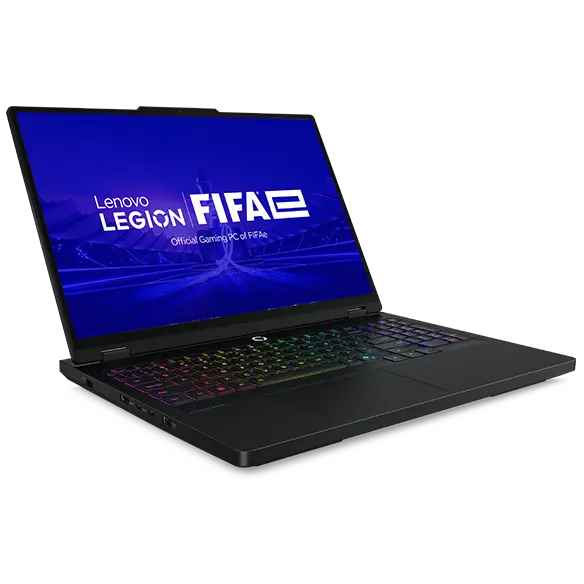
Exact Legion Pro 5i Gen 10 chassis shown. The recommendation is locked to Australian part 83NNCTO1WWAU1 with RTX 5070, 32GB RAM and 1TB SSD.
Part 83NNCTO1WWAU1 combines an Intel Core i9-14900HX with an RTX 5070 Laptop GPU using 8GB of GDDR7 and a 115W power target. Its 32GB of DDR5-5600 uses two 16GB SODIMMs, while the 1TB PCIe Gen4 SSD and second storage capability provide a sensible starting point.
Extended product analysis
The 16-inch 2560 × 1600 IPS display runs at 240Hz, reaches a claimed 500 nits and covers 100% DCI-P3, with HDR 400-class support, G-SYNC and an anti-glare finish. It is better suited to fast sustained gaming than a portability-first machine.
An 80Wh battery and broad connectivity help away from the desk, but maximum gaming performance still requires the 245W charger. The heavier chassis and large power supply are real costs, and the older 14th-generation HX platform is not Lenovo's newest Core Ultra generation.
VRAM and warranty boundary
The RTX 5070 still carries 8GB of VRAM, which can constrain ultra textures and high-resolution ray tracing in demanding games. The locked Australian configuration lists a one-year onsite base warranty; Australian Consumer Law rights remain separate.
Pros
- Strong sustained RTX 5070 performance
- 115W GPU implementation
- 32GB dual-SODIMM memory
- 1TB SSD with expansion path
- 240Hz wide-gamut display
- Strong cooling and ports
Cons
- Heavy chassis
- Only 8GB GPU memory
- Large 245W charger
- One-year base warranty
- Battery life is secondary
- Older 14th-generation HX CPU platform
Lenovo Legion 5i Gen 11 — 83VK006JAU
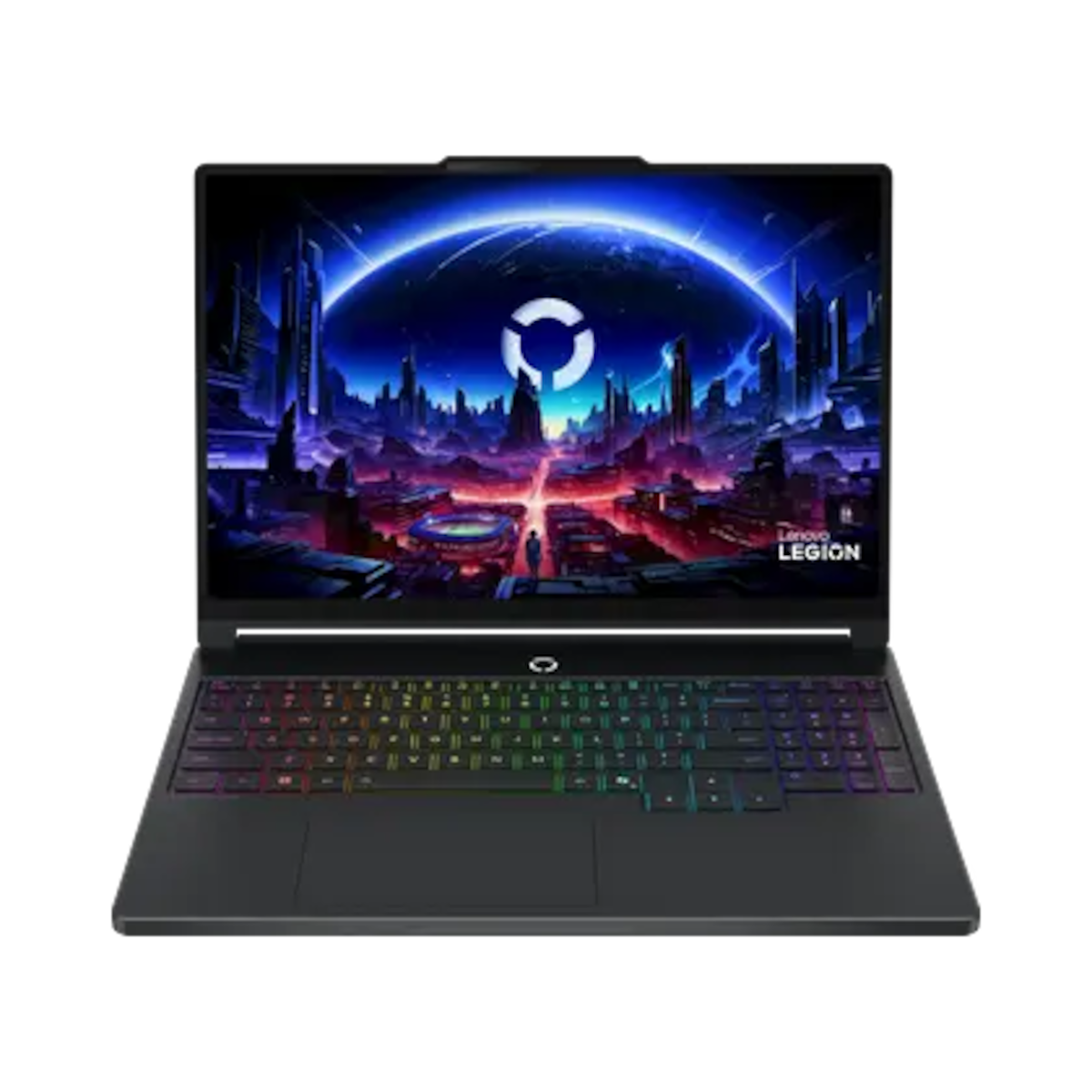
Exact Legion 5i 15-inch Gen 11 family and chassis shown. The recommendation is fixed AU part 83VK006JAU.
Exact AU part 83VK006JAU uses a Core Ultra 7 251HX, RTX 5060 Laptop GPU with 8GB GDDR7 at 115W, 32GB DDR5-5600 and a 512GB PCIe Gen4 SSD. Its roughly 1.93kg chassis and 80Wh battery sit in a practical middle ground between desktop replacement and ultraportable.
Extended product analysis
The 15.3-inch 2560 × 1600 OLED runs at 165Hz, with 500-nit-class typical brightness, DisplayHDR True Black 1000 certification, 100% DCI-P3 and G-SYNC. That display is a major advantage over many budget RTX 5060 machines.
Two DDR5 SODIMM slots and two M.2 positions materially strengthen long-term value. The shipping 512GB SSD is the obvious weakness because modern game libraries fill it quickly, but storage expansion is straightforward compared with fully soldered designs.
Value and warranty boundary
The award depends on the current sale position rather than an evergreen price claim. If pricing rises sharply while stronger RTX 5070 systems remain cheaper, the ranking needs reassessment. The base warranty is one year onsite.
Pros
- 115W RTX 5060
- 32GB replaceable memory
- Excellent 165Hz 1600p OLED
- 80Wh battery
- Two SODIMM and two M.2 positions
- Strong current value
Cons
- Only 512GB storage
- Sale-dependent value
- One-year base warranty
- 8GB VRAM
- OLED static-image risk
- Not an ultralight
ASUS ROG Zephyrus G14 2026 — GU405AP-SY004W
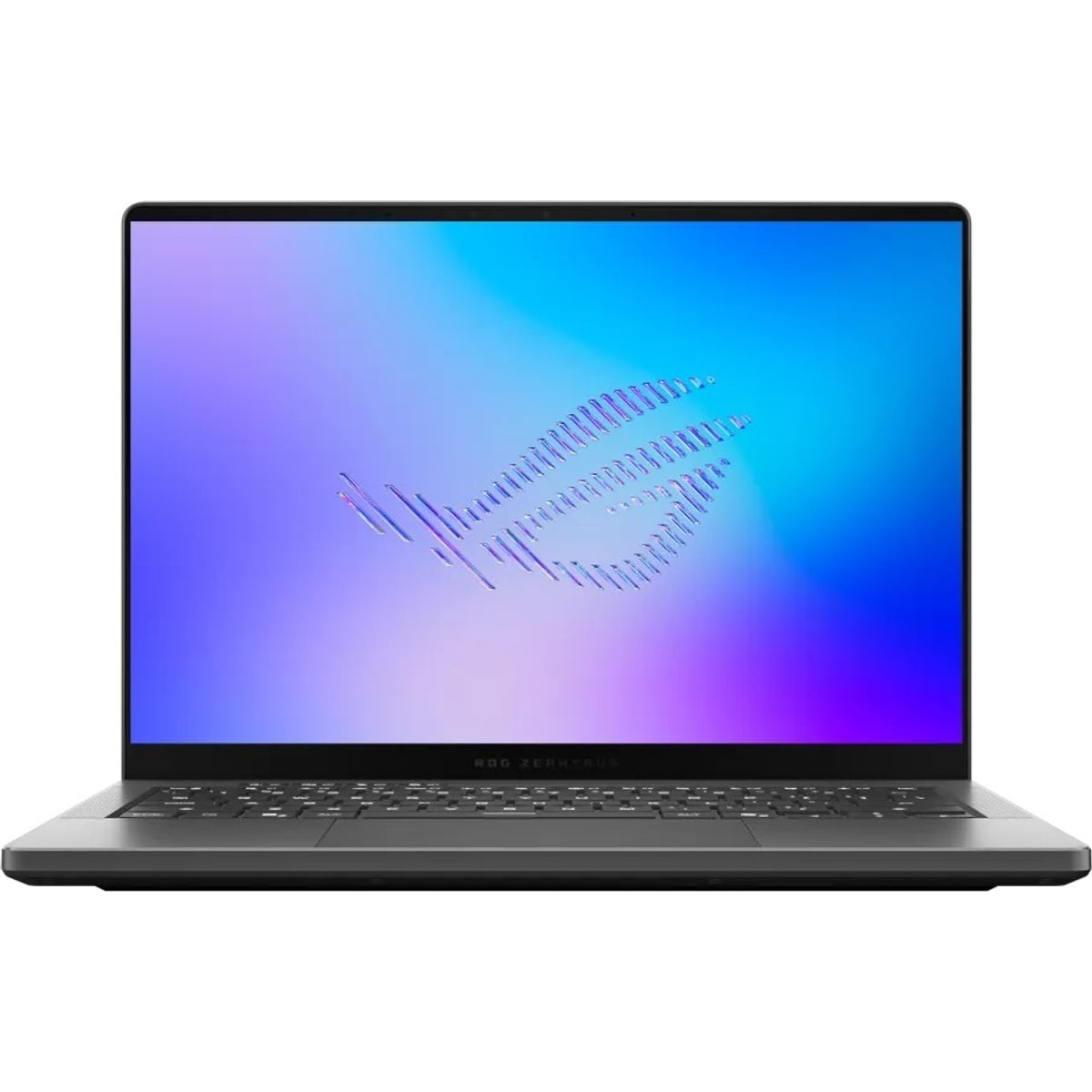
Exact GU405AP-SY004W Eclipse Grey product shown with Core Ultra 9 386H, RTX 5070, 32GB LPDDR5X and 1TB SSD.
Australian SKU GU405AP-SY004W uses an Intel Core Ultra 9 386H, RTX 5070 Laptop GPU with 8GB GDDR7, 32GB LPDDR5X memory and a 1TB SSD. The exact memory configuration is 32GB onboard and is not upgradeable.
Extended product analysis
The 14-inch 2880 × 1800 OLED runs at 120Hz with G-SYNC and wide-gamut colour. ASUS specifies the RTX 5070 at about 105W in Turbo mode and up to roughly 115W in Manual mode, so it should not be treated as automatically equivalent to every larger RTX 5070 laptop.
The unusually compact metal chassis is the point of the machine, but it reduces upgrade flexibility and gaming headroom compared with a heavier Legion. Its 120Hz refresh rate is also lower than the 165Hz and 240Hz panels of the larger finalists.
Price and portability boundary
The G14 carries a substantial premium. Its 1.5kg-class weight is excellent for this performance tier, but charger weight still matters in a backpack and maximum gaming performance remains a mains-power use case.
Pros
- Premium 1.5kg-class chassis
- RTX 5070 performance
- Sharp 3K 120Hz OLED
- 32GB memory and 1TB SSD
- Excellent colour and contrast
- Strong travel practicality
Cons
- Very high price
- 8GB VRAM
- Lower GPU power headroom than larger designs
- Soldered 32GB memory
- OLED static-image risk
- 14-inch screen is less immersive at a desk
Gaming laptop buying advice
Buying advice
Do not buy by GPU name alone
Check the GPU's power target, cooling system and independent sustained behaviour. A 115W RTX 5060 can outperform a heavily restricted implementation carrying the same badge.
8GB VRAM is the shared limit
Both RTX 5060 and RTX 5070 finalists use 8GB. That is capable for mainstream 1080p and 1600p gaming, but it does not make the RTX 5070 automatically future-proof for ultra textures and high-resolution ray tracing.
OLED is excellent, not consequence-free
The Legion 5i and G14 deliver deep blacks, fast response and strong HDR, but glossy reflections, static-image retention risk, possible burn-in and content-dependent power use remain relevant.
Gaming performance is mains-first
Battery still matters for study, web use, media and travel, but demanding games should be played on mains power for full performance. Manufacturer battery claims use different tests and should not be treated as directly comparable.
Include the charger in portability
The G14 is the clear portability winner, the Legion 5i occupies the middle, and the Legion Pro is a heavier desktop replacement. Charger size and weight affect backpack practicality as much as the laptop alone.
Plan storage before checkout
Modern games consume hundreds of gigabytes. The 512GB Legion 5i needs the earliest storage plan, but its second M.2 position makes expansion practical.
OLED care
Use sensible display sleep settings, avoid leaving static HUDs or desktop elements at maximum brightness for long periods, and keep manufacturer panel-care features enabled. OLED burn-in risk is reduced by good habits, not eliminated.
Which gaming laptop should you buy?
Buy the Legion Pro 5i 83NNCTO1WWAU1 for the strongest broad gaming balance. Buy the Legion 5i 83VK006JAU for the best current combination of price, RTX 5060 power, memory and OLED quality. Buy the Zephyrus G14 GU405AP-SY004W when portability and premium construction justify a much higher price.
Frequently asked questions
Is an RTX 5070 laptop automatically much faster than an RTX 5060 laptop?
No. GPU power limits and cooling matter. The RTX 5070 is the stronger tier, but a full-power RTX 5060 can outperform lower-power implementations, and both finalists here use 8GB of VRAM.
Is 8GB of VRAM enough for gaming?
It is workable for mainstream 1080p and 1600p gaming, especially with sensible settings and upscaling. It can become restrictive with ultra textures, heavy ray tracing and future high-resolution games.
Is 512GB enough for a gaming laptop?
It is a usable starting point, but it fills quickly. The selected Legion 5i has two M.2 positions, making storage expansion an important part of its value case.
Should I choose OLED or IPS?
OLED provides excellent contrast and response; IPS avoids OLED's static-image concerns and can suit long desktop sessions. The Legion Pro's 240Hz IPS prioritises sustained gaming, while the other finalists favour richer OLED image quality.
Can I upgrade the RAM?
The two Lenovo finalists use SODIMM memory and provide stronger upgrade flexibility. The Zephyrus G14's exact 32GB LPDDR5X configuration is soldered.
Which pick is easiest to carry?
The Zephyrus G14 is the clear winner at about 1.5kg class. The Legion 5i is around 1.93kg, while the Legion Pro is the heavier performance-first option.
Why is the LOQ not ranked?
The checked Lenovo direct price no longer supported its value case. The selected Legion 5i was materially cheaper while offering 32GB RAM, a 165Hz OLED and a 115W RTX 5060.